
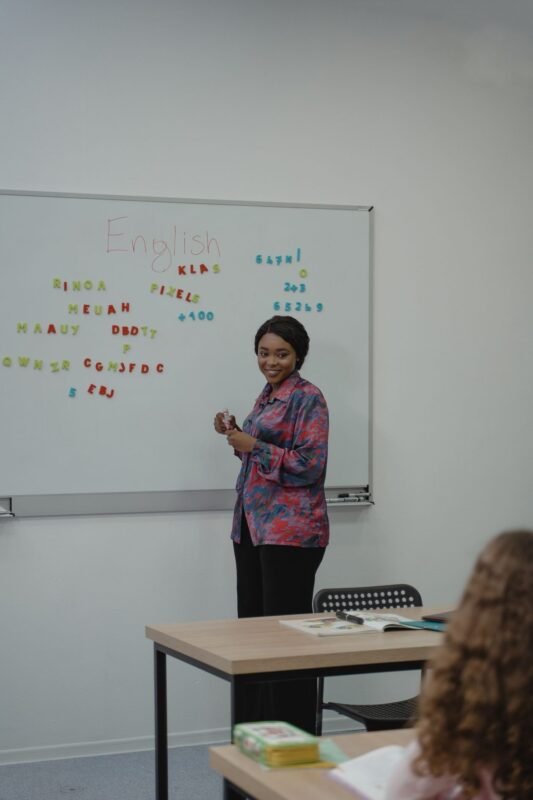
English teachers are the largest WP applicant group in Vietnam — and the most mistake-prone: many think any bachelor’s degree suffices, or teach “under the table” on tourist visas. There are actually two doors: the education door (MOET standards) and the expert door (2 years’ experience) — most new teachers use the education door, needing no 2-year experience.
The education door: bachelor’s + teaching certificate
Under Decree 219/2025, experts in education and training prove qualifications under education law (guided by MOET), not the generic 2-year rule. For language centers, standards follow language-center regulations.
The standard file for new teachers: bachelor’s degree (any field — mandatory; no degree means no legal work) + teaching certificate (TEFL/TESOL/CELTA — the market typically wants 120 hours with practicum, though no regulation fixes 120 hours as the legal minimum). Native speakers (UK, US, Ireland, Canada, Australia, NZ, South Africa): degree + teaching certificate. Non-native speakers: English-teaching degree; or English degree + teaching certificate; or bachelor’s + IELTS/TOEFL (market benchmark C1/IELTS 7) + teaching certificate.
The expert door and the rest of the dossier
Via the expert door (less common for new teachers): bachelor’s + 2 years’ equivalent teaching experience. The rest of the WP dossier is standard (Article 18): criminal record (06 months), health certificate (12 months) (checked in Vietnam), passport, two 4×6 photos, Form 03 request.
After the WP comes the LD2 visa (work visa, up to 2 years) and TRC. Warning: teaching on a tourist visa/visa exemption = illegal work — deportation risk + fines (~USD 1,500 per market reports); the school faces joint liability.
New-teacher traps
Trap 1 — bogus TEFL courses: unrecognized certificates / bought diplomas — dossier rejected, money lost. Ask which certificate the school will file, then legalize exactly that one. Trap 2 — teaching before the WP: “paid probation” before WP issuance = unlicensed work. Trap 3 — age: Decree 219 sets no maximum age, but many schools use retirement ages (men ~61, women ~56, rising) as informal hiring cutoffs.
Practical recommendations
First, confirm with the school which door (education or expert) before paying for a TEFL course — each needs different certificates. Second, legalize the bachelor’s degree + teaching certificate + criminal record (06 months) — those three complete 80% of the dossier. Third, no paid teaching before the WP — not even one session; and require the school to sponsor everything (schools handle ~80% of the paperwork).
Frequently asked questions
What qualifications do English teachers need in Vietnam?
Bachelor’s degree (any field, mandatory) + TEFL/TESOL/CELTA teaching certificate. Non-native speakers additionally need: an English-teaching degree, or a degree + IELTS/TOEFL (C1/IELTS 7) + teaching certificate.
Is 2 years’ teaching experience required?
No — via the education door (MOET standards, no 2-year rule). Only the expert door needs a degree + 2 years’ experience.
Must the TEFL be 120 hours?
No regulation fixes 120 hours as the legal minimum — it’s a market/hiring standard. What matters is a recognized certificate the school will file.
Can I teach on a tourist visa?
No. It’s illegal work — deportation risk + fines; the sponsoring school faces joint liability. A WP + LD2 visa is required.
Is there an age limit for teaching?
Decree 219/2025 sets no maximum age. But retirement ages (men ~61, women ~56) are informal hiring cutoffs at many schools.
For detailed advice on WPs for English teachers, schools/companies may contact FLAT Law Firm.
This article has been quality-reviewed by the FLAW AI Legal Council. Content was prepared by the FLAT Law Firm AI Legal Council and has not been reviewed by a human lawyer.


