
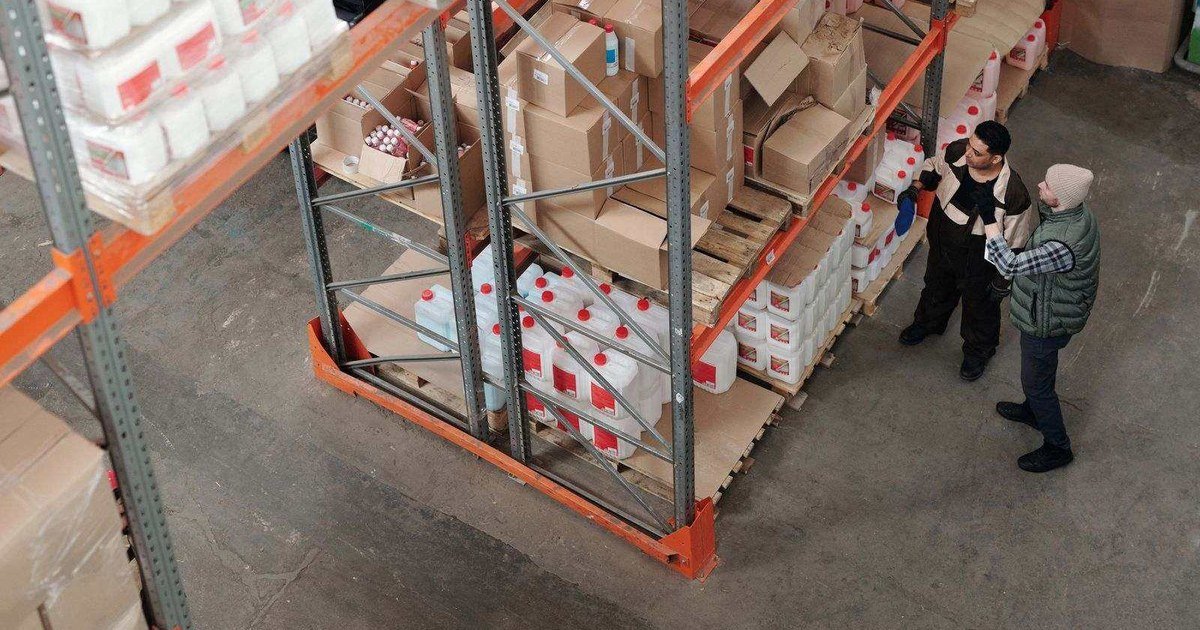

A company imports a shipment of raw materials worth billions of dong: on opening the container, part of the goods is moldy and part does not meet the agreed technical specifications. The overseas seller insists the goods were inspected before shipment, while the buyer cannot put the shipment into production. Who bears the burden of proving the defect existed before delivery? Within what time limit must a claim be filed to remain valid? And when the parties cannot agree, what weight does an independent inspection result carry before arbitration or courts?
Goods quality disputes are the most common type of dispute in sale of goods — and also the hardest to handle, because they require combining technical evidence (inspection, assessment) with the legal framework (claim time limits, sanctions, damages). This article systematizes the provisions of the 2005 Commercial Law on non-conforming goods, the claims process, the role of independent inspection, and the available remedies: price reduction, replacement, return of goods, and damages.
Quick summary
| Topic | Disputes over goods quality in sale-of-goods contracts |
|---|---|
| Main basis | Commercial Law 2005: Articles 39–41 (non-conforming goods), Article 318 (time limit for claims), Article 319 (limitation period for lawsuits) |
| Claim time limit | 6 months from the delivery date for quality claims; 3 months from the end of the warranty period if the goods are warranted |
| Applicable sanctions | Specific performance; penalty for breach up to 8% of the value of the breached contractual obligation; damages (actual losses + direct profits) |
| Key evidence | Delivery minutes, inspection results at receipt, independent inspection results |
Why goods quality disputes are the hardest to handle
Unlike late delivery or late payment — breaches determinable by dates and figures — quality disputes always begin with a technical question: are the goods truly “non-conforming”, and did the defect exist before delivery or arise afterwards.
The 2005 Commercial Law sets out the seller’s liability for non-conforming goods in Article 40: unless otherwise agreed, the seller is not liable for defects the buyer knew or should have known at the time of contracting; within the claim time limit, the seller is liable for all defects existing before the time risk passed to the buyer — even if the defect is discovered only after risk passed; and the seller is liable for defects arising after risk passed if caused by the seller’s breach of contract.
In practice, the most contentious point is latent defects — flaws undetectable by ordinary inspection on receipt (e.g., electronic components with hidden faults, raw materials contaminated with impurities discoverable only when put into production). With latent defects, the buyer usually discovers the problem late, after the goods have been used, and the seller readily argues the fault arose from the buyer’s storage or use. This is precisely when detailed delivery minutes, the receipt inspection process, and independent inspection results play a decisive role.
See the article on commercial disputes and arbitration for an overview of dispute resolution methods.
Inspecting goods on receipt: the commonly neglected obligation
Many Vietnamese companies habitually sign for goods quickly to keep production on schedule, skipping inspection — and only look for evidence when a problem arises. This is the costliest mistake in quality disputes, because the delivery moment is the only time the goods are still “intact” in the presence of both parties (or the carrier).
A proper receipt inspection process should include:
- Checking quantity, type, and specifications against the contract and delivery documents (packing list, bill of lading);
- Visually inspecting packaging, seals, labels, and expiry dates;
- Sampling goods for quality testing at the agreed ratio (or per industry standards), with sampling minutes signed by both parties;
- Recording all anomalies in detail in the delivery minutes, with timestamped photos and videos — and reserving the right to claim in writing at the time of receipt if signs of non-conformity are found.
Important note: signing delivery minutes stating “correct quantity and type” without a reservation does not mean the buyer accepts the goods’ quality — but it makes it much harder for the buyer to prove the defect existed before delivery. In high-value contracts, companies should consider engaging an independent inspection body from the delivery stage.
Remedies when goods do not conform to the contract
On discovering non-conforming goods, the law does not force the buyer to accept contract cancellation immediately. Article 41 of the 2005 Commercial Law provides a flexible remedy mechanism: unless otherwise agreed, where the contract only specifies a delivery period without a specific delivery time, a seller who delivers early but delivers short or non-conforming goods still has the right to make up the shortfall, replace the goods to conform, or remedy the non-conformity — within the remaining delivery period.
However, this right of the seller to remedy is not unconditional: if the remedy causes disadvantage or unreasonable costs to the buyer, the buyer may require the seller to remedy the disadvantage or bear those costs. In practice, this is the basis for the buyer to require the seller to bear storage costs, re-inspection costs, or losses from production line stoppages during the remedy period.
Beyond the Article 41 remedy mechanism, the buyer may also apply the sanction of specific performance — requiring the seller to deliver the goods as committed. This sanction is particularly meaningful where the goods are special and hard to source elsewhere on the market. Where the seller cannot or will not remedy, the buyer moves to stronger options: price reduction, replacement/return of goods, contract cancellation, and damages (see section 6).
Claim time limits and limitation periods: two milestones not to confuse
This is the point most companies confuse — and the point that loses many cases at the starting line because the claim was filed late.
The claim time limit (Article 318 of the 2005 Commercial Law) is the period for the aggrieved party to send a claim to the breaching party. Unless otherwise agreed, this period is: 3 months from the delivery date for quantity claims; 6 months from the delivery date for quality claims — and for warranted goods, 3 months from the end of the warranty period; 9 months for other breaches. If the claim is filed after this period, the breaching party may refuse to handle it.
The limitation period for lawsuits (Article 319) is the period for filing suit before arbitration or courts: 2 years from the time the lawful rights and interests were infringed. These two milestones are independent: a timely claim does not automatically “extend” the limitation period, and conversely, a still-running limitation period does not mean a late claim will be accepted.
The practical lesson: as soon as signs of non-conforming goods are detected, the company must send a written claim (email with confirmed receipt, official letter) within 6 months — even while the parties are still negotiating in good faith. “Saving” the claim until negotiations collapse is the surest way to lose the right to claim.
Independent inspection: when needed and how to use it properly
When the parties cannot agree on the quality of the goods, the result of an independent inspection body is usually the most weighty evidence — before both arbitration and courts. The 2005 Commercial Law devotes an entire chapter (Chapter V, on inspection of commercial goods and services) to the activities of traders providing inspection services.
For inspection results to have maximum value, companies should note:
- Agree in advance in the contract on the inspection body (or the appointment mechanism in case of dispute), the inspection scope, and cost allocation principles — normally the party at fault bears inspection costs, or the requesting party advances them;
- Preserve the goods’ condition pending inspection: do not destroy, put into production, or alter the condition of the disputed shipment before inspection, as this may destroy the evidentiary value;
- Request inspection promptly, within the claim time limit, so the results attach to the goods’ condition at the time of the dispute.
A noteworthy legal point: under Article 266(1) of the 2005 Commercial Law, where a trader providing inspection services issues an inspection certificate with erroneous results due to its own unintentional fault, it must pay a penalty to the client, at a level agreed by the parties but not exceeding ten times the inspection service fee. This provision shows the law sets high accuracy requirements for inspection activities — and is also the basis for companies to choose reputable inspection bodies genuinely competent for the disputed goods.
For details on collecting and preserving evidence, see the article on collecting evidence in commercial disputes.
Price reduction, replacement, return, or damages: which option to choose
No option is “right” for every case — the choice depends on the degree of non-conformity, remediability, the shipment’s value, and the commercial relationship between the parties:
- Price reduction: suitable where the goods remain usable but of lower quality than committed (e.g., raw materials meeting 90% of specifications). The reduction is agreed by the parties, usually based on the difference in use value or additional handling costs. This option best preserves the commercial relationship.
- Replacement / make-up delivery: suitable where the seller can supply conforming replacement goods within an acceptable time and the buyer still needs the goods for production and business.
- Return of goods and contract cancellation: applies where the non-conformity is serious (fundamental breach of contractual obligations) or the seller cannot remedy. Under Article 312 of the 2005 Commercial Law, the cancellation sanction applies where the parties agreed it as a condition for cancellation, or where one party fundamentally breaches contractual obligations. On cancellation, the parties return to each other what they received, and the aggrieved party may claim damages.
- Damages: may be applied independently or combined with the above options. Under Article 302, damages cover the actual, direct losses suffered by the aggrieved party and the direct profits the aggrieved party would have earned absent the breach — e.g., storage costs, re-inspection costs, losses from production stoppages, profits lost from orders cancelled for lack of conforming materials.
On penalties for breach: under Article 301, the penalty level is agreed by the parties in the contract but may not exceed 8% of the value of the breached contractual obligation. Note: penalties apply only where the contract so agrees (Article 300); but under Article 307, where the parties have agreed a penalty, the aggrieved party may apply both the penalty and damages concurrently. The penalty clause in a sale contract is therefore never “redundant”.
The general principles for handling commercial contract breaches are analyzed in more detail in the article on handling breaches of commercial contracts.
Evidence decides victory or defeat in quality disputes
In quality disputes, the party with better technical evidence usually wins — regardless of how clever the legal arguments. A complete evidence dossier should include:
- The contract and appendices specifying quality standards, acceptance procedures, and warranty terms;
- Delivery minutes recording the goods’ condition, with reservation of the right to claim;
- Photos and videos of unloading and inspection (timestamped, witnessed by the parties or a third party);
- Internal test results and laboratory test results;
- The inspection certificate of an independent inspection body;
- Written exchanges between the parties on the quality issue (emails, official letters) — proving the buyer claimed in time and the seller was notified;
- Documents proving losses: invoices for storage and re-inspection costs, cancelled contracts, calculations of lost profits.
The key point on the burden of proof: under Article 304 of the 2005 Commercial Law, the party claiming damages must prove the losses, their extent, and the direct profits that would have been earned. At the same time, under Article 305, the claiming party must take reasonable measures to mitigate losses — otherwise, the breaching party may require a reduction of the losses that could have been mitigated. In other words, discovering defective goods but leaving them sitting without seeking alternatives may mean the additional losses from the delay are not compensated.
Prevention at the contract drafting stage: cheaper than any lawsuit
Most quality disputes are rooted in a contract describing quality vaguely (“goods meet standards”, “good quality”). A carefully drafted sale contract will specify:
- Specific quality standards: technical specifications, referenced national/international standards (TCVN, ISO…), samples (counter-samples signed by both parties, sealed and kept);
- Acceptance procedures: time, place, inspection methods, sampling ratios, acceptance deadlines, and the legal consequences of acceptance (or failure to accept on time);
- Warranty terms: duration, scope, warranty procedures — noting that the claim time limit for warranted goods is 3 months from the end of the warranty period (Article 318);
- Inspection terms: the designated inspection body, inspection scope, cost-bearing principles;
- Agreed claim time limits: the parties may well agree a claim period longer than the statutory 6 months — particularly important for goods with latent defects that are hard to detect early;
- Sanctions: the penalty level (within the 8% cap), the damages mechanism, and the dispute resolution clause (negotiation — mediation — arbitration/court).
On choosing between arbitration and courts, note the current legal framework: the 2010 Law on Commercial Arbitration (No. 54/2010/QH12) has been amended and supplemented by Law No. 81/2025/QH15 dated 24/06/2025, effective from 01/07/2025 — to be distinguished from Resolution No. 81/2025/UBTVQH15 (also effective from 01/07/2025), which concerns court organization, concentrating jurisdiction over requests to set aside arbitral awards in the People’s Courts of three cities: Hanoi, Da Nang, and Ho Chi Minh City.
When to contact a lawyer
- Discovering non-conforming goods of significant value and needing to immediately build a claim strategy and preserve evidence within the statutory time limits;
- The parties disagree on inspection results and an independent inspection needs organizing, with inspection terms negotiated;
- The seller denies liability on grounds of late claims, goods already used, or storage faults;
- Needing to calculate and prove losses (actual losses, lost profits) for a damages claim;
- Negotiations have collapsed and suit must be filed before arbitration or courts within the 2-year limitation period;
- Drafting and reviewing sale contracts to prevent quality disputes in future transactions.
How FLAT LAW FIRM helps
FLAT LAW FIRM advises and represents companies in goods quality disputes, from prevention to dispute resolution:
- Reviewing and drafting quality, acceptance, warranty, inspection, and dispute resolution clauses in sale contracts;
- Advising on timely claims procedures, drafting claim documents and evidence dossiers;
- Coordinating independent inspections and assessing the evidentiary value of inspection certificates;
- Representing clients in negotiation and mediation with the breaching party; calculating and proving claimed damages;
- Representing clients in filing and pursuing cases before commercial arbitration or competent courts.
Frequently asked questions
Can I still claim if defects are found only after accepting the goods?
Yes, if still within the claim time limit. Under Article 40 of the 2005 Commercial Law, within the claim time limit the seller is liable for all defects existing before the time risk passed — even if discovered only later (latent defects). The prerequisite is a timely claim within 6 months from delivery (or as agreed), and the buyer proving the defect existed before delivery — where delivery minutes and independent inspection prove their worth.
How is the claim time limit calculated for warranted goods?
Under Article 318 of the 2005 Commercial Law, for warranted goods the quality claim time limit is 3 months from the end of the warranty period (instead of 6 months from delivery). Companies must note the “end of warranty” milestone and send written claims before it expires.
Is independent inspection mandatory to claim damages?
The law does not require it, but where the parties disagree on quality, an independent body’s inspection certificate is the most weighty evidence. To avoid disputes over objectivity, the parties should agree in advance in the contract on the inspection body and cost principles. If inspection is only appointed when the dispute arises, the shipment’s condition must be preserved intact.
What is the maximum penalty for breach in goods quality disputes?
Under Article 301 of the 2005 Commercial Law, the penalty is agreed by the parties but may not exceed 8% of the value of the breached contractual obligation. The condition for application is that the contract contains a penalty agreement (Article 300). Where a penalty has been agreed, the aggrieved party may apply both the penalty and damages concurrently (Article 307).
What is the limitation period for suing in goods quality disputes?
Under Article 319 of the 2005 Commercial Law, the limitation period for commercial disputes is 2 years from the time the lawful rights and interests were infringed. Note the distinction from the claim time limit (6 months): a timely claim does not automatically extend the limitation period.
Discuss with a lawyer at FLAT LAW FIRM
Facing a goods quality issue — goods not as committed, a partner denying liability, or needing a sale contract reviewed? Send us the case details and we will assess the appropriate handling options.
Send a legal consultation request Contact FLAT LAW FIRMUseful links
This article is for general legal information purposes at the time of publication only and does not replace legal advice for any specific case. Laws and their application may change; please consult a lawyer before making decisions.