
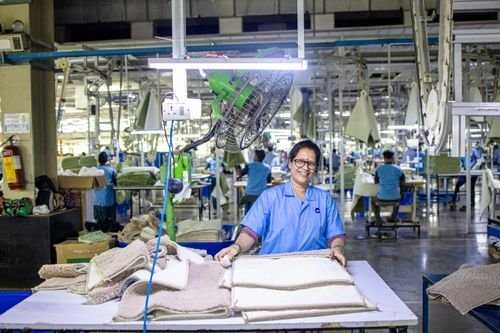
Scenario: A Korean-invested electronics components manufacturer has just received its IRC for a ready-built factory inside Yen Phong Industrial Park and its ERC in Bac Ninh, planning to bring 25 Korean experts to install the production line and hire 600 Vietnamese workers within six months. In this model, “labor” is not one checklist item but an entire program — and every tax and banking step must run in parallel to keep the production schedule.
Who issues the IRC and receives reports in Bac Ninh
Projects inside industrial parks receive their IRC from the Bac Ninh Industrial Parks Management Board, which also receives investment activity reports; projects outside the parks are handled by the investment registration office under the Bac Ninh Department of Finance (successor to the former Department of Planning and Investment after the early-2025 restructuring). The general framework: Law on Investment 143/2025/QH15 (effective 1 March 2026, replacing Law 61/2020/QH14) plus Decree 96/2026/ND-CP (issued 31 March 2026); Law on Enterprises 59/2020/QH14 (amended by Law 76/2025/QH15, effective 1 July 2025). All sectoral instruments below are in force as of 19 October 2026.
On tax: since 1 March 2025 under Decision 381/QD-BTC, the General Department of Taxation — provincial Tax Department model was replaced by Department of Taxation — regional tax sub-departments (20 nationwide); a Bac Ninh enterprise works with the regional tax sub-department for its area and the district-level tax team where the factory sits.
The 10 steps — through a manufacturing lens
1. Work permits for the 25 Korean experts — start in week one. Decree 219/2025/ND-CP (effective 7 August 2025, replacing Decrees 152/2020/ND-CP and 70/2023/ND-CP) is now the sole governing instrument. Article 3(3) relaxes expert criteria: a university degree or higher plus at least 2 years of relevant experience (previously 3 years); priority sectors need only a degree plus 1 year. Issuing authority: the Bac Ninh Department of Home Affairs. A helpful change: Decree 219 merges the foreign-labor demand approval into the permit process and shortens job posting — but dossiers still require legalized degrees, experience confirmations, criminal record checks and health certificates, so start at least 6–8 weeks before the experts planned arrival.
2. Social insurance for 600 workers — prepare before mass hiring. The Law on Social Insurance 41/2024/QH15 (effective 1 July 2025) makes participation compulsory upon signing labor contracts. Bac Ninh practice: first-time unit registration at the district-level social insurance agency where the factory sits (Yen Phong IP), then workforce increases reported by hiring wave. A mass-hiring manufacturer should agree the bulk-reporting format with the agency up front to avoid end-of-month backlogs.
3. Open the ICA before moving investment capital. Circular 38/2026/TT-NHNN (effective 18 August 2026, replacing the expired Circular 06/2019/TT-NHNN; the former “direct investment capital account (ICA)” is now the “foreign investment capital account in Vietnam (ICA)”): an FDI enterprise opens a foreign investment capital account in Vietnam (ICA) at a licensed bank; all contributions and profit remittances pass through it. For a manufacturing project, capital often arrives alongside imported machinery — accounting must clearly separate cash contributions (via ICA) from equipment import payments.
4. Contribute the full capital within 90 days. Article 47(2), Article 75(2) and Article 113(1) of the Law on Enterprises 59/2020/QH14: 90 days from the Enterprise Registration Certificate issuance; time for transporting and importing contributed assets and completing ownership-transfer procedures does not count toward the 90 days — a provision especially meaningful for a factory contributing an imported Korean production line. Missing the deadline: register a capital reduction to the actually contributed amount.
5. Register to use e-invoices. Decree 123/2020/ND-CP (detailed in Circular 78/2021/TT-BTC): mandatory since 1 July 2022; register with the directly managing tax authority and issue invoices only after acceptance. A factory invoicing sales to its parent or sister companies should register early to avoid blocking shipments.
6. File the business license tax declaration. Article 3(8) of Decree 139/2016/ND-CP (amended by Decree 22/2020/ND-CP): newly established organizations are exempt in the first year; the declaration is still due no later than 30 January of the following year (Article 10(1) of Decree 126/2020/ND-CP). From year two: above VND 10 billion of capital — VND 3 million/year; VND 10 billion or below — VND 2 million/year.
7. Register for electronic tax payment and get a digital signature. Electronic tax debit via a bank plus a public digital signature. A Yen Phong IP manufacturer contacts its directly managing tax team to complete the initial tax dossier (depreciation method, accounting form) as soon as the enterprise code exists.
8. Publish the enterprise registration contents. Article 32 of the Law on Enterprises 59/2020: public announcement on the National Enterprise Registration Portal, kept public for 30 days from publication; details in Article 73 of Decree 168/2025/ND-CP (replacing Decree 01/2021/ND-CP).
9. Make the seal and issue internal seal rules. Article 43 of the Law on Enterprises 59/2020: the enterprise decides the seal type, quantity, form and content; no seal-specimen notification since 1 January 2021. A factory with multiple workshops and warehouses needs internal rules stating where the seal is kept and who holds it.
10. Quarterly and annual investment activity reports. Article 47 of the Law on Investment 143/2025/QH15: report to the Bac Ninh Industrial Parks Management Board (the IRC issuer) and the local statistics office on executed capital, business results, labor, budget contributions and environment — in writing and via the National Investment Information System. For a factory, the “R&D investment and environmental protection” section needs real figures from HSE and accounting, not blanks.
Practical note: synchronize the hiring clock with the capital clock
Two clocks run in parallel that investors often let drift: (i) the 90-day capital contribution clock — money must arrive via the ICA; (ii) the work permit clock — Korean experts may only work legally with a permit in hand. Bac Ninh reality: many factories bring experts in on visa exemption and let them “work temporarily” while permits pend — an administrative labor violation that, when inspected, disrupts the entire line-installation schedule. The right sequence: start work permit dossiers as soon as the ERC exists, in parallel with opening the ICA and transferring capital.
Frequently asked questions
What must Korean experts satisfy for a work permit?
Under Article 3(3) of Decree 219/2025/ND-CP (effective 7 August 2025): a university degree or higher plus at least 2 years of relevant work experience; or a degree plus at least 1 year for priority sectors (science, technology, innovation, national digital transformation, and so on). Dossiers go to the Bac Ninh Department of Home Affairs and include the application letter, expert-status proof, criminal record check and health certificate — foreign-issued papers need legalization.
For a project inside Yen Phong IP, who issues the IRC?
The Bac Ninh Industrial Parks Management Board issues IRCs for projects inside industrial parks; projects outside the parks are handled by the investment registration office under the Bac Ninh Department of Finance. Quarterly and annual investment activity reports (Article 47 of the Law on Investment 143/2025/QH15) go to the authority that issued the IRC and the local statistics office.
Hiring 600 workers — how to register social insurance in time?
Register the unit for first-time social insurance participation at the district-level social insurance agency where the factory sits before signing labor contracts en masse (Law on Social Insurance 41/2024/QH15, effective 1 July 2025), then report workforce increases by hiring wave. Agree the bulk-reporting format with the agency in advance to avoid bottlenecks.
Contributing an imported production line: does import time count toward the 90 days?
No. Article 47(2), Article 75(2) and Article 113(1) of the Law on Enterprises 59/2020/QH14 expressly exclude time for transporting and importing contributed assets and completing administrative ownership-transfer procedures from the 90-day period. The company must still document the import progress and complete valuation and ownership transfer under Articles 35 and 36 of the Law on Enterprises 59/2020.
Related articles
- Actual Timelines at the Department of Natural Resources and Environment: Statutory Days vs Reality, and Where Delays Happen
- Actual Timelines at the Tax Department: Statutory Days vs Reality, and Where Delays Happen
- Actual Timelines at the Business Registration Office: Statutory Days vs Reality, and Where Delays Happen
- Actual Timelines at the Industrial Park Management Board: Statutory Days vs Reality, and Where Delays Happen
- Actual Timelines at the Department of Planning and Investment: Statutory Days vs Reality, and Where Delays Happen
This legal analysis has been verified against current Vietnamese regulations and cross-border FDI transaction practices by the attorneys at FLAT LAW FIRM.