
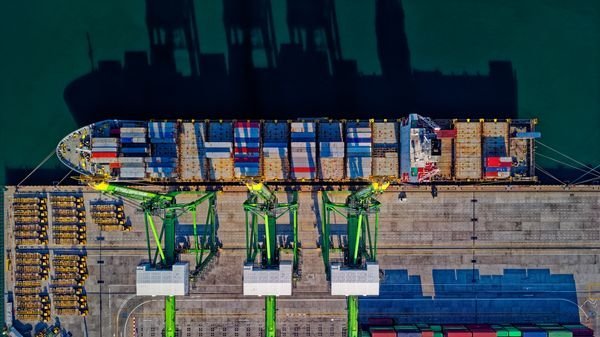
Scenario: a foreign-invested logistics and light-manufacturing LLC has just received its Investment Registration Certificate for a project inside the Quang Ninh Economic Zone (Dong Mai Industrial Park), followed by its Enterprise Registration Certificate. Economic-zone projects enjoy a distinct incentive regime — but incentives only work if claimed correctly — and seaport operations add customs and foreign-exchange layers. Map note: unlike the other four provinces in this series, Quang Ninh was not merged; it remains unchanged under Resolution 202/2025/QH15.
1. The economic-zone advantage: incentives recorded on the IRC
Projects inside the economic zone are licensed by the Quang Ninh Economic Zone Management Board as the investment registration agency, under Law No. 143/2025/QH15 on Investment (effective 1 March 2026, replacing Law No. 61/2020/QH14) and Decree No. 96/2026/ND-CP (dated 31 March 2026, effective 15 May 2026). Zone incentives — corporate income tax, import duty, land rent — are typically recorded on the IRC or the investment policy approval. Two disciplines from day one: first, verify each incentive’s conditions are actually met in operations (location, sector, scale); second, know the shield — Article 12 of Investment Law No. 143/2025/QH15 guarantees incentives when later legislation changes them, with the claim procedure in Decree No. 96/2026/ND-CP (written request to the investment registration agency with the incentive-bearing license). Incentives are a documented right, not an automatic gift.
2. Capital, foreign exchange and repatriating profits
Open the foreign investment capital account (ICA) under Circular No. 38/2026/TT-NHNN (effective 18 August 2026, fully replacing Circular No. 06/2019/TT-NHNN) — capital contributions, profit remittances and investment capital transfers all flow through it. Contributions must be completed within 90 days of the Enterprise Registration Certificate (Clause 2, Article 47 and Clause 2, Article 75 of Enterprise Law No. 59/2020/QH14). On profit repatriation, the standing rule: profits may be remitted abroad only after the enterprise has fulfilled its tax obligations for the fiscal year, through the ICA account with supporting documents (audited financial statements, tax finalization). Plan the repatriation calendar with the auditor early — year-end scrambles over missing tax-finalization papers are a classic, avoidable delay for zone exporters.
3. Customs and seaport operations
A zone project importing equipment or exporting through the seaport must register with the customs authority and set up electronic customs declaration before the first shipment. Imported goods forming fixed assets of an incentivized project are generally exempt from import duty, but exemption requires registering the duty-free goods list with customs in advance — goods cleared without registration rarely get the exemption retroactively. Align e-invoices (Article 15, Decree No. 123/2020/ND-CP — tax authority responds within 1 working day) with customs declarations from the first consignment; invoice-customs mismatches are a standard audit flag.
4. First tax duties, labor and periodic reporting
Tax registration follows the one-stop interlinked mechanism, but in practice the first tax dossier is due within 10 working days of the Enterprise Registration Certificate (Law No. 108/2025/QH15 on Tax Administration, effective 1 July 2026, replacing Law No. 38/2019/QH14): business license tax declaration, VAT method, accounting regime, depreciation method. Business license tax: Decree No. 139/2016/ND-CP (amended by Decree No. 22/2020/ND-CP) — first-year exemption, declaration still due before 30 January of the following year; over VND 10 billion: VND 3 million/year; VND 10 billion or less: VND 2 million/year. Buy a digital signature (Law No. 20/2023/QH15 on E-Transactions). On labor: declare workforce use within 30 days of commencing operations, report changes semi-annually (before 5 June) and annually (before 5 December) — Clause 2, Article 12 of Labor Code No. 45/2019/QH14, detailed in Article 4 of Decree No. 145/2020/ND-CP; foreign staff need work permits under Decree No. 219/2025/ND-CP (effective 7 August 2025), issued by the Department of Home Affairs; register employees for compulsory social insurance (Social Insurance Law No. 41/2024/QH15, effective 1 July 2025). On reporting: Article 47 of Investment Law No. 143/2025/QH15 — quarterly and annual reports to the investment registration agency (here, the Economic Zone Management Board) and the statistics office, in writing and via the National Investment Information System. On seals: Article 43 of Enterprise Law No. 59/2020/QH14 (amended by Law No. 76/2025/QH15) removed the seal-specimen notification duty.
Frequently asked questions
Does a company inside the economic zone automatically get tax incentives?
No. Incentives apply only when the project meets the statutory conditions (location, sector, scale) and the incentive is recorded on the IRC or approval. The enterprise must actively apply the incentive in tax filings and keep evidence of eligibility — the zone address alone grants nothing.
What is needed to remit profits abroad?
Profits may be remitted after the enterprise completes its tax obligations for the year, via the ICA account under Circular No. 38/2026/TT-NHNN, with supporting documents such as audited financial statements and the tax finalization. Coordinate the timeline with the auditor; missing finalization papers at year-end are the usual bottleneck.
We lease a warehouse outside the economic zone — does it affect incentives?
Potentially yes. Incentives attach to the zone location and the licensed project scope; activities outside the zone may fall outside the incentive perimeter. Check each incentive’s geographic condition before signing an off-zone lease, and consider whether the activity needs a separate location registration.
Importing machinery as fixed assets: is import duty exempt?
Goods imported to form fixed assets of an incentivized project are generally exempt from import duty under the export/import tax regime — but only with advance registration of the duty-free goods list with the customs authority and proof the goods serve the licensed project. Clear first, register later almost never works.

