
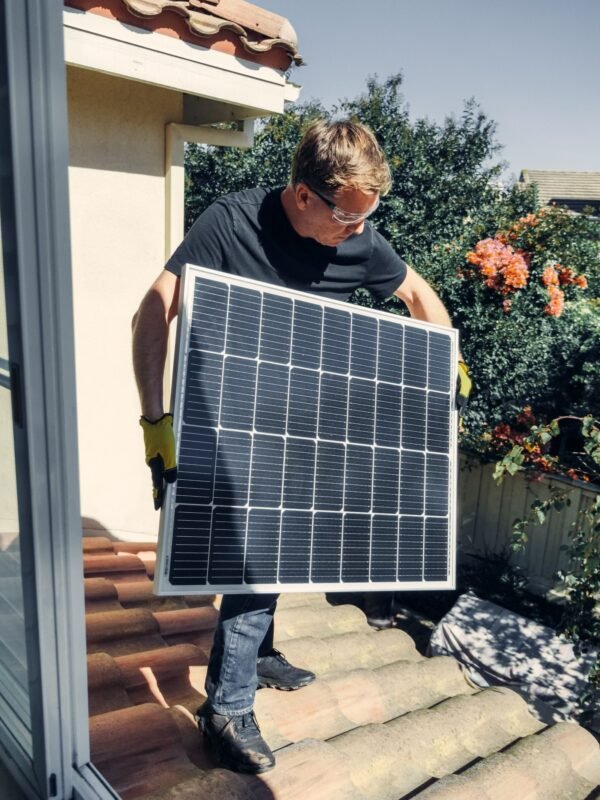
A factory roof is untapped energy real estate at most FDI plants in Vietnam, and the question asked most often when setting up a rooftop solar project is whether the surplus generated at weekends, when the plant is idle but the system still produces, can be sold to the grid. Since 2026 the answer has widened, but it remains a capped mechanism with technical conditions, not free power trading.
Self-generation for self-consumption is the core model
Rooftop solar on a factory operates in the self-generation, self-consumption model under Electricity Law 61/2024/QH15 and Decree 58/2025/ND-CP on renewable power development: the system is installed to serve the establishment’s own demand, connecting to the national grid at the existing connection point. The factory needs no power activity licence for the self-use part in statutory conditions, but must notify and coordinate technically with the power utility on installed capacity, protection equipment and prevention of unintended reverse feed.
Because the system is not an independent power plant, it carries no long-term power purchase agreement of the commercial project kind. The project’s core value is self-consumed power replacing grid purchases, while surplus power is handled under a separate limited mechanism, and investors should not build financial models assuming all surplus output can be sold like a ground-mounted solar farm.
Selling surplus power: the two-stage cap of 20 then 50 percent
Decree 58/2025/ND-CP originally allowed self-consumption rooftop solar to sell surplus power to the grid in a volume not exceeding 20 percent of installed capacity under prescribed conditions. Decree 243/2026/ND-CP, effective from 26 June 2026, raised that ceiling to 50 percent: from that date, surplus power sold to the grid can reach half of installed capacity, output generated beyond the cap is not recorded for payment, and the system must have technical means to limit feed-in.
The surplus purchase price and settlement mechanism follow power authority rules for each period, at a level well below the retail price the factory pays, matching the nature of surplus as a by-product of the self-consumption model. Accompanying technical conditions include two-way metering, feed-in power control equipment and compliance with the local power utility’s requirements during connection acceptance. A factory designing a project after 26 June 2026 should design the system and connection file on the 50 percent frame from the start.
Roof risks and accompanying legal duties
Installing a system on a factory roof raises issues beyond electricity: roof load and structure must be verified, changes to roof function can touch the factory’s construction and fire prevention files, and where the plant is leased, installation rights need written consent from the landlord or infrastructure investor for the remaining lease term. End-of-life panels and electronic equipment are waste to be managed under waste rules, including producer and importer responsibility for equipment.
For investment purposes, the rooftop system should be clearly recorded in the project file: capacity, system ownership where the roof is leased or a third party supplies on-site power, and the treatment mechanism when the factory lease ends. Third-party models that install and sell power on site to the factory are common, but their contracts must be examined closely on the power trading character, because selling electricity remains a conditional activity under electricity law.
Frequently Asked Questions
Does a factory rooftop solar installation need a power generation licence?
No power activity licence is needed for the self-generated, self-consumed part under Electricity Law 61/2024/QH15 and Decree 58/2025/ND-CP, because a rooftop system is not a commercial power plant selling electricity. In place of a licence, the factory must notify the power utility of the installed capacity and comply with connection technical and electrical safety requirements. Only where an operating model steps outside the self-consumption frame into commercial power selling do ordinary power activity conditions arise.
Above what capacity is a permit required?
The current frame sets no capacity threshold above which a generation licence becomes required for the self-consumption model. What changes with scale is the level of requirements at notification, technical coordination and acceptance: the larger the system, the stricter the requirements on protection equipment, feed-in power control and anti-reverse-feed safeguards. A factory should obtain the local power utility’s written confirmation of the requirements applying to its planned capacity before finalising the design.
Can surplus power be sold to the grid?
The surplus purchase price is set by the power authority for each period, at a level below the retail price the factory pays for grid power, because surplus is a by-product of the self-consumption model rather than output of a commercial power plant with a long-term purchase agreement. For a financial model, investors should obtain written confirmation from the local power utility of the price and settlement mechanism applying at the time of connection.
What is the grid connection procedure?
The connection procedure comprises: notifying and providing system information to the local power utility; survey and agreement on the connection point and technical requirements; installing the system with two-way metering and feed-in limiting equipment so surplus feed stays within the saleable cap; technical connection acceptance and signing the surplus-related agreement where power is fed to the grid. Detailed sequence follows the guidance of the power utility in the factory’s locality.
Bottom line for factories installing rooftop solar
Rooftop solar for Vietnamese factories is a self-consumption model with limited surplus sales: a 50 percent of installed capacity ceiling under the frame from 26 June 2026. System design, connection files and financial models must all be built on that frame, together with roof verification and the factory owner’s consent where the plant is leased.
Related articles
- TRC vs Visa-Only: What Changes for Buyers?
- Only a Tourist Visa: Can You Buy a House in Vietnam?
- Social Housing: Can Foreigners Buy? (Answer and Exceptions)
- Property Auctions in Vietnam: Can Foreigners Join?
- Fake Pink Books: How to Detect Them When Buying
This legal analysis has been verified against current Vietnamese regulations and cross-border FDI transaction practices by the attorneys at FLAT LAW FIRM.

