
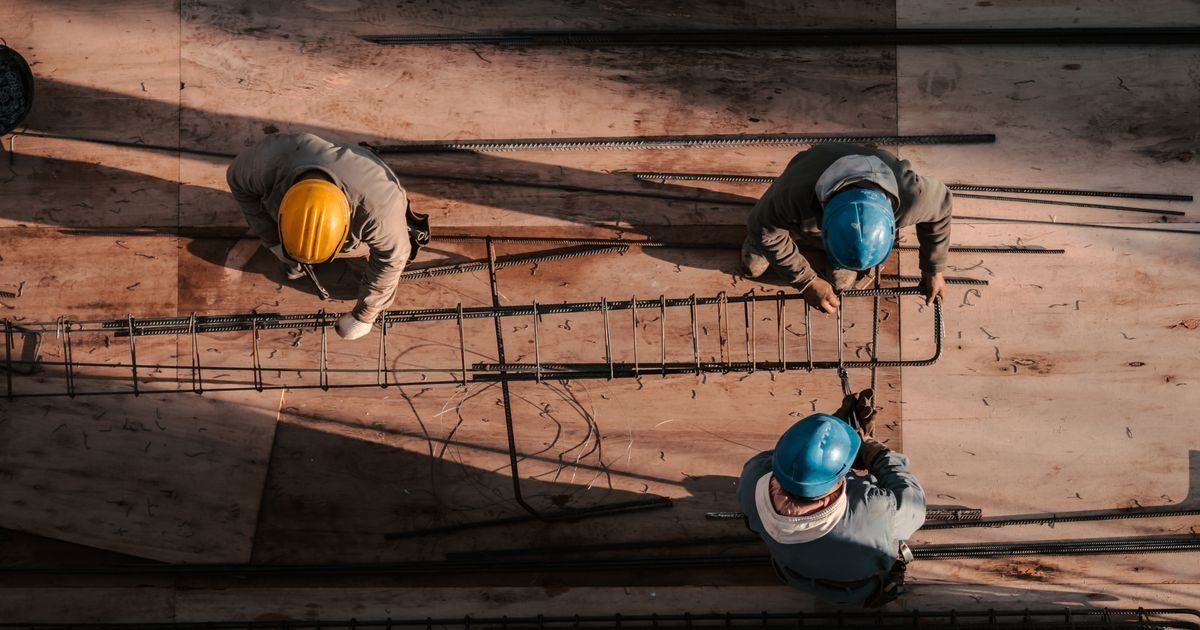
EPC disputes with Chinese contractors are among the costliest risks facing project owners in Vietnam today: Chinese EPC contractors win a growing share of industrial, energy and infrastructure projects, yet when a project slips, overruns or suffers design defects, the resulting dispute often lasts years and costs multiples of the original contingency. This article analyses EPC disputes through a Vietnam–China lens — a 7-axis legal comparison, two anonymised practice scenarios, and an action checklist for employers — from contract drafting to the day a dispute actually breaks out.
Contents
- 1. Context: why EPC disputes with Chinese contractors deserve special attention
- 2. Seven-axis Vietnam–China comparison at a glance
- 3. Axis-by-axis analysis
- 4. Two anonymised practice scenarios
- 5. Practical lessons for employers
- 6. Frequently asked questions
- 7. Need counsel fluent in both systems?
1. Context: why EPC disputes with Chinese contractors deserve special attention
An EPC (Engineering – Procurement – Construction) contract is the classic "turnkey" model: a single contractor takes responsibility for design, procurement of materials and equipment, construction, testing, acceptance and handover to the employer. Vietnamese law defines the model expressly at Article 6.1(g) of Decree 210/2026/ND-CP (in force since 1 July 2026, replacing Decrees 37/2015/ND-CP and 50/2021/ND-CP), and reserves it for complex projects with high technical and technological requirements demanding tight integration from design through commissioning and technology transfer.
In practice, Chinese contractors hold a significant share of Vietnam's industrial EPC market — power plants, manufacturing facilities, industrial-park infrastructure. Their edge is usually competitive pricing, strong equipment and manpower mobilisation, and experience on similar projects in China and other developing markets. But that edge is also the seed of disputes: bids are priced on Chinese-market cost and schedule assumptions, while execution in Vietnam is governed by an entirely different legal system, administrative procedures and site conditions.
Three features make EPC disputes with Chinese contractors harder than ordinary EPC disputes:
- The legal gap: Chinese contractors reason in PRC-law logic (e.g. liquidated damages may be reduced by courts; independent guarantees operate on a "pay on demand" basis), while the project is governed by Vietnam's Construction Law 135/2025, Decree 210/2026 and Civil Code.
- Language and evidence barriers: EPC contracts are typically bilingual (Vietnamese–Chinese or Vietnamese–English); interpreting clauses, gathering site evidence and commissioning technical expert assessments all become harder across languages.
- Cross-border enforcement: the contractor's assets may sit in both Vietnam and China; enforcement strategy must be designed into the dispute-resolution clause — not improvised after winning.
This article compares the two legal frameworks across seven axes, draws lessons from practice, and offers actionable recommendations. Note: this is general legal information, not advice on any specific matter; the scenarios are anonymised composites.
2. Seven-axis Vietnam–China comparison at a glance
| Axis | Vietnam | China | What it means for employers |
|---|---|---|---|
| 1. Legal framework for EPC contracts | Construction Law 135/2025/QH15 (Art. 86 on rewards/penalties); Decree 210/2026/ND-CP defines EPC contracts at Art. 6.1(g); Decision 1040/QD-BXD publishes contract models (Annex VII = EPC model) | PRC Civil Code Arts. 788–807 (construction project contracts) + SPC Interpretation (I) (Fa Shi [2020] No. 25, effective 01/01/2021) | Vietnam has construction-specific instruments; China governs within the Civil Code plus interpretations. Both recognise the EPC contractor's turnkey responsibility, but handle void contracts differently |
| 2. Foreign contractor licensing | MANDATORY construction activity permit (Art. 42(1), Decree 212/2026/ND-CP; Decree 175/2024 expired 1 July 2026); conditions: bid award + JV with or use of Vietnamese subcontractors (Art. 43) | 资质 (qualification grade) system under the Construction Enterprise Qualification Regulations; contracts signed without proper 资质 may be declared void | The "standing" risk: in Vietnam, a Chinese contractor working without a permit faces administrative sanctions and contract-validity risk; in China, lacking 资质 is a ground for voidness — more severe |
| 3. Design-risk allocation | The EPC contractor bears turnkey responsibility for design–procurement–construction–acceptance–handover (Art. 6.1(g), Decree 210/2026); design defects preventing acceptance are the contractor's liability | PRC Civil Code Art. 801: contractor liable for project quality; Chinese practice likewise places design risk on the EPC contractor | A major point of convergence: both systems put design risk on the EPC contractor. Disputes are rarely about "who bears it" but about extent and causation |
| 4. Payment, advance payment, guarantees | Advance payment + bank advance-payment guarantee is standard; late-payment interest: as agreed, otherwise at the overdue rate published by the commercial bank where the contractor holds its payment account (Art. 28(5), Decree 210/2026); private contracts: interest as agreed, otherwise the Civil Code default (10% p.a. absent agreement) | Similar 预付款保函 practice; independent guarantees (独立保函) per the 2016 SPC Interpretation: the bank must pay against complying documents and may not invoke underlying-contract disputes (except clear fraud) | The hottest dispute point: calling the advance-payment guarantee when the contractor delays or walks away. Employers must understand guarantee "independence" — the bank is not an arbitrator of right and wrong |
| 5. Delay: penalties and compensation | Public investment/PPP projects: penalty ≤ 12% of the breached portion (Art. 86(3), Construction Law 135/2025); private commercial contracts: penalty ≤ 8% of the breached obligation (Art. 301(2), Commercial Law 2005), unless otherwise provided | 违约金 as agreed; under PRC Civil Code Art. 585, if "excessively higher than losses", courts/arbitral tribunals may REDUCE it at the breaching party's request | The core difference: Vietnam imposes hard caps by funding/contract type; China has no hard cap but allows downward adjustment to actual loss. Chinese contractors are often "shocked" by hard caps in Vietnam — and vice versa |
| 6. Acceptance, quality, warranty | Acceptance under Decree 207/2026/ND-CP (replacing Decree 06/2021 from 1 July 2026); minimum warranty 12–24 months by project grade | 竣工验收 under applicable rules; warranty (保修) under Art. 40 of the Quality Management Regulations: waterproofing 5 years; heating/cooling 2 seasons; electrical, plumbing, equipment installation and finishing 2 years | China sets itemised warranty periods; Vietnam sets them by project grade. EPC warranty disputes typically involve latent design defects surfacing after handover |
| 7. Dispute resolution and enforcement | Negotiation → mediation → arbitration/courts (Art. 86(5), Construction Law 135/2025; Art. 17, Decree 210/2026); VIAC is the leading institution; Vietnam is a New York Convention member (reciprocity reservation) | Detailed SPC interpretations; CIETAC and BAC are the leading institutions; China is a New York Convention member (reciprocity and commercial reservations) | Both states recognise foreign awards in principle. But enforcing against assets in China needs strategy from day one: seat, governing law and enforcement mechanics |
3. Axis-by-axis analysis
3.1. Legal framework for EPC contracts
Vietnam's position. Vietnam regulates EPC contracts through construction-specific instruments: the Construction Law 135/2025/QH15 (Article 86 on contractual rewards, penalties and dispute resolution; in force since 1 July 2026, replacing the Construction Law 50/2014), Decree 210/2026/ND-CP detailing construction contracts (in force 1 July 2026, replacing Decrees 37/2015/ND-CP and 50/2021/ND-CP), and Decision 1040/QD-BXD publishing seven model construction contracts (Annex VII = the EPC model; applicable from 1 July 2026, replacing the models at Circular 02/2023/TT-BXD). Notably, Decree 210/2026 not only defines the EPC contract (Art. 6.1(g)) but also details construction-contract dispute resolution in Article 17 — the choice of dispute-resolution method under Article 86(5) of the Construction Law is for the parties to agree in the contract.
An important transition: Construction Law 135/2025/QH15 has been in force since 1 July 2026, replacing the Construction Law 50/2014. As announced, it abolishes post-basic-design appraisal procedures, assigns design-control responsibility to the employer, and expands permit exemptions. For EPC contracts — where design is the contractor's core obligation — this shift in design-control responsibility rebalances risk between employer and contractor. For EPC contracts signed before 1 July 2026 and still in performance, parties should review the change-in-law clause; contracts signed from mid-2026 onward should carry a clear one.
China's position. China has no standalone construction-contract statute; the field is governed within the 《中华人民共和国民法典》(PRC Civil Code, effective 01/01/2021) at Articles 788–807 (construction project contracts), supplemented by the Supreme People's Court's 司法解释 (judicial interpretations). The most important is the 《最高人民法院关于审理建设工程施工合同纠纷案件适用法律问题的解释(一)》(Interpretation (I) on the Application of Law in Construction Contract Disputes, Fa Shi [2020] No. 25, effective 01/01/2021) — detailed adjudication guidance on void contracts, payment under void contracts, quality, acceptance and party liability.
Practical implication. Chinese contractors enter Vietnam with a PRC-law mental map; Vietnamese employers rarely understand the other side's logic either. A telling example: where a contract is declared void, Article 793 of the PRC Civil Code allows payment "by reference to the contract price" for works duly accepted — a pragmatic mechanism with no direct Vietnamese equivalent. Conversely, Vietnam's hard penalty caps (12%/8%) are alien to Chinese contractors accustomed to flexible, loss-based adjustment at home.
3.2. Foreign contractor licensing: Vietnam's permit vs China's 资质
Vietnam's position. This is where many Chinese contractors are most complacent. Under Article 42(1) of Decree 212/2026/ND-CP (on construction activity capacity conditions; in force since 1 July 2026), a foreign contractor may only carry out construction activities in Vietnam after obtaining a construction activity permit from the state construction authority. (Decree 175/2024/ND-CP, which previously governed this regime at Articles 113–114, expired on 1 July 2026 and was replaced by Decree 217/2026/ND-CP; the foreign-contractor provisions moved to Decree 212/2026/ND-CP.) Article 43 imposes two conditions: (1) a winning-bid or contractor-selection decision; and (2) a joint venture with a Vietnamese contractor or engagement of Vietnamese subcontractors — unless no domestic contractor is capable of any part of the package — with a clear allocation of scope, volume and value.
The consequence: an EPC contract signed with a Chinese contractor lacking the permit carries serious legal risk — from administrative penalties to validity challenges once a dispute erupts. Employers must verify standing before signing, not after advancing funds.
China's position. China manages through the 资质 (qualification grade) system under the 《建筑业企业资质管理规定》: contractors must hold the 资质等级 matching the project scale and type. The systemic difference: in China, a construction contract signed by a contractor without proper 资质 may be declared void by courts — a far heavier consequence than an administrative violation. This is why Chinese contractors are highly sensitive to "standing" issues, yet misapply the concern in Vietnam: they worry about their 资质 back home while underweighting the Vietnamese activity permit.
Lesson: make the construction activity permit a condition precedent to advance payment and mobilisation in the tender documents and the EPC contract, and require the contractor to maintain it throughout performance.
3.3. Design-risk allocation: the EPC contractor's turnkey responsibility
A welcome convergence. Both systems agree: in an EPC contract, the contractor bears turnkey responsibility from design to handover. Vietnam expresses it in the EPC definition (Art. 6.1(g), Decree 210/2026): performance "from design, procurement of materials and equipment to construction, testing, acceptance and handover". China expresses it in PRC Civil Code Art. 801 on the contractor's quality liability and the established principle that the EPC contractor bears design risk.
Real disputes are not about "who bears it" but about three questions:
- The boundary between "design defect" and "employer-driven change": Chinese contractors often argue that repeated requirement changes by the Vietnamese employer (especially where the employer never froze the functional brief) are the root cause of delay and cost overrun; employers counter that adjustments fall within turnkey responsibility. A good EPC contract must define "variation" precisely and require written variation orders.
- Applicable design standards: Chinese GB standards or Vietnamese TCVN? Many acceptance disputes trace to designs meeting GB but failing Vietnamese acceptance codes. The contract must designate the governing standards hierarchy and a mechanism for resolving conflicts between the two systems.
- Liability for sub-contracted design: the EPC contractor cannot pass design blame to its design sub-contractor vis-à-vis the employer — liability is turnkey. Both legal systems agree on this point.
3.4. Payment, advance payment and bank guarantees
Payment is the most common trigger of EPC disputes. The typical structure: an advance payment (often 10–20% of contract value) backed by an advance payment guarantee from a bank; milestone- or progress-based payments; and a retention held until the end of the warranty period.
Vietnam's position. Article 28(5) of Decree 210/2026/ND-CP provides: late-payment interest is as agreed in the contract; absent agreement, it is determined by the overdue rate published by the commercial bank where the contractor holds its payment account. For private contracts, late-payment interest is as agreed; absent agreement, the Civil Code applies (Arts. 357, 468) — 10% per annum on the overdue sum where no rate was agreed. In practice, many private EPC contracts leave the late-payment interest clause blank, only to discover at dispute stage that there is "no financial sanction" for employer payment delays — while the contractor faces heavy delay penalties. This asymmetry breeds disputes.
China's position and the independent guarantee. The legal point Vietnamese employers most often misunderstand is the nature of the independent guarantee (独立保函, on-demand guarantee). Under the 《最高人民法院关于审理独立保函纠纷案件若干问题的规定》(SPC Provisions on Independent Guarantee Disputes, Fa Shi [2016] No. 24, effective 01/12/2016), an independent guarantee is independent of the underlying contract: upon a complying demand with conforming documents, the guarantor bank must pay and may not invoke disputes under the EPC contract to refuse — except in cases of clear, fully-evidenced fraud.
The practical consequences for employers: (1) when calling an advance-payment or performance guarantee after a Chinese contractor's breach, ensure the demand complies with every letter of the guarantee text and is backed by complete breach evidence — the bank is not an adjudicator of the merits; (2) where the employer is the party asked to issue a guarantee (less common), limit the scope of any independent guarantee and negotiate an accessory guarantee where bargaining power allows.
Foreign contractor tax — the payment blind spot. Chinese contractors working in Vietnam are subject to foreign contractor tax: VAT and CIT levied on turnover, withheld at source, declared and paid by the Vietnamese party (usually the employer) on the contractor's behalf. Disputes typically centre on whether the contract price is "inclusive" or "exclusive" of contractor tax, and who bears the cost when tax policy changes. EPC contracts should address gross-up mechanics and tax-policy-change risk allocation expressly. (Specific rates depend on work type and timing — confirm with tax counsel per contract; this article states no figures to avoid misapplication.)
3.5. Delay: liquidated damages, compensation, force majeure
Vietnam's position: capped penalties. Article 86(3) of the Construction Law 135/2025/QH15 (in force since 1 July 2026, replacing the Construction Law 2014): for construction works under public investment and PPP projects, contractual penalties must not exceed 12% of the value of the breached portion; beyond agreed penalties, the breaching party must also compensate damages. For private projects, the penalty is as agreed — but where the contract falls under the Commercial Law (merchants in commercial activity), Article 301(2) of the Commercial Law 2005 caps penalties at 8% of the breached obligation value, unless another law provides otherwise. In litigated construction disputes with commercial elements, courts and tribunals must determine the governing law case by case — a complex legal question parties routinely overlook at drafting stage.
China's position: loss-calibrated penalties. Under PRC Civil Code Art. 585, parties may agree 违约金 (liquidated damages); but where the amount is "excessively higher than the losses caused" (过分高于造成的损失), the breaching party may ask the court or tribunal to reduce it appropriately. There is no hard 8%/12% cap as in Vietnam — instead a flexible, actual-loss-based adjustment mechanism. Meanwhile Art. 584 confines recoverable damages to losses the breaching party "foresaw or ought to have foreseen" at contracting (the foreseeability principle familiar across jurisdictions).
Practical implication — a two-way "legal culture shock":
- Chinese contractors in Vietnam are often shocked by hard caps: at home they can seek reduction by proving actual losses are lower; in Vietnam, once a penalty within the statutory cap is agreed, room for downward adjustment is far narrower.
- Conversely, Vietnamese employers applying Vietnamese logic to penalty clauses governed by Chinese law may be disappointed when a Chinese court substantially reduces a penalty they considered "clearly agreed".
Force majeure and hardship. Both systems excuse liability for force majeure: Vietnam — Civil Code Art. 156.3 (definition) and Art. 420 (hardship); China — PRC Civil Code Art. 180 (force majeure) and Art. 533 (情势变更, change of circumstances). In EPC disputes, Chinese contractors frequently invoke material price volatility (steel, equipment) or pandemic/border-closure policies as grounds for extension and price adjustment. The drafting lesson: the EPC contract should list which events count as force majeure, set notice mechanics (deadlines, form, evidence) and — most importantly — separate "extension of time" from "price adjustment": an extension does not imply a price increase.
3.6. Acceptance, quality and warranty
Vietnam's position. Acceptance follows Decree 207/2026/ND-CP on construction quality management, construction and maintenance (in force since 1 July 2026, replacing Decree 06/2021/ND-CP). Minimum warranty periods are 12–24 months by project grade: not less than 24 months for special-grade and grade-I works using public investment capital, not less than 12 months for the remaining grades. In EPC projects, the acceptance bottleneck is rarely rough construction quality but testing, commissioning and systems integration — precisely the EPC contractor's turnkey scope.
China's position. Art. 40 of the 《建设工程质量管理条例》(Regulations on Quality Management of Construction Projects) sets itemised warranty (保修) periods: waterproofing (roofs, wet areas, exterior walls) 5 years; heating/cooling systems 2 heating/cooling seasons; electrical wiring, plumbing, equipment installation and finishing works 2 years; foundation and structural works for the design service life. China's 竣工验收 (completion acceptance) is likewise documentation-intensive.
Practical implication. EPC warranty disputes typically erupt 1–3 years after handover, when latent design defects (e.g. systems not reaching design capacity, waterproofing failures from design solutions) surface. By then the Chinese contractor may have demobilised entirely from Vietnam, guarantee accounts may have expired, and cross-border technical evidence-gathering is expensive. Lessons: (1) hold a retention large enough through the warranty period; (2) spell out post-handover warranty duties — defect notification, cure periods, and the employer's self-cure and set-off rights; (3) for equipment sourced from China, require back-to-back manufacturer warranties.
3.7. Dispute resolution and cross-border enforcement
Domestic mechanisms. Article 86(5) of the Construction Law 135/2025 and Article 17 of Decree 210/2026 provide that the choice of construction-contract dispute-resolution method (negotiation, mediation, an international-practice dispute board, arbitration or courts) is for the parties to agree in the contract. In practice, arbitration is preferred over courts for EPC disputes with Chinese contractors — neutrality, confidentiality and cross-border enforceability. In Vietnam, the Vietnam International Arbitration Centre (VIAC) is the most-selected institution; in China, CIETAC and BAC (Beijing) lead.
Cross-border enforcement — the decisive point. Both Vietnam (acceded 1995, reciprocity reservation) and China (acceded 1987, reciprocity and commercial reservations) are parties to the 1958 New York Convention on the Recognition and Enforcement of Foreign Arbitral Awards. In principle, an award rendered in one member state is recognisable and enforceable in the other. But "in principle" is not "automatic": recognition procedures in each jurisdiction have their own documentary, translation and filing requirements, and local court practice varies — especially when enforcing against a contractor's assets in China.
Four decisions to lock in at drafting stage, not at dispute stage:
- Seat of arbitration: Vietnam (evidence convenience, enforcement in Vietnam), China (leverage where enforcement targets Chinese assets), or a third seat such as Singapore/SIAC (neutrality acceptable to both sides). No universally correct answer — it depends on where enforceable assets sit and the bargaining balance.
- Governing law: for a project built in Vietnam, Vietnamese law is the natural default and hard to avoid (especially licensing, acceptance, safety); but commercial issues (payment, guarantees issued by Chinese banks) may be governed differently — delineate expressly.
- Language of arbitration: English is usually the meeting point; a Vietnamese–Chinese bilingual arbitration multiplies translation cost and interpretation risk. Designate one official language of the proceedings.
- Multi-tier mechanisms: senior-level negotiation → mediation or a Dispute Adjudication Board (DAB/DRB) → arbitration. For EPC projects, a DAB resolves technical disputes as they arise during construction instead of letting them accumulate into a "mega-case" at the end.
4. Two anonymised practice scenarios
Note: the scenarios below are composites drawn from practice, with all identifying details (company names, tax codes, specific locations) removed. They illustrate lessons, not any real case.
Scenario 1: A 14-month delay — who pays for the "unfrozen design"?
A Vietnamese employer signed a lump-sum EPC contract with a Chinese contractor for an industrial plant: 20-month schedule. In reality, the employer revised the functional requirements six times in the first eight months (by email and meeting minutes, with no formal contract amendments); the contractor sent three extension-of-time requests that received no written reply; the project finished 14 months late.
At dispute, each side had its theory: the employer claimed delay liquidated damages up to the contractual cap; the contractor blamed employer-caused delay (requirement changes, late handover of certain fronts) and claimed prolongation costs plus a price adjustment for steel price volatility.
Lessons:
- Every change in writing, priced before execution. Emails and meeting minutes are no substitute for signed variation orders stating time and cost impact. This is the single most common failure in Vietnamese EPC disputes.
- Silence on extension requests is dangerous. When a contractor's extension request follows contractual procedure and the employer never replies in writing, it becomes very hard to defeat the extension claim entirely later — even if the grounds were only partly justified.
- Separate time from money. An extension of time does not imply a price adjustment; the contract should set independent conditions for each, especially for material price movements.
Scenario 2: Calling the advance payment guarantee — when the bank "does not judge the merits"
A Chinese contractor received a 15% advance under an EPC contract, backed by an advance payment guarantee issued by a Chinese bank as an independent guarantee (独立保函). After ten months the contractor unilaterally suspended works, citing two overdue milestone payments. The employer considered the payment delays justified — the corresponding milestones were not achieved — and demanded full payment under the advance guarantee.
The bank, having verified the demand's documentary compliance with the guarantee text, paid the employer without examining the underlying quantity dispute. The contractor then sued, alleging abusive calling (calling the guarantee while the employer was itself in payment default) amounting to guarantee fraud.
Lessons:
- Understand independence before calling. The bank checks documents only; it does not adjudicate the underlying contract. Calling on a thin file (incomplete breach evidence, or where the employer is itself in payment breach) invites a fraud allegation and counterclaim.
- Build the breach file first. Before calling: contractual breach notices in proper form, signed site records, an independent supervision consultant's opinion, and a quantified call amount tied to loss/unrecovered advance.
- Negotiate the guarantee type upfront. With bargaining power, push for an accessory guarantee (the bank may invoke underlying-contract defences) instead of a pure on-demand instrument — or at least circumscribe the call conditions in the guarantee text.
5. Practical lessons for employers
Drawn from the seven axes and the scenarios above, here are ten action lessons — in project-chronological order:
Before signing:
- Vet the contractor as a condition precedent. Require the Chinese contractor to evidence: the Vietnamese construction activity permit (or a committed licensing timeline), PRC 资质, three years of financials, and a track record of comparable completed EPC projects. Make maintaining the permit a contractual obligation with clear sanctions.
- Lock the technical standards and contract language. State expressly where Vietnamese TCVN/codes govern, where Chinese GB standards are acceptable, and which prevails on conflict. For bilingual contracts, designate one prevailing language for interpretation (usually Vietnamese for Vietnam-based projects, or English for international arbitration).
- Design a two-tier penalty regime. Tier 1: per-day/per-week delay damages with a cap consistent with applicable law (mind the 12% cap for public investment/PPP projects under Article 86(3) of the Construction Law 135/2025 and the Commercial Law's 8% cap for private commercial contracts). Tier 2: compensation for actual losses exceeding the penalty — but with a workable loss-proof mechanism, not paper-only damages clauses.
- Detail the variation and claims machinery. Every variation by signed amendment, priced and time-assessed before execution; every claim (extension, price) subject to notice deadlines (e.g. 28 days per FIDIC practice) — miss the deadline, lose the right. The cheapest clause with the highest defensive value.
During performance:
- Administer documents like the project itself. Every instruction, approval and notice in writing, in the contractual form. Maintain bilingual site diaries and periodic quantity-acceptance records signed by both sides — they will be the decisive evidence if disputes arise.
- Trigger DAB/mediation early; don't let disputes accumulate. Push technical disagreements on quantity, quality or schedule to the Dispute Adjudication Board or mediation promptly instead of "settling everything at the end". EPC disputes left to fester for 2–3 years typically multiply far beyond their original value.
- Protect cash flow both ways. Employers: don't withhold certified milestone payments as "leverage" — it is a double-edged sword, handing the contractor grounds to suspend and claim. Slow contractors: apply penalties and set-offs by the book instead of informally withholding money without basis.
At dispute stage:
- Complete the file before deploying the guarantee "weapon". As Scenario 2 shows: call only with complete breach evidence and a quantified amount; take advice on fraud-allegation risk under independent-guarantee law.
- Assess two enforcement scenarios in parallel. The moment litigation/arbitration is decided, simultaneously map: where the contractor's assets sit (Vietnam/China/third country), where the expected award will be enforced, and what interim measures are needed to preserve assets. Enforcement strategy decides half the case's value.
- Weigh a commercial solution before fighting to the end. International EPC arbitration runs 2–4 years with enormous counsel and technical-expert costs. Often, a controlled contract adjustment (price, schedule, scope) delivers more economic value than a winning award that cannot be enforced.
6. Frequently asked questions
1. Does a Chinese EPC contractor need a permit to work in Vietnam?
Yes. Under Article 42(1) of Decree 212/2026/ND-CP (in force since 1 July 2026), a foreign contractor may only carry out construction activities in Vietnam after obtaining a construction activity permit. (Decree 175/2024/ND-CP, which previously governed this regime at Articles 113–114, expired on 1 July 2026 and was replaced by Decree 217/2026/ND-CP; the foreign-contractor provisions moved to Decree 212/2026/ND-CP.) Article 43 requires a winning-bid/selection decision and a joint venture with — or use of subcontractors from — Vietnam (unless no domestic contractor can perform any part of the package). Employers should make the permit a condition precedent to advance payment and mobilisation.
2. What is the cap on delay penalties in an EPC contract with a Chinese contractor?
It depends on funding and contract type. For construction works under public investment and PPP projects, Article 86(3) of the Construction Law 135/2025/QH15 (in force since 1 July 2026) caps penalties at 12% of the breached portion's value. For private projects, the cap is agreed — but under the Commercial Law, Article 301(2) of the Commercial Law 2005 caps penalties at 8% of the breached obligation's value unless another law provides otherwise. Note: Construction Law 135/2025 has been in force since 1 July 2026, replacing the Construction Law 2014.
3. Can the employer call the advance payment guarantee when the contractor walks off site?
It depends on the guarantee type and the evidence file. Under an independent guarantee (独立保函), the bank must pay against complying documents without adjudicating the underlying EPC dispute (per the PRC Supreme People's Court's 2016 Interpretation No. 24). Call only with a clear contractual basis and complete breach evidence; calling while the employer is itself in payment default risks a fraud allegation and counterclaim.
4. Where should EPC disputes be arbitrated — Vietnam, China or a third country?
There is no universal answer. Vietnam-seated arbitration (e.g. VIAC) suits evidence and enforcement in Vietnam; China-seated arbitration (e.g. CIETAC) helps where enforcement targets Chinese assets; a neutral third seat (e.g. SIAC Singapore) offers neutrality. Both Vietnam and China are New York Convention members, so foreign awards are in principle recognisable in both — but the enforcement strategy must be assessed case by case on the contractor's actual asset footprint.
5. What to do when the Chinese contractor invokes "material price volatility" to demand a lump-sum price increase?
Check the contract first: a lump-sum EPC contract places price-volatility risk on the contractor unless it contains a price-adjustment clause or an operative force majeure/hardship mechanism. Verify: (a) whether a change-in-law/price-adjustment clause exists; (b) whether the volatility meets the hardship threshold under Civil Code Art. 420; (c) whether the contractor gave timely notice and proved the impact. An extension of time does not imply a price increase — handle the two claims independently.
7. Need counsel fluent in both systems?
An EPC dispute with a Chinese contractor is never just a construction-contract dispute — it is a compound problem of Vietnamese construction law, Chinese legal logic, engineering, finance and guarantees, and cross-border arbitration. The costliest mistakes are usually made not at the hearing, but in the clauses drafted — or left blank — on signing day.
FLAT Law Firm's China Desk supports employers across the full EPC lifecycle: contractor vetting, drafting and negotiating bilingual EPC contracts, managing claims during construction, and representing clients in domestic and international arbitration. Contact our hotline at 0988424851 for advice on your specific project.
Language versions
References
- Construction Law No. 135/2025/QH15 (Art. 86(3) — contractual rewards/penalties; in force since 01/07/2026, replacing Construction Law No. 50/2014/QH13).
- Decree No. 210/2026/ND-CP on construction contracts (in force 01/07/2026, replacing Decrees 37/2015/ND-CP and 50/2021/ND-CP); Decision No. 1040/QD-BXD publishing seven model construction contracts (Annex VII = EPC model; applicable from 01/07/2026, replacing models at Circular 02/2023/TT-BXD).
- Decree No. 212/2026/ND-CP (Arts. 42(1), 43 — foreign contractor activity permits); Decree No. 217/2026/ND-CP replacing Decree No. 175/2024/ND-CP (in force 01/07/2026); Decree No. 207/2026/ND-CP (quality management, acceptance, warranty; in force 01/07/2026, replacing Decree No. 06/2021/ND-CP).
- Commercial Law No. 36/2005/QH11 (Art. 301); Civil Code No. 91/2015/QH13 (Arts. 156, 357, 418, 420, 468); Law on Commercial Arbitration No. 54/2010/QH12.
- 《中华人民共和国民法典》(PRC Civil Code, effective 01/01/2021), Arts. 180, 532–533, 584–585, 788–807.
- 《最高人民法院关于审理建设工程施工合同纠纷案件适用法律问题的解释(一)》, 法释〔2020〕25号 (effective 01/01/2021).
- 《最高人民法院关于审理独立保函纠纷案件若干问题的规定》, 法释〔2016〕24号 (effective 01/12/2016).
- 《建筑业企业资质管理规定》(Construction Enterprise Qualification Regulations); 《建设工程质量管理条例》(Quality Management Regulations), Art. 40.
- 1958 New York Convention (Vietnam acceded 1995; China acceded 1987).
—