
Anonymity note: All company names, place names and identifying details in this article have been changed. The legal analysis and lessons retain their full reference value.
Contents
- 1. Background (anonymized)
- 2. The legal issues
- 3. Solution options
- 4. Outcome
- 5. Lessons learned
- 6. Prevention checklist from this case
- 7. Language versions
- 8. References
1. Background (anonymized)
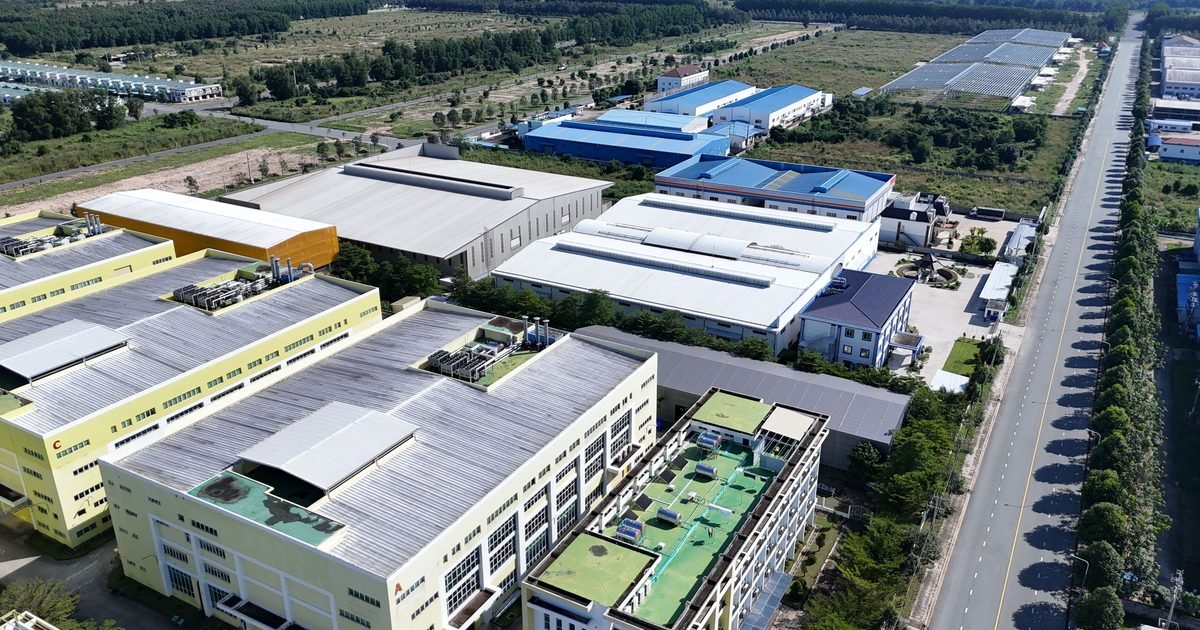
Company X — a Singapore-invested manufacturer of electronic components — decided to expand into Vietnam with a registered investment capital of USD 20 million. The plan: lease 3 hectares in an industrial cluster in a southern province, build a factory, hire 400 workers, and export 90% of output.
X followed a sequence many investors still use:
- Signed an MOU with the cluster infrastructure developer and paid a deposit to hold the land.
- Signed the land lease for 40 years, prepaying part of the rent.
- Filed for the Investment Registration Certificate (IRC) with the investment registration authority.
At step 3, the dossier stalled: the authority issued a written request for explanation of the project site's conformity with planning. The reason: the leased land sat inside an industrial cluster whose detailed plan only permitted logistics and warehousing — not industrial manufacturing generating industrial wastewater like X's project.
X had already prepaid hundreds of thousands of dollars in rent. The "factory operational within 12 months" timeline was at risk of collapse.
2. The legal issues
Three legal questions needed answers:
- What happens to an IRC dossier when the site breaches planning? — The project site is a mandatory dossier item subject to appraisal. Without proving planning conformity, the IRC cannot be granted.
- Can the signed land lease "save" the project? — The lease is a civil relationship between X and the infrastructure developer; it cannot substitute for the legal planning requirement. The developer's MOU promised "procedural support" but no specific commitment on sectoral planning conformity.
- Can the zoning be adjusted in time? — Theoretically yes, but adjusting a detailed plan is a multi-tier administrative procedure taking many months to over a year, with no guaranteed outcome.
3. Solution options
3.1 Options considered
Option A — Persist with the old site and lobby for a zoning adjustment. Pros: no deposit lost, site plan unchanged. Cons: uncontrollable timeline; the opportunity cost of a 12–18 month delay for a USD 20 million factory is enormous; no one could guarantee the adjustment outcome.
Option B — Terminate the lease and move to a compliant site. Pros: full control of the timeline; a "clean" IRC dossier. Cons: partial loss of deposit/prepayment; lease liquidation negotiations needed.
Option C — Shrink the project to "fit" the existing zoning. Pros: keep the site. Cons: X's project is industrial manufacturing — it cannot be morphed into logistics; not viable on sectoral grounds.
3.2 The chosen option and why
X chose Option B, executed on two parallel tracks:
- Negotiating lease liquidation: invoking force-majeure-style / frustration-of-purpose arguments (the site objectively could not host a manufacturing project), negotiating maximum recovery of prepaid amounts. Result: most of the money recovered, with a portion accepted as "tuition".
- Finding a replacement site: engaging an independent consultant to screen three candidate clusters/zones before any commitment — checking the 1/500 detailed plan, permitted sectors, wastewater infrastructure, and distance to residential areas. The MOU was signed only after written preliminary confirmation of planning conformity.
The IRC dossier was re-filed for the new site, with planning-conformity evidence attached from the outset.
4. Outcome
- The IRC was granted for the new site within the authority's normal processing time, with no site-related queries.
- Total damage: a non-recoverable portion of the deposit + re-screening consultancy fees + about 5 months of delay versus the original plan.
- Compared with Option A (betting on a zoning adjustment), X saved at least 7–12 months and avoided an indefinite stall.
5. Lessons learned
- Zoning is the first gate, not a final formality. Every financial and timeline calculation is meaningless on a non-conforming site. Zoning checks must come before signing, not after.
- "Industrial cluster/park" does not mean "anything goes." Each zone has a detailed plan with a permitted-sector list. Wastewater-generating manufacturing faces far tighter constraints than logistics or warehousing.
- An infrastructure developer's MOU and "procedural support" promises do not replace independent legal due diligence. Support with procedures ≠ a commitment on planning conformity. Contracts must allocate responsibility if the site proves legally unfit.
- Tie deposits to legal conditions precedent. Example: the deposit converts into payment only upon written confirmation of planning conformity; otherwise it is refunded.
- When wrong, cut losses fast — it is cheaper than doubling down. Sunk costs should not justify pouring more time into a site with no legal future.
6. Prevention checklist from this case
☐ Screen planning before signing any land commitment: 1/500 detailed plan, permitted sectors, environmental quotas. ☐ Verify independently, not just via the infrastructure developer: written input from the managing authority or an independent consultant. ☐ Attach legal conditions to deposits/MOUs: refund if the site cannot legally host the project. ☐ Build exit clauses into the land lease: unilateral termination rights and refund mechanics for objective legal impediments. ☐ Keep backup sites ready: at least 1–2 pre-screened alternatives. ☐ File the IRC with planning-conformity evidence from day one — do not wait for the authority to ask.
Facing a similar situation? A pre-signing legal review of the site usually costs far less than fixing the problem afterwards — contact FLAT Law Firm for advice.
7. Language versions
8. References
- Investment Law 2025 (No. 143/2025/QH15) — passed 11/12/2025, effective 01/03/2026; Article 7 and Appendix IV effective 01/07/2026.
- Planning Law 2025 (No. 112/2025/QH15), effective 01/03/2026.
- Content cross-checked via thuvienphapluat.vn at the time of writing (28/9/2026).