
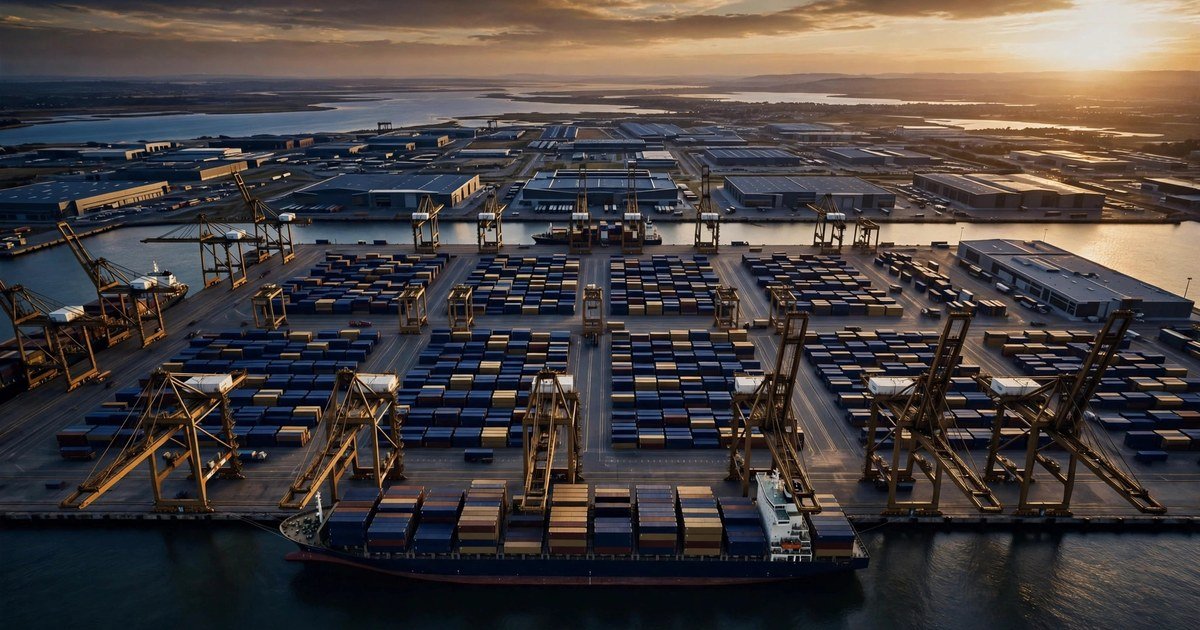
Vietnam is becoming a key link in global supply chains: deep-sea ports, industrial-park systems stretching North to South, new-generation FTAs (CPTPP, EVFTA), and manufacturing FDI inflows driving enormous demand for logistics, warehousing and forwarding services. Unsurprisingly, more and more foreign investors want to participate directly in this market rather than merely buying services.
But logistics is one of the most legally "multi-layered" sectors: the foreign-investment layer, the international-commitments (WTO) layer, the sectoral transport licensing layer, the land–construction–fire-safety layer for warehouses, and the customs layer for bonded warehouses. This article systematizes the full legal framework foreign investors must grasp before committing capital to logistics and warehousing in Vietnam.
Contents
- 1. Why Vietnamese logistics attracts foreign investors
- 2. The multi-layered legal framework
- 3. International commitments: which sub-sectors are open, and how far
- 4. Three market-entry models
- 5. Business conditions by sub-sector
- 6. Land and warehousing: leasing, building, fire safety, environment
- 7. Customs: bonded warehouses, tax-suspension warehouses, e-procedures
- 8. Tax: VAT, CIT and incentives
- 9. Logistics-specific labor issues
- 10. Seven common mistakes
- 11. FAQs
- 12. When to work with counsel
- References
1. Why Vietnamese logistics attracts foreign investors
Three structural forces are driving Vietnamese logistics demand. First, the supply-chain relocation wave ("China + 1") is bringing manufacturing FDI into Vietnam, multiplying demand for forwarding, warehousing, domestic transport and import-export services. Second, new-generation FTAs (CPTPP, EVFTA, RCEP) cut tariffs, boosting two-way trade and cross-border logistics demand. Third, the e-commerce boom drives demand for fulfillment warehouses and last-mile logistics in major cities.
For foreign investors, direct participation in Vietnamese logistics means controlling service quality for their own supply chains while tapping a double-digit-growth services market. But "direct participation" is not as simple as opening a trading company — each logistics sub-sector has its own set of conditions.
2. The multi-layered legal framework
Foreign investors must pass through five legal layers:
Layer 1 — Investment law: the 2025 Investment Law and Decree 96/2026/ND-CP. Logistics is not a prohibited sector; foreign-invested logistics projects obtain IRCs like ordinary FDI projects. Some sub-sectors are conditional business lines.
Layer 2 — International commitments: Vietnam's services schedules under the WTO, CPTPP and EVFTA determine which sub-sectors open to foreign investors and how far (equity ratios, forms of commercial presence). This layer decides the ownership model (see section 4).
Layer 3 — Sectoral transport law: road traffic, maritime, civil aviation, railway and inland waterway laws plus guiding decrees — conditions for each transport mode (capital, vehicles, personnel, licenses).
Layer 4 — Land, construction, fire safety, environment: for warehousing — the 2024 Land Law, Construction Law, Fire Prevention Law, Environmental Protection Law.
Layer 5 — Customs and tax: the 2014 Customs Law (bonded warehouses, customs brokers), the 2024 VAT Law, the CIT Law.
Missing any layer can stall a project: e.g., holding a valid IRC and ERC but no transport business license means the trucks cannot legally roll.
3. International commitments: which sub-sectors are open, and how far
This is logistics' most distinctive legal layer. Vietnam committed to open logistics services sub-sector by sub-sector, at varying depths:
- Widely opened sub-sectors (often allowing 100% foreign capital or high ratios): freight forwarding, warehousing services, agency services, technical testing and analysis related to logistics.
- Still-restricted sub-sectors: maritime, road, air and inland waterway transport — often capping foreign ownership and/or requiring joint-venture form, with conditions on crew nationality, vessel/aircraft registration.
Working principle: never assume a sub-sector is 100% open just because a neighboring one is. Each CPC code in the commitment schedule must be checked individually against current sectoral law — domestic law may add conditions (e.g., sub-licenses) even where the international commitment is open.
Note: new-generation FTAs (CPTPP, EVFTA) may open further than the WTO for investors from member states — EU, Japanese, Singaporean and other investors should check FTA commitments alongside the WTO to capture the highest openness available.
4. Three market-entry models
Model 1 — Wholly foreign-owned company: viable for fully opened sub-sectors (forwarding, warehousing). Advantages: absolute control, fast decisions. Procedure: IRC → ERC → sectoral licenses (if any).
Model 2 — Joint venture with a Vietnamese partner: mandatory or optimal for foreign-equity-capped sub-sectors. The Vietnamese partner brings more than equity ratio — existing licenses, regulator relationships, domestic market knowledge. The biggest JV risk is governance disputes, so the JV contract and charter must design voting and exit mechanisms clearly from the start.
Model 3 — M&A of a Vietnamese logistics company: buying a firm with licenses, warehouses, customers and staff. Advantages: fast market entry with existing sectoral licenses. Drawbacks: thorough legal due diligence is essential — are licenses still valid, is warehouse land disputed, tax debts, labor debts? Foreign buyers acquiring equity must complete capital-purchase approval where applicable (see T-031 on capital transfers by the same author).
Model choice depends on sub-sector, desired speed and risk appetite. In practice many investors combine: a wholly foreign-owned vehicle for forwarding/warehousing (opened), plus a JV for transport (restricted).
5. Business conditions by sub-sector
Road transport: freight transport business requires a transport business license; vehicles must be compliant with journey monitoring devices; drivers need appropriate driving licenses. International multimodal transport has its own conditions on capital and agency networks.
Maritime/inland waterway: strict conditions on vessel registration, crew and liability insurance. Foreign equity is typically capped per commitments.
Pure warehousing: no transport business license needed, but warehouses must meet fire-safety conditions (fire-safety design appraisal, fire-safety acceptance before use — especially for flammable goods), environmental conditions (depending on stored goods: chemicals, refrigerated goods, etc.), and land-use planning conformity.
Customs brokerage: must be recognized by customs authorities; customs declarants need certificates. A classic "sub-license" sector — a logistics firm wanting to declare customs for clients must invest in certified personnel.
Express delivery / e-commerce last-mile: besides business registration, postal services are regulated (postal licenses) where postal services are supplied.
6. Land and warehousing: leasing, building, fire safety, environment
Land is the biggest bottleneck for warehouse projects:
- Land sources: most commonly subleasing in industrial parks from infrastructure developers, or leasing outside IPs. Verify the underlying land legality: whether the infrastructure developer paid land rental one-off or annually (this determines your permitted sublease form), remaining term, detailed planning.
- Term: maximum 50 years; large projects with slow capital recovery may be considered for up to 70 years.
- Building warehouses: construction permits required (except exempt cases), compliance with warehouse building codes, then completion procedures before use. See T-425 (building factories on leased land) by the same author for detail.
- Fire safety: warehouses are subject to fire-safety design appraisal — appraise the fire-safety design before construction and obtain fire-safety acceptance before use. This is a precondition for lawful operation; many warehouses get suspended for operating before acceptance.
- Environment: depending on stored goods (chemicals, waste, refrigerated goods using gas, etc.), projects may need environmental impact assessment reports or environmental registration.
7. Customs: bonded warehouses, tax-suspension warehouses, e-procedures
For investors in import-export logistics, the customs warehouse system is a key competitive tool:
- Bonded warehouses: store goods cleared for export or foreign goods awaiting import procedures; goods in bonded warehouses are not yet subject to import duty. Must be recognized by customs, meeting conditions on premises, management systems and customs data connectivity.
- Tax-suspension warehouses: serve export-processing enterprises and export manufacturers — imported raw materials for export production are duty-exempt when brought into tax-suspension warehouses.
- E-customs (VNACCS/VCIS): declarations and clearance are electronic; businesses need digital signatures and customs declaration software, or hire customs brokers.
Owning bonded/tax-suspension warehouses shortens clients' clearance times, cuts port storage costs, and differentiates against pure-forwarding competitors.
8. Tax: VAT, CIT and incentives
- VAT: domestic logistics services bear the standard rate (currently 10%, except during reduction periods under resolutions). International transport services and services directly supporting international transport may qualify for 0% VAT if documentary conditions are met (contracts, bank payment vouchers, etc.). Correct classification of each revenue stream is mandatory — misapplication leads to back-taxes and penalties.
- CIT: standard 20% rate. Logistics projects in incentivized locations (economic zones, hi-tech parks, difficult socio-economic areas, etc.) or incentivized sectors may enjoy time-limited CIT exemption/reduction and land rental reduction.
- Foreign contractor tax: payments to foreign contractors (e.g., foreign shipping lines/airlines) trigger withholding obligations for the Vietnamese payer.
- Investment incentives: large-scale, high-tech logistics projects (smart/automated warehouses) in IPs/economic zones should screen incentive eligibility at the project-formulation stage — incentives attach to the initial investment registration and are very hard to add later.
9. Logistics-specific labor issues
- Drivers, crew, warehouse staff: need appropriate practicing certificates (matching driving license classes, crew certificates, etc.). Labor contracts must state correct titles and working conditions.
- Overtime: peak seasons (export rush, e-commerce sales) routinely exceed standard hours — comply with overtime caps (max 40 hours/month, 200 hours/year; 300 hours/year in special cases) and overtime pay at 150%/200%/300%.
- Occupational safety: warehousing and stevedoring are high-risk environments — safety training, protective equipment and accident insurance are required.
- Foreign workers: foreign logistics specialists (warehouse managers, supply-chain experts) need work permits; note the new work-permit rules effective 2026.
10. Seven common mistakes
- Registering a generic "logistics" business line then operating specialized transport without sub-licenses.
- Assuming 100% foreign ownership is allowed for every sub-sector without checking the WTO schedule.
- Leasing warehouse land without verifying the infrastructure developer's underlying land legality (rental payment form, remaining term).
- Putting warehouses into use before fire-safety acceptance.
- Misapplying VAT rates between domestic services (10%) and services for international transport (0%).
- Forgetting foreign contractor tax on payments to foreign shipping lines/airlines.
- Not screening investment incentives at project formulation, losing years of tax exemption/reduction.
11. FAQs
Can foreign investors own 100% of a logistics company in Vietnam?
It depends on the sub-sector. Vietnam has opened many logistics sub-sectors to 100% foreign ownership (e.g., freight forwarding, warehousing), but some transport sub-sectors still cap foreign ownership under the WTO schedule of commitments and sectoral law (e.g., maritime, road and air transport). Check the commitment applicable to each specific sub-sector before choosing between a wholly foreign-owned model and a joint venture.
Is warehousing a conditional business sector?
Warehouse leasing itself is not as tightly conditional as transport, but warehouses must meet fire-prevention, environmental (depending on stored goods) and land-use planning requirements. Bonded warehouses and tax-suspension warehouses are strictly managed under the Customs Law and must be recognized by customs authorities, meeting conditions on location, facilities and management systems.
What licenses does a foreign-invested logistics company need?
Depending on registered sub-sectors: (1) an Investment Registration Certificate (IRC) for foreign-invested projects; (2) an Enterprise Registration Certificate (ERC); (3) sectoral licenses: transport business licenses (per mode), international multimodal transport license, customs broker recognition, bonded/tax-suspension warehouse recognition. Each license has its own conditions on capital, vehicles, personnel and facilities.
Are there incentives for leasing land to build logistics warehouses in industrial parks?
Logistics projects in industrial parks and economic zones may enjoy investment incentives (corporate income tax, land rental) if they meet location and sector conditions under the 2025 Investment Law. Maximum land lease term is 50 years, extendable to 70 for large projects. Note: land in IPs is usually subleased from the infrastructure developer — verify the underlying land legality and rental payment form (one-off/annual).
What VAT applies to logistics services?
Domestic logistics services are subject to the standard VAT rate (currently 10%, except during periods of reduction under resolutions of the National Assembly/Standing Committee — check at invoicing time). International transport services and services directly supporting international transport may qualify for 0% VAT if documentary conditions are met. Correct classification of each revenue stream is mandatory.
What is the biggest legal mistake foreign logistics investors make?
Registering a generic "logistics services" business line on the ERC and immediately operating maritime/road/air transport without sectoral licenses and without checking WTO foreign-equity caps. Consequences: administrative penalties, orders to suspend the violating sub-sector, and in bad cases a full restructuring of the ownership model.
12. When to work with counsel
Engage counsel from the project-formulation stage, before filing the IRC application, if you: have not pinned down which logistics sub-sectors are open to 100% foreign capital; plan large-scale warehousing (land, fire safety, environment); seek investment incentives; plan to acquire a Vietnamese logistics company; or will operate international multimodal transport.
FLAT Law Firm advises comprehensively on logistics projects for foreign investors: WTO/FTA commitment screening, investment structuring, IRC and sectoral licensing, warehouse land and construction, customs and tax. Call our hotline 0988424851 for advice on your specific project.
References
- Investment Law No. 143/2025/QH15 dated 11/12/2025, effective 01/3/2026.
- Decree No. 96/2026/ND-CP dated 31/3/2026 detailing the Investment Law.
- Vietnam's schedule of services commitments upon WTO accession (and CPTPP, EVFTA commitments).
- Customs Law No. 54/2014/QH13 dated 23/6/2014.
- VAT Law No. 48/2024/QH15 dated 26/11/2024, effective 01/7/2025.
- Land Law No. 31/2024/QH15 dated 18/01/2024, effective 01/8/2024.


