
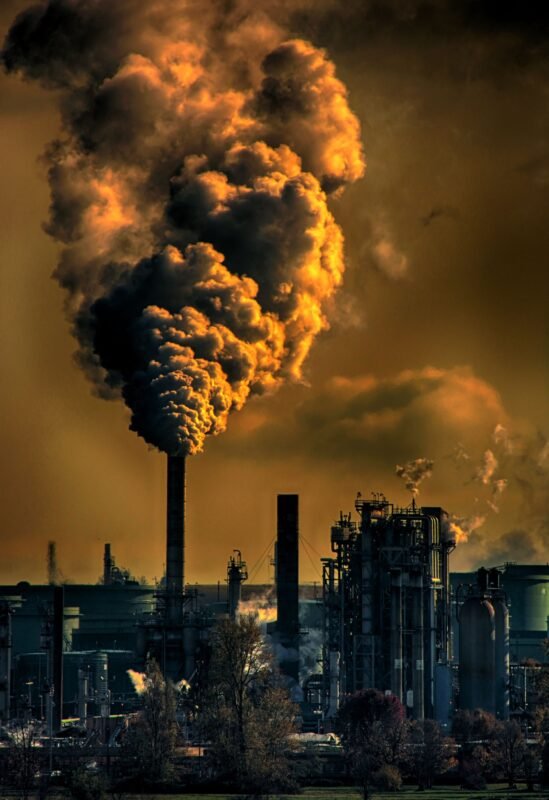
The short answer: YES. When a company causes environmental pollution, the factory director — as an individual — can face criminal prosecution under Article 235 of the Penal Code (the crime of causing environmental pollution). The fact that the company bears liability as a legal entity does not shield the individual behind the violation.
Why a director cannot hide behind the legal entity
Article 235 defines the offender as “any person” — meaning the criminal liability attaches directly to the individual who commits the illegal discharge, regardless of their position in the company.
More importantly, Clause 2, Article 75 of the Penal Code expressly provides that the criminal liability of a legal entity does not exclude the criminal liability of individuals. In other words, the company being penalised and the director being prosecuted are two independent, parallel liabilities — there is no “the company was already fined, so the individual is off the hook”.
How individual criminal liability reaches a director
1. Direct perpetrator or accomplice (Articles 17 and 235)
A director who directly orders, organises or takes part in illegal discharge faces liability as an organiser, commander, instigator or perpetrator under Article 17 of the Penal Code on complicity. Typical examples: a director ordering secret night-time discharge, directing that the wastewater treatment system be switched off to save costs, or approving the dumping of hazardous waste without treatment.
2. A person with authority who permits illegal discharge (Article 236)
Article 236 of the Penal Code criminalises “any person with authority who permits the burial, filling, dumping or discharge” of waste in violation of regulations. A factory director who signs off on illegal discharge falls squarely under this provision. After Law 86/2025/QH15 (the same amendment cluster covering Articles 235–239), Clause 1 of Article 236 provides a fine of VND 100–400 million, non-custodial reform of up to 02 years, or imprisonment of 02–03 years — increased from the old 50–200 million VND / 03 months–02 years.
Article 235 penalties after Law 86/2025 (applicable from 01/7/2025)
Law 86/2025/QH15 (effective 1 July 2025) amended Article 235 in a harsher direction. The currently applicable text is Consolidated Document 135/VBHN-VPQH (5 September 2025). The frames for individuals:
- Clause 1: fine of VND 100 million–1 billion or imprisonment of 02–03 years (old: 50–500 million VND / 03 months–02 years).
- Clause 2: fine of VND 1–2 billion or imprisonment of 03–05 years.
- Clause 3: fine of VND 2–6 billion or imprisonment of 05–07 years.
- Clause 4 (supplementary penalties): fine of VND 60–400 million, prohibition from holding managerial positions, or prohibition from practising a profession or doing certain jobs for 01–05 years — a supplementary penalty that strikes directly at a director’s management role.
New offence thresholds: lowered compared with the old text

The most significant change in Law 86/2025 is the lowering of the environmental parameters in Clause 1 of Article 235, making it easier for conduct to constitute a crime:
- Point c (wastewater): discharge of 500–under 5,000 m³/day exceeding the national technical regulation (QCVN) by 03–under 05 times, or discharge of 300–under 500 m³/day exceeding the QCVN by 05 times or more. The old text required 05–under 10 times / 10 times or more.
- Point d (new): discharge at lower thresholds — from 500 m³/day exceeding the QCVN by 02–under 03 times, or 300–under 500 m³/day exceeding by 03–under 05 times, or 100–under 300 m³/day exceeding by 05 times or more — but where the offender has already been administratively sanctioned for an act under this Article or convicted of this crime, with the criminal record not yet expunged, and reoffends.
- New points dd, e, g, h: additional cases concerning ordinary solid waste, radioactive waste and other parameters.
Note: to date there is no resolution of the Council of Justices quantifying “causing serious consequences” (Clause 2, point e) or “very serious or particularly serious consequences” (Clause 3, point e); the statutory wording must be read as written, without inventing thresholds.
The company is also punished — corporate liability under Article 76
Article 235 is among the 33 crimes for which commercial legal entities bear criminal liability under Article 76 of the Penal Code. Legal entities are punished under Clause 5 of Article 235: a fine of VND 6–14 billion (frame 1), VND 14–24 billion or suspension of operations for 06 months–02 years (frame 2), VND 24–40 billion or suspension for 01–03 years (frame 3) — at the same time as the individuals (the director, those who directed the conduct) are punished under Clauses 1–4. That is the meaning of the “independent and parallel” principle.
Being a director does not automatically mean guilt
Conversely, the law does not permit automatic attribution of criminal liability to a director merely because of their position. To prosecute, the proceeding authorities must prove:
- Specific conduct: the director directly committed, directed or organised the illegal discharge, or failed to perform their assigned environmental-protection duties;
- Fault: intent or negligence;
- Causation between the director’s conduct and the pollution.
If the director has fully performed their environmental management and supervision duties and the violation was committed by subordinates beyond their instructions, criminal liability of the individual director is hard to establish — liability then falls on the direct violator and the legal entity.
Application over time: the 01/7/2025 milestone
The new provisions of Law 86/2025 on Article 235 are “unfavourable” to offenders (higher penalties, lowered environmental parameters), so they apply only to offences committed from 1 July 2025 onwards. Conduct before that date is governed by the old text (the transitional provisions of Law 86/2025). Correctly determining the time of the conduct is the first and mandatory step in assessing criminal liability.
Conclusion
A factory director can face individual criminal prosecution when the company causes environmental pollution — through Article 235 (direct commission/complicity) or Article 236 (permitting illegal discharge) — under penalty frames that have been increased since 1 July 2025. The liability of the legal entity and of the individual coexist in parallel, but prosecuting the individual director always requires proof of specific conduct, fault and causation — never a presumption from the job title.
Note: This article is for general information only and does not constitute legal advice. Every specific case must be assessed on its file, evidence and the law in force at the time of writing (14/10/2026). For assistance, please contact FLAT Law Firm.
For reference only, not legal advice. Content quality-checked by the AI Legal Council; not yet reviewed by a human lawyer.