
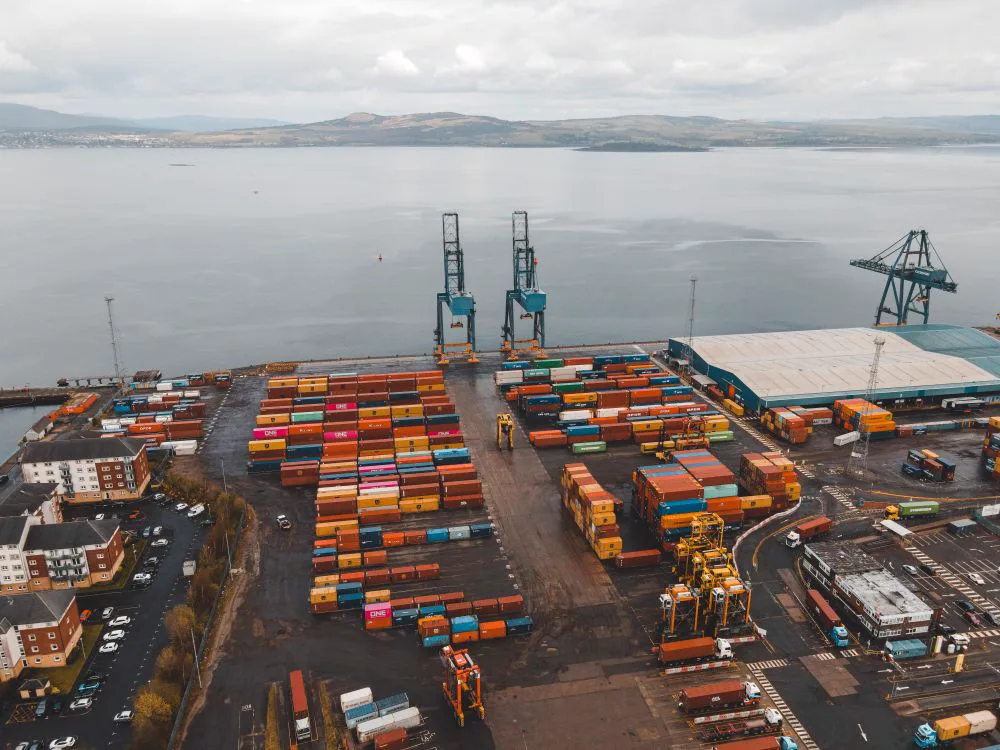
A familiar scenario for many exporters: goods delivered to China, but the buyer invents excuses to delay payment — then goes silent. This article sets out a step-by-step response through the lens of the current legal framework. It is a scenario analysis: the article does not “decide” any specific case in place of a court or tribunal — each step must be assessed against the actual dossier.
Step 1 — Determine the applicable law: does the CISG govern?
Both Vietnam and China are members of the CISG — the 1980 Vienna Convention on international sale of goods (Vietnam since 01/1/2017). For contracts between businesses with places of business in two member states, the CISG applies directly in place of national law — unless the parties agreed to exclude it. So never assume the CISG “automatically applies absolutely”: first check whether the contract excludes the CISG or chooses a different national law. The CISG has been applied by Vietnamese courts in international sale disputes, so this is practical ground, not mere theory.
Step 2 — Review the entire contract
Before any action, re-read the contract asking: what do the payment terms say about method, deadlines and late-payment sanctions? Which governing law? Does the dispute clause choose arbitration or courts, and where? Is the CISG excluded? A contract with no dispute-resolution clause makes every later step many times harder — a lesson for the next contract too.
Step 3 — Demand payment in writing and preserve evidence
Send a written payment demand (bilingual Vietnamese–Chinese if needed), stating the amount, the contractual basis and a reasonable payment deadline. At the same time, gather and preserve all delivery evidence: bills of lading, customs declarations, handover records, email correspondence. On export customs dossiers, note Circular 121/2025/TT-BTC (effective 01/02/2026) amending customs procedures; foreign-trade management now follows Decree 292/2026/ND-CP (effective 05/9/2026) — Decree 69/2018 has expired and may no longer be cited.
Step 4 — Apply contractual and legal sanctions
A buyer’s failure to pay breaches the contract. Depending on the dossier, consider: (a) specific performance plus late-payment interest; (b) contractual penalties — if agreed, subject to the cap under the 2005 Commercial Law (check the full text before applying; do not invent figures); (c) damages under the CISG — covering actual loss and lost profits, within what the breaching party could have foreseen; (d) contract avoidance if the breach qualifies as fundamental. Choosing and combining sanctions needs careful assessment on the specific dossier.
Step 5 — Emergency measures: hold the goods, stop the next shipment
If the business still controls the goods (not yet delivered, or in transit under conditions permitting), consider withholding them. For multi-shipment contracts, the CISG allows the seller to suspend performance where there are clear grounds to believe the buyer will not perform a substantial part of its obligations — e.g. after defaulting on an earlier shipment. This is a key defensive tool to avoid “the more you ship, the more you lose”, but it must be applied within its conditions to avoid being seen as the breaching party yourself.
Step 6 — Do not let limitation expire while negotiating
Alongside negotiation, watch the 03-year limitation period for contract disputes (Article 429 of the 2015 Civil Code). Once expired, the right to sue is lost no matter how strong the merits. Prolonged negotiation without limitation-preserving measures is a common mistake — set a timeline and have a litigation/arbitration fallback ready before limitation draws near.
Step 7 — Dispute resolution: follow the contract’s agreement
The dispute-resolution path follows what the contract agreed: arbitration or courts, where, under which law. Without an agreement, the business may sue before Vietnamese courts or commence arbitration under the 2010 Law on Commercial Arbitration. On enforcement: arbitral awards may be enforced in China under the 1958 New York Convention (China is a member); court judgments are considered under the 1998 Vietnam–China MLA treaty. Given cross-border enforceability, arbitration is usually preferred in disputes with Chinese counterparties — one more reason to put an arbitration clause in the contract from the start.
Step 8 — Prevention for the next contract
Turn the lesson into process for future contracts: use irrevocable L/Cs or secured DP/DA terms; require deposits/TTR; buy export credit insurance; spell out penalty and late-interest clauses; agree on arbitration (SIAC, HKIAC, VIAC…); and check the buyer’s creditworthiness before signing — a simple due-diligence step can prevent a costly dispute later.
Related reading
- Recovering Debts from Chinese Counterparties: Legal Options
- Vietnamese Outbound Investment into China: Procedures
Facing a payment dispute with a Chinese buyer? Reach us via the Contact page of FLAT Law Firm for an assessment of your options.
The legal content of this article is reviewed by FLAT’s AI Legal Council and submitted to the owner for approval; it is not an opinion of a licensed lawyer and does not replace legal advice for specific cases.
The information in this article is for reference only and does not constitute legal advice. Consult a lawyer for your specific case.