
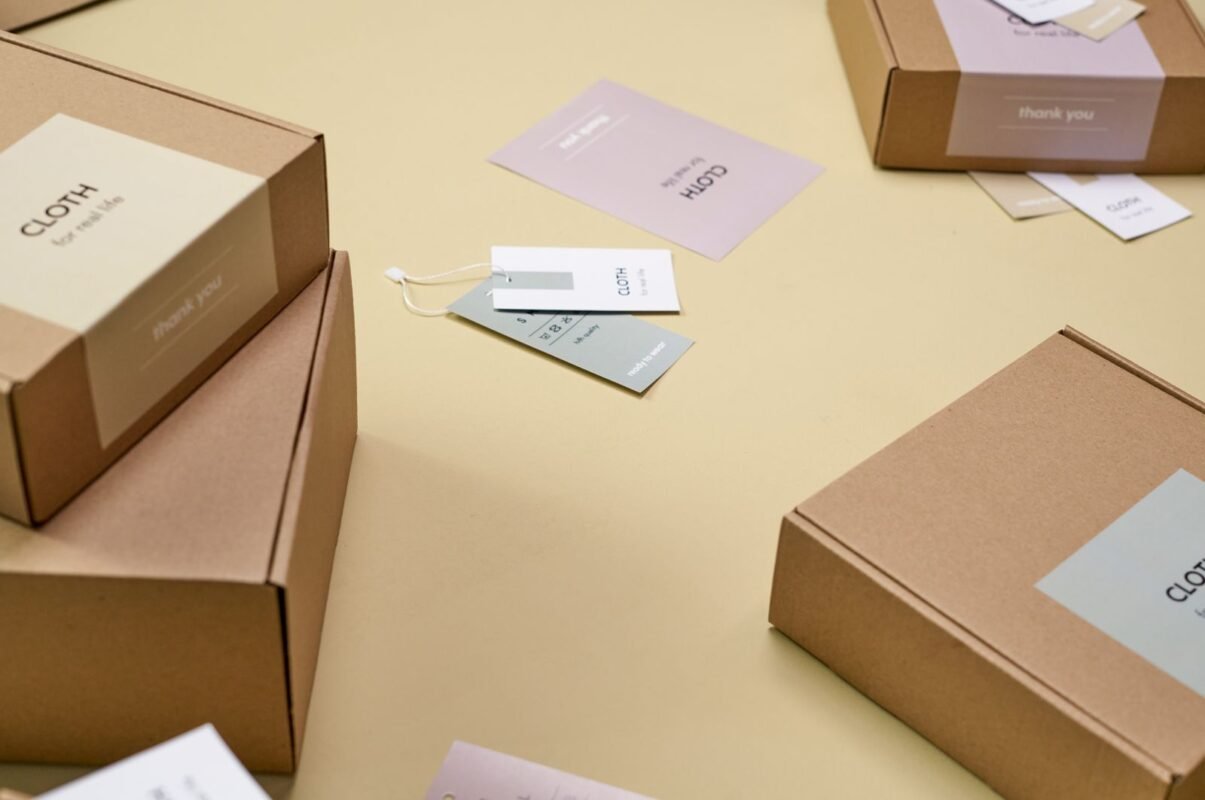
Beautiful packaging, a striking logo — but which form of protection should you register: industrial design or trademark? Under Vietnamese law, the correct answer is: you do not have to choose one — layered protection is allowed. This article uses a selection matrix based on your protection goal, plus a warning about the most common mistake that costs businesses their rights.
1. The answer: one package — multiple rights, layering is not prohibited
The law does not prohibit one physical object from being simultaneously protected by multiple IP rights. Article 9g of Decree 65/2023/ND-CP (added by Decree 100/2026/ND-CP, effective 01/4/2026) governs how conflicts are resolved when one subject matter carries multiple IP rights — indirectly confirming that layered protection is lawful.
For packaging and labels, there are three main protection channels — each covering a different “layer” of the same package:
2. Industrial design — protects the OUTER SHAPE of the packaging
Under Articles 63–67 of the Intellectual Property Law (consolidated document 67/VBHN-VPQH, 23/3/2026), an industrial design protects the outward appearance of a product: its shape, lines, colours or their combination creating an aesthetic look visible during exploitation of its function.
Protection conditions: novelty, inventive step (creativity), and industrial applicability. Term: 5 years from the filing date, renewable twice consecutively (maximum 15 years). A new point from Law 131/2025: industrial designs now include non-physical products such as graphical user interfaces (GUIs) and icons.
For packaging: a uniquely shaped bottle, a distinctive box, an aesthetic 3D packaging structure — register an industrial design.
3. Trademark — protects the SIGNS placed on the packaging
Under Articles 72–75 of the IP Law, a trademark protects signs that are visible (or sounds representable in graphic form), capable of distinguishing the goods or services of one undertaking from another, and not falling within the exclusions from protection (Article 73).
Term: 10 years from filing, renewable without limit — a decisive long-term advantage over industrial designs (maximum 15 years).
For packaging: the logo, brand name and identifying patterns printed on the package — register a trademark. This is usually the priority channel because of unlimited renewals and because it is the most direct tool against counterfeiting.
| Criterion | Industrial design | Trademark |
|---|---|---|
| What is protected | Outward (3D) shape of the packaging | Distinguishing signs on the packaging |
| Core condition | Novelty, creativity | Distinctiveness |
| Term | 5 years, 2 renewals (max 15 years) | 10 years, unlimited renewals |
| How rights arise | Registration required (protection title) | Registration required (protection title) |
4. A third channel — copyright for graphic design
Packaging with applied-art character (unique graphic design on the label, decorative patterns) may also be registered for copyright as an applied-art work. Advantages: fast procedure, low cost, long term. Limitation: it protects only the specific form of expression, not the idea or function.
An important note on how rights arise (Article 6.3(a) of the IP Law): industrial designs and trademarks both acquire rights on the basis of a decision granting a protection title — i.e. registration is required. This differs from copyright, which arises automatically upon creation and fixation in a material form.
5. Selection matrix by situation
- Unique 3D shape (distinctive bottle, box design) → register an industrial design.
- Logo, brand name, identifying patterns → register a trademark (priority, thanks to unlimited renewals).
- Optimal: register in parallel — industrial design + trademark (+ copyright for the graphic design) — each channel guards one layer, building a multi-tier fence.
Distinction: “goods labelling” under Decree 43/2017/ND-CP (amended by Decree 111/2021/ND-CP) — the mandatory information in Vietnamese on labels — is NOT an industrial property subject matter. Only signs capable of distinguishing on the label can be registered as trademarks.
6. Three common mistakes that cost businesses their rights
Mistake 1 — Launching the packaging before filing an industrial design application → loss of novelty. The most common mistake. Industrial designs require absolute novelty — file before disclosing the packaging. The law provides a 6-month grace period for unauthorised disclosure or scientific reporting, but do not gamble on exceptions.
Mistake 2 — Confusing “goods labelling” with “trademark”. Fully compliant labelling under Decree 43/2017 does not equal trademark rights. To monopolise a sign, file a separate trademark application.
Mistake 3 — Overexpecting 3D trademarks (packaging shapes). The law permits 3D trademarks in principle, but examination of distinctiveness for 3D signs is very strict in practice — treat this as a practical caution, not a promise of success rates.
Also remember the exclusion boundaries: industrial designs do not protect purely functional technical features; trademarks do not protect descriptive signs — not every package is registrable.
FAQ
Q: Can one package be registered as both an industrial design and a trademark?
A: Yes. The law does not prohibit layered protection — one package can simultaneously hold an industrial design (shape), a trademark (distinguishing sign) and copyright (graphic design).
Q: Which should be filed first?
A: Usually the trademark, given unlimited renewals and its direct anti-counterfeit role. But if the packaging has a unique 3D shape, file the industrial design before market disclosure to preserve novelty.
Q: Is compliant goods labelling under Decree 43/2017 enough to protect my brand?
A: No. Goods labelling is a mandatory information duty, not an IP right. To monopolise a sign, register a trademark separately.
Legal sources
- Intellectual Property Law — consolidated document 67/VBHN-VPQH (23/3/2026) — Articles 63–67 (industrial design conditions and validity); Articles 72–75 (trademark conditions); Article 6.3(a) (rights established via protection titles); Article 213 (trademark-counterfeit goods) — non-physical industrial designs from Law 131/2025, effective 01/4/2026
- Decree 100/2026/ND-CP (31/3/2026) — adds Article 9g to Decree 65/2023/ND-CP (resolving conflicts where one subject matter carries multiple IP rights) — effective 01/4/2026
- Circular 10/2026/TT-BKHCN (31/3/2026; replacing Circular 23/2023/TT-BKHCN) — new application forms for industrial designs and trademarks — effective 01/4/2026
- Decree 43/2017/ND-CP (amended by Decree 111/2021/ND-CP) — goods labelling — in force
- Decree 99/2013/ND-CP (amended by Decree 186/2026/ND-CP) — sanctions for industrial design and trademark infringement — Decree 186/2026 effective 15/7/2026
- Full texts: thuvienphapluat.vn (accessed 14/10/2026)
Need a multi-layer protection strategy for packaging and labels? The FLAT Law Firm team advises on industrial design, trademark and copyright registration for business products. Contact us at contact us.
The information in this article is for general reference only under the law in force at the time of writing (14 October 2026) and does not constitute legal advice for a specific case.
Transparency note: This article was produced by the AI content production system of FLAT Law Firm and is undergoing internal review (AI Legal Council QA and owner approval before publication). It has not been reviewed by a human lawyer.


