
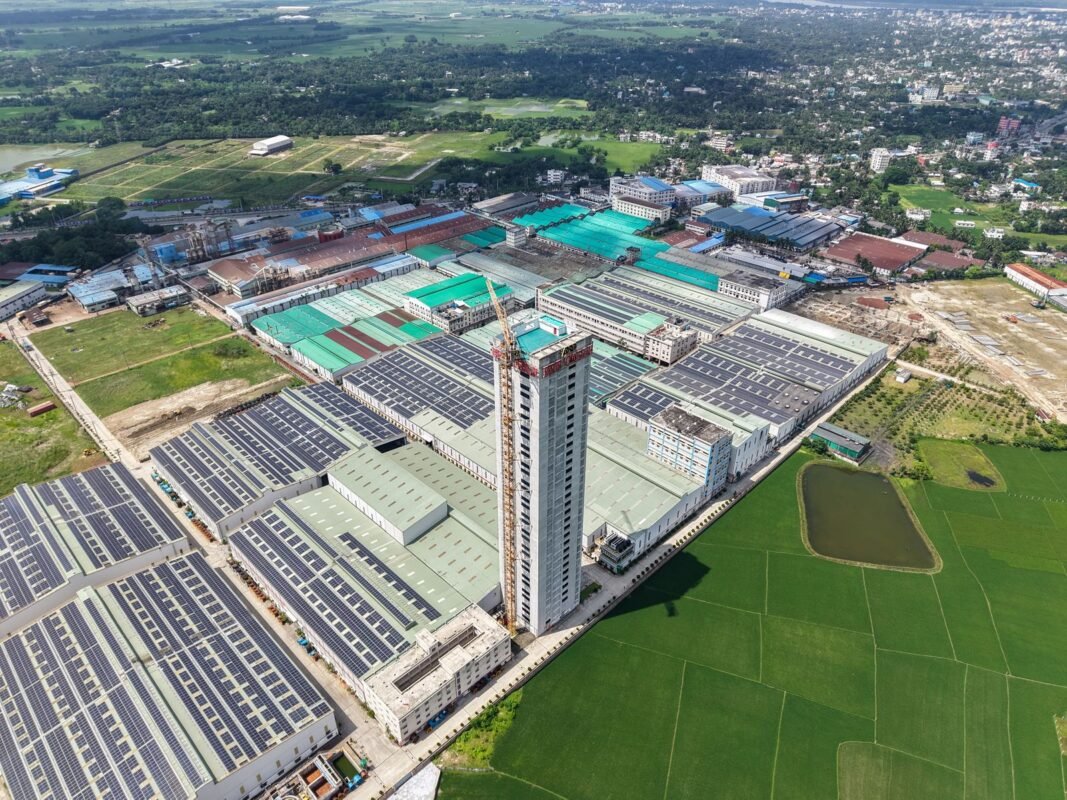
Leasing land to build a factory — whether leasing directly from the State or sub-leasing inside an industrial park (IP) — does not exempt a business from obtaining a construction permit. On the contrary, the “leased land” factor creates specific hurdles that permit applications on owned land never face. This article sets out seven legal notes when applying for a factory construction permit on leased land, under the new framework: the Land Law 31/2024/QH15 (effective 1 August 2024), the Construction Law 135/2025/QH15 (effective 1 July 2026), and Decree 217/2026/ND-CP (effective 1 July 2026).
First, distinguish two cases — because dossiers and competent authorities differ: (A) leasing land directly from the State (land allocation/lease under the Land Law 2024) and (B) sub-leasing land/infrastructure inside an IP from the IP infrastructure developer.
Note 1: Land-use purpose must “match” the factory
The threshold condition: the parcel’s land-use purpose must be production/business land or IP land under the approved plan. Many businesses lease land designated for “commercial/services” and then apply for a manufacturing-factory permit — the file is returned because the land-use purpose does not match the proposed works.
What goes wrong if skipped: you must complete a land-use-purpose conversion first (adding 1–3 months), or worse — you sign the lease only to discover the land may not host a factory, and deposits and design fees go down the drain.
How to handle: check the land-use-right certificate and the zoning plan before signing the lease; insert a clause making the deposit agreement conditional on a conforming land-use purpose.
Note 2: The lease term must be “long enough” for the factory’s life cycle
Under the Land Law 2024, land lease terms follow the investment project but may not exceed 50 years (70 years in special cases). A factory lives for decades — if the lease has only 10–15 years left, the business faces the risk: when the lease expires, what happens to the works on the land?
How to handle: negotiate a lease term of at least 20–30 years with a priority renewal clause; spell out in the lease the ownership and disposal of on-land assets upon expiry.
Note 3: The landowner’s written consent to build (sub-lease case)
In case (B) — sub-leasing inside an IP — the sub-lessor (the IP infrastructure developer) must issue a written consent for the lessee to build on the sub-leased land. This is part of the lawful land papers required for permit issuance under Decree 217/2026/ND-CP, and the most commonly missing dossier item.
What goes wrong if skipped: the permit file is returned for lacking “lawful land papers”; worse, building without the landowner’s consent may breach the sub-lease itself.
How to handle: request the IP developer’s written consent during sub-lease negotiations; verify their sub-leasing standing (land-use rights, fulfilled financial obligations to the State).
Note 4: Compliance with the IP’s detailed plan
Inside an IP, every structure must conform to the IP’s approved detailed construction plan: building density, height, setbacks, floor-area ratio, and crucially the IP’s targeted industries. A chemical plant cannot sit in an IP oriented toward light industry and high tech.
How to handle: obtain the IP Management Board’s written approval on planning and industry conformity before preparing the design — it is also a permit-dossier component inside IPs under the new delegation.
Note 5: The permit dossier specifics for leased land
Beyond the standard permit dossier (application form, design drawings, investor’s legal papers), leased-land files additionally require:
- Lawful land papers: the land lease contract (case A) or the sub-lease contract plus the landowner’s consent (case B);
- The IP Management Board’s written document (case B): approval on planning and industries;
- The Investment Registration Certificate (IRC) where required — evidencing that the project objective covers building the factory.
Licensing authority (Article 53, Construction Law 135/2025): for works inside IPs, authority rests with the IP Management Board under delegation; outside IPs, with the competent People’s Committee level. Processing time: 10 working days from receipt of a complete valid dossier, handled fully online.
Note 6: Land financial obligations must be settled
Land rent (one-off or annual) and related fees must be paid or under an approved payment plan before the permit file is considered. In sub-leases, confirm the sub-lessor has settled its financial obligations to the State — otherwise its sub-leasing right is questionable, tainting the entire file’s legality.
How to handle: ask the lessor for land-rent payment receipts; in sub-leases, check the sub-lease’s representations on the sub-lessor’s financial obligations.
Note 7: Fire safety, environment, and utility connections — the “three gates” after the permit
A construction permit is not the finish line. A factory on leased land must pass three more gates before operation:
- Fire prevention and fighting: fire-safety design appraisal and acceptance — mandatory for factories; the fire dossier must run in parallel with the permit design from the start;
- Environment: environmental impact assessment (EIA) or environmental registration, depending on scale and production type;
- Utility connections: power, water, wastewater treatment, internal IP roads — connection agreements with the IP infrastructure developer should be locked before construction to avoid “built but no power, no wastewater outlet.”
8. Fully online filing: practical notes
Under the new framework, construction-permit applications are processed fully online. In practice, businesses should prepare for three realities. First, digital signatures: the application must be signed with the enterprise’s registered digital signature — ensure the signature certificate is valid and the authorized signatory’s information is current. Second, scan quality: design drawings and land papers must be scanned in full color at readable resolution; blurred scans are the top reason for “supplementation” requests that restart the 10-working-day clock. Third, the dossier tracking code: keep the online receipt code and check status regularly — if the authority requests supplementation, the response deadline is short, and missing it means re-filing from scratch.
For case (B) inside IPs, note that the IP Management Board operates its own one-stop portal linked to the national system. Confirm with the Board which portal to use before filing — submitting to the wrong portal is a surprisingly common and entirely avoidable delay.
Frequently asked questions
Can construction start before the permit is issued? No. Commencing construction without a permit where one is required is an administrative violation subject to fines and, in serious cases, forced demolition. The 10-working-day processing time is short — the rational strategy is a complete, correct first filing, not an early start.
What if the lease expires mid-construction? This is precisely why Note 2 matters. If expiry threatens, negotiate an extension or memorandum with the lessor immediately and notify the licensing authority of any change in land papers — a permit issued on expired land papers can be revoked.
Does a foreign-invested enterprise face extra steps? The permit procedure itself is the same, but the IRC (Investment Registration Certificate) becomes a key dossier component proving the project’s conformity with its licensed objectives. Ensure the IRC’s objectives expressly cover factory construction before filing.
Summary dossier checklist
- ☐ Conforming land-use purpose (production/business or IP land) — checked before leasing
- ☐ Long enough lease term + asset-disposal clause on expiry
- ☐ Landowner’s written consent to build (sub-lease)
- ☐ IP Management Board approval on planning/industries
- ☐ Lease/sub-lease contract + IRC (if any)
- ☐ Land financial obligations settled
- ☐ Fire-safety and environmental dossiers in parallel with permit design
- ☐ IP utility-connection agreements
This article provides general legal information as of 14 October 2026 based on Land Law 31/2024/QH15, Construction Law 135/2025/QH15, and Decree 217/2026/ND-CP. Detailed planning and authority delegation may vary by IP/locality — businesses should check directly with the IP Management Board before designing.
This article has been reviewed by the QA Council — FLAW AI Legal Council.
Related articles
- Vietnam’s Land Law 2024: 10 key changes affecting citizens and businesses
- Overseas Vietnamese buying houses in Vietnam: latest conditions
- Suspended projects and frozen zoning: can residents build or transfer land?
- Compensation for land recovery: specific land pricing and resettlement policies
- Delayed apartment ownership certificates: resident remedies and developer fines


