
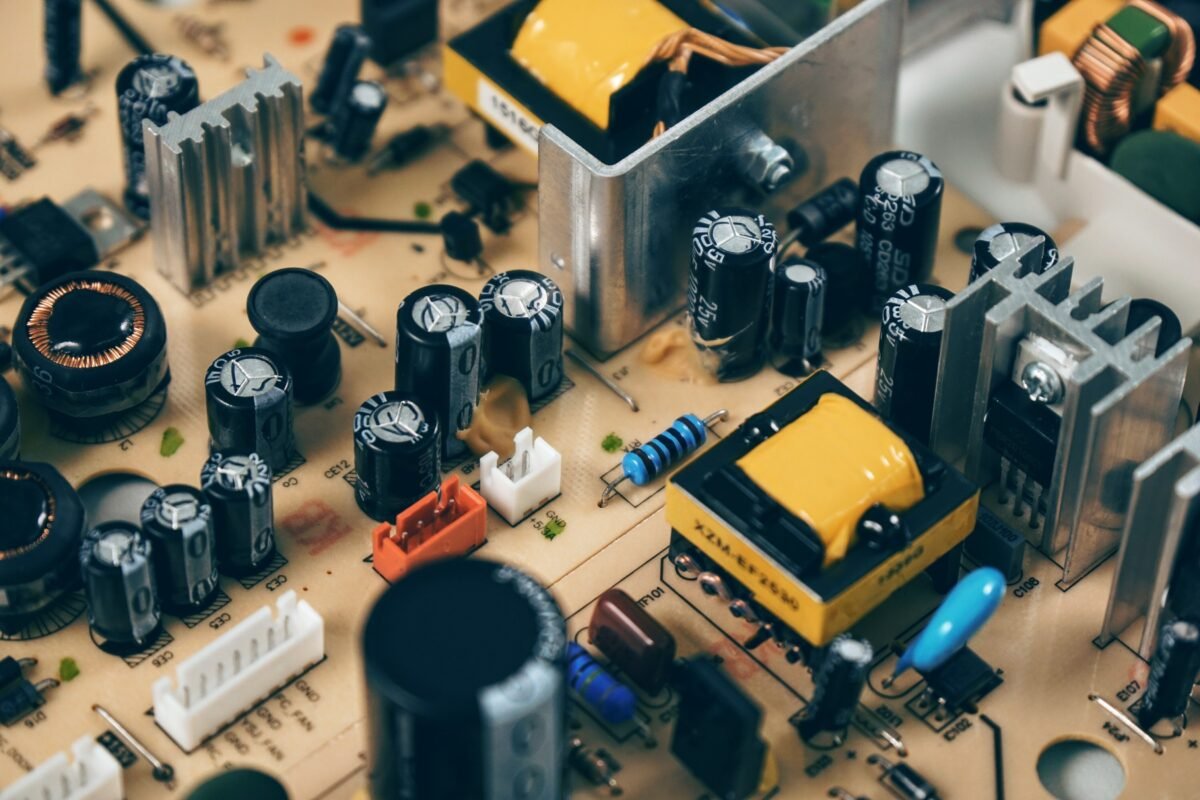
When electronics “giants” shift lines to Vietnam under “China Plus 1”, they don’t come alone — they drag entire supply chains with them. For Chinese consumer-electronics component suppliers, this is a “follow-the-customer” opportunity: connectors, cables, acoustics, camera modules, PCBs… This article analyses the opportunity and how to seize it.
1. “China Plus 1” in electronics: what’s happening
- Global electronics brands (Korean, American, Chinese) are diversifying production out of China — Vietnam leads as a destination thanks to location, costs, FTAs and a formed ecosystem;
- Major assembly plants (phones, laptops, wearables) are present — creating local component demand;
- Localisation pressure: big brands require suppliers nearby — first movers win contracts;
- Beyond assembly: Vietnam is climbing up the value chain — from assembly to component manufacturing.
2. Component groups with the biggest opportunities
| Group | Examples | Why the opportunity |
|---|---|---|
| Precision mechanics | Casings, frames, hinges | Must be near assembly; costly to import |
| Connectors & cables | Connectors, internal cables | Many variants, fast (JIT) delivery |
| Acoustics | Speakers, mics | Chinese technology strong, big demand |
| Camera modules | Phone camera modules | High value, following phone brands |
| PCB/PCBA | Printed boards, board assembly | Needed in every electronic device |
| Batteries & chargers | Small lithium cells, chargers | Following consumer devices |
| Packaging | Boxes, formed trays | Bulky, must produce nearby |
3. The “follow-the-customer” model
- Chinese suppliers usually come to Vietnam for a specific customer with committed orders — not betting on the general market;
- Offtake agreements: negotiated before investing — orders secured, then the plant built;
- Early phase: may start with warehouse + light processing (simple assembly, packing), upgrading to manufacturing;
- Risk: single-customer dependence — if the customer pivots, the supplier “dies together”. Diversify gradually.
4. Quality standards: the “entry ticket”
- Big electronics brands run strict supplier assessment systems (plant audits, ISO quality management, social responsibility);
- Certifications: ISO 9001 minimum; many brands require ISO 14001 (environment), ISO 45001 (safety);
- Traceability: components must trace to material lots — digitalised management systems;
- Confidentiality: suppliers access brands’ drawings and technology — strict NDAs; breach means permanently lost contracts.
5. Site selection: near customers
- Rule #1: locate near customers’ plants — Bac Ninh, Bac Giang, Thai Nguyen clusters (Samsung and supply chain); Hai Phong, Quang Ninh (LG, VinFast and auxiliaries);
- JIT delivery: many components need same-day delivery — distance is existential;
- Parks with existing supply chains: choose IPs hosting other suppliers — shared logistics, labour, services;
- Infrastructure: stable power (electronics hates outages), high-speed internet, near airports/ports for imported components.
6. Investment procedures for component suppliers
- IRC: electronics-component manufacturing is encouraged — dossier per Investment Law 143/2025/QH15;
- Incentives: supporting industries may earn CIT incentives — confirm eligibility with authorities;
- Environment: component production (plating, chemicals) needs EIA — never understated;
- Fire safety: electronics plants have specific requirements (cleanrooms, chemicals);
- Labour: mass worker recruitment — early hiring and training plans.
7. Competition: not only with Vietnamese firms
- Rivals are other Chinese suppliers also coming — fierce price competition;
- Advantages: existing customer relationships, technology, scale — suppliers already serving big brands in China hold better “tickets”;
- Strategy: don’t compete on cheapest — compete on stable quality, on-time delivery, technical service;
- Partnership: ally with Vietnamese suppliers (land, labour) — small-JV models for the early phase.
8. Risks to anticipate
- Customer dependence: Section 3 — diversification is existential;
- Order volatility: consumer electronics is cyclical — cash-flow planning for low seasons;
- Technology transfer: big brands require gradual transfer to Vietnamese staff — protect core know-how;
- FX and costs: USD-denominated inputs, possibly VND sales — FX risk management;
- Policy: changing incentives and environmental rules — monitor and adapt.
9. Market-entry timeline: 12–24 months
Months 1–3: survey, meet potential customers, assess demand. Months 3–6: offtake negotiation, site selection, project setup. Months 6–12: IRC, land lease, construction. Months 12–18: equipment installation, recruitment, training. Months 18–24: trial production, customer qualification, mass production. Note: big brands’ qualification takes 3–6 months — no shortcuts.
10. Pre-Vietnam checklist for suppliers
- Committed offtake from at least one customer?
- Customer quality standards assessed, compliance capability confirmed?
- Site chosen near customers?
- Full costing done (land, construction, equipment, labour, logistics)?
- Personnel plan ready (Chinese experts + Vietnamese hiring)?
- IRC dossier and tax-incentive assessment prepared?
- Customer-diversification strategy in place?
10. Your first 30 days after choosing a site
- Days 1-7: sign the in-principle land agreement and pay the deposit; engage a Vietnamese law firm to start the IRC application;
- Days 8-15: commission the environmental assessment (if required for your sector); confirm power-capacity allocation in writing with the IP;
- Days 16-30: file the IRC application; begin detailed factory design with a licensed Vietnamese design firm; open the project’s capital account;
- Parallel track: start recruiting the core team (plant manager, HR, chief accountant) – hiring takes longer than founders expect;
- Keep a single project tracker: every permit, every deadline, every responsible person – slippage compounds.
11. Common mistakes foreign investors make
- Choosing on land price alone: the cheapest IP often has the weakest power supply and slowest permit support – total cost of ownership decides;
- Skipping the rainy-season visit: some IPs flood; visit in September-October before signing anything;
- Verbal promises: incentive commitments from IP sales teams mean nothing until written into the lease and confirmed by the provincial authority;
- Underestimating timelines: IRC plus construction permits plus fire-safety approval rarely fit the “six months” in the pitch deck – budget twelve;
- No independent review: having the draft lease reviewed by an independent Vietnamese lawyer (not the IP’s recommended one) saves fortunes.
12. Working with IP management boards
- The IP management board is your single window for most permits inside the park – build the relationship early;
- Boards run investor-care teams: use them for introductions to customs, tax and labour contacts;
- Ask for the board’s track record: how many foreign projects, average permit timelines, any major disputes;
- Boards can sometimes expedite provincial-level procedures – but only for tenants with complete, honest dossiers;
- Keep everything in writing; the helpful officer who promised you the earth may rotate to another post next quarter.
13. Environmental compliance: the hidden gate
- Many investors discover environmental licensing late – it can block construction or operation;
- Know your category: some sectors need a full environmental impact assessment; others a simpler environmental permit – your sector decides;
- IPs have central wastewater plants, but your effluent must meet the IP’s inlet standards – pre-treatment investment is often required;
- Budget for environmental compliance at feasibility stage, not after the factory is built;
- Non-compliance shutdowns are public and politically sensitive – this is not a corner to cut.
14. When to hire a local consultant
- DIY works if you have done 2-3 Vietnam projects before and speak the language of permits;
- Hire help for your first project, for conditional sectors, or when the timeline is tight;
- A good consultant does three things: permits (IRC/ERC/land), introductions (IPs, suppliers, banks), and translation – of language and of bureaucracy;
- Vet consultants like suppliers: references from foreign clients, fee transparency, no “guaranteed permit” promises;
- The cheapest consultant is the one you hire before mistakes happen, not after.
Contact us
FLAT Law Firm advises Chinese investors throughout the Vietnam investment cycle — from deal structuring and licensing to operations and compliance. Contact us for advice tailored to your project.
This article has been quality-reviewed by the FLAW AI Legal Council


