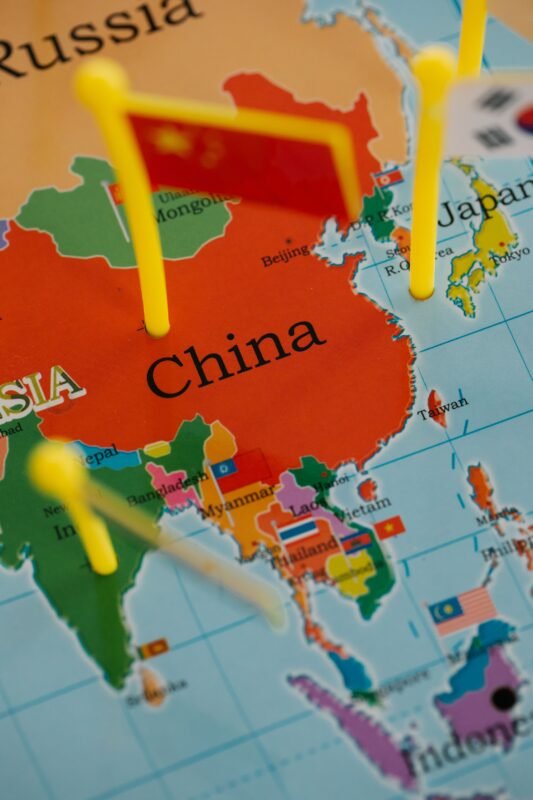
Every long-term investor must answer: how does geopolitical risk affect a 20–50-year project? South China Sea tensions are raised by every Chinese investor’s board when considering Vietnam. This article is not about politics — it is about business risk management: the scenarios that could touch investment operations, and how to prepare.
1. Framing it right: which risk, for whom
- Who: long-horizon investors (factories, infrastructure, industrial real estate) — capital buried for 10–50 years, not quickly withdrawn;
- Not: short-term traders or financial investors — those flows adjust fast;
- The business question: over the project’s life, which geopolitical events could affect operations, logistics, people and assets — and what does hedging cost;
- Principle: risk management is preparing for what may not happen — not predicting politics.
2. Transmission channels to investment operations
- Sea logistics: the South China Sea is a vital shipping lane — escalation could affect marine insurance and freight costs;
- Market sentiment: tense headlines can sway customers’, partners’ and banks’ decisions — even when actual operations don’t change;
- Supply chains: firms dependent on materials/shipping through the area may need backup plans;
- People: foreign experts and families care about safety — HR policy should account for it;
- Reality check: FDI production and business in Vietnam continue normally through all phases — these channels are latent risks, not the present state.
3. Which sectors are most sensitive
- Logistics and seaports: directly exposed to shipping lanes;
- Offshore energy: oil & gas, offshore wind — operating at sea;
- Marine tourism: sensitive to traveller sentiment;
- Less sensitive: inland manufacturing (electronics, textiles, furniture) — little direct exposure;
- Assess: determine your sector’s sensitivity — don’t apply generic anxiety to every project.
4. Scenario 1: status quo (base case)
- Picture: tensions at the diplomatic level, no military escalation — the state of play for many years;
- Business impact: negligible — FDI, trade and logistics run normally;
- Reference probability: the base case most analytical outfits use;
- Preparation: periodic monitoring; no special measures needed.
5. Scenario 2: short-term escalation
- Picture: a maritime incident driving headlines for weeks to months;
- Business impact: temporarily higher marine-insurance costs; some partners pause decisions; workforce jitters;
- Preparation: an internal communications plan (reassuring staff), logistics contingencies, steady bank/partner relations;
- Experience: past waves all subsided — prepared firms rode through undisrupted.
6. Scenario 3: prolonged disruption (worst case)
- Picture: sustained tensions materially affecting regional shipping and trade;
- Business impact: sharply higher logistics costs; some routes rerouted; supply-chain pressure;
- Preparation: diversify logistics (overland, rail via the northern border; different ports); buffer stocks; force-majeure clauses;
- Note: low probability but high impact — prepare on “insurance” logic, not “prediction” logic.
7. Political risk insurance: worth buying
- What: cover for war, civil disturbance, expropriation, currency-transfer restrictions — from MIGA (World Bank Group) and private insurers;
- When: very large projects, very long horizons, immovable assets (infrastructure, heavy plants);
- Cost: a recurring premium — weigh against the risk scale;
- Limits: it does not cover ordinary business risk (markets, FX) — read the exclusions;
- Reality: most ordinary manufacturing projects in Vietnam don’t buy — but run the assessment once for an informed decision.
8. Preventive contract clauses
- Force majeure: define which events qualify — and consequences (suspension, liability relief);
- Hardship: clauses allowing renegotiation on fundamental change — distinct from force majeure;
- Governing law and disputes: neutral mechanisms (international arbitration) for major contracts;
- Insurance allocation: clearly assign who insures what;
- Periodic review: decade-old clauses may no longer fit — review on renewal.
9. Communications and relationships: intangible assets
- Responsible business: obeying Vietnamese law and contributing locally — the best “shield” in any scenario;
- Avoid political statements: businesses should not opine on geopolitics — focus on business;
- Crisis plan: a ready playbook for communications incidents — spokesperson, messages, channels;
- Government relations: good local-government relations — a support channel when needed.
10. A board decision framework
- Step 1: determine sector/project sensitivity (Section 3);
- Step 2: build the 3 scenarios (Sections 4–6) with estimated financial impact;
- Step 3: decide on political risk insurance (Section 7);
- Step 4: review contract clauses (Section 8);
- Step 5: monitor periodically — assign ownership for an annual review;
- Conclusion: geopolitical risk is one of many risks to manage — not a reason to avoid investing, but a reason to invest prepared.
11. Monitoring: building an early-warning routine
- Assign ownership: one person (or a small team) owns the geopolitical watch – not “everyone”;
- Sources: reputable international media, Vietnamese official statements, industry-association briefings, your embassy’s business advisories;
- Triggers: define in advance what developments trigger what responses – e.g., shipping-insurance spikes trigger logistics-plan B;
- Cadence: a quarterly risk note to management in calm times; weekly during flare-ups;
- Signal vs noise: most headlines are noise – the routine’s job is spotting the few real signals.
12. Insurance beyond political risk cover
- Marine cargo insurance: review war-risk clauses – know when they activate and what they exclude;
- Business interruption: check whether policies cover supply-chain disruption from geopolitical events – many don’t by default;
- Credit insurance: if buyers delay payment during crises, trade-credit insurance cushions cash flow;
- Annual review: insurance bought for last decade’s risks may miss this decade’s – review with your broker yearly;
- Cost-benefit: price each cover against the scenario impacts from Sections 4–6.
13. Supply-chain resilience
- Map dependencies: which inputs and routes touch the sensitive area – most firms are surprised by the answer;
- Dual sourcing: qualify a second supplier or route for critical inputs before you need it;
- Buffer stocks: strategic inventory of bottleneck materials – sized to the disruption scenarios, not to habit;
- Nearshoring options: some inputs can shift to overland routes via the northern border – slower but insulated;
- Contracts: supplier contracts should share disruption risk – not dump it all on you.
14. Communicating risk to headquarters
- Speak money: boards respond to quantified impact – “scenario 2 costs X, hedging costs Y” – not to adjectives;
- Show the work: present the three scenarios, the monitoring routine and the insurance decision together – a system, not a worry;
- Benchmark: peers (Korean, Japanese, Taiwanese investors) manage the same risk – their practices are your reference;
- Update rhythm: fold the geopolitical note into the regular country-risk reporting – not as a special alarm;
- Goal: a board that sees managed risk – and keeps approving Vietnam investment.
15. Review cadence: keeping it alive
- Annual deep review: re-run the three scenarios with fresh data – probabilities and impacts shift;
- Post-incident review: after any flare-up, capture lessons within 30 days – what worked, what didn’t;
- Ownership continuity: document the framework so it survives staff turnover;
- Risk management that lives in one person’s head dies when they leave.
16. Quick answers
- Should we still invest? Yes – with preparation: geopolitical risk is one managed risk among many, not a veto;
- Buy political risk insurance? Assess once for every large, long-horizon, immovable project – most manufacturers won’t need it;
- Most sensitive sectors? Seaports, offshore energy, marine tourism – inland manufacturing is far less exposed.
- Remember: prepared investors keep investing – risk management is what turns uncertainty into a plan.
Contact us
FLAT Law Firm advises Chinese investors throughout the Vietnam investment cycle — from deal structuring and licensing to operations and compliance. Contact us for advice tailored to your project.
This article has been quality-reviewed by the FLAW AI Legal Council