
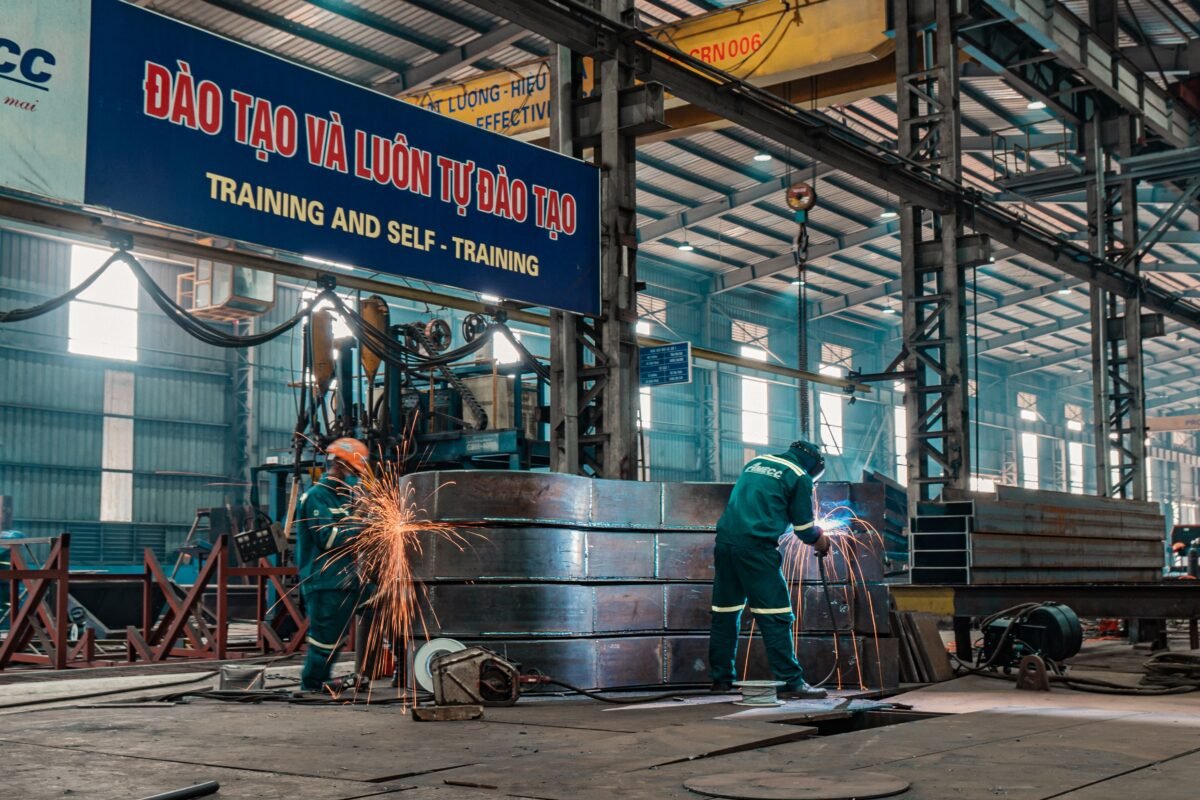
You already run a plant in China — now you want a second plant in Vietnam. This is not “copy-paste”: machinery, contracts and people must all cross the border under separate procedures. This article gives the practical roadmap.
1. The overall roadmap: 4 phases
- Phase 1 — Preparation (months 1–3): incorporate in Vietnam, obtain IRC/ERC, pick the site;
- Phase 2 — Build (months 4–9): lease/build the factory, move machinery, hire;
- Phase 3 — Pilot (months 10–12): install, trial-run, train, certify;
- Phase 4 — Operate (year 2+): ramp up, shift orders;
- Note: an indicative timeline — varies by industry and scale.
2. Moving machinery from China to Vietnam
- Option 1 — Permanent export: sell/transfer machines to the Vietnamese company — export duties (if any) plus Vietnamese import duties;
- Option 2 — Temporary import: bring machines temporarily — duty relief conditional on re-export;
- Valuation: used machines — valued for duty purposes, avoiding customs disputes;
- New machines: buying new for Vietnam — compare against moving old ones;
- Advice: a customs broker plus counsel — machinery procedures are complex.
3. Supplier contracts: new or transferred?
- Rule: the Vietnamese entity is a new party — the Chinese company’s contracts do not automatically apply;
- New contracts: negotiate fresh contracts with suppliers — price, delivery terms;
- Transfer: novation agreements (with supplier consent) — see our novation article;
- Chinese suppliers: they ship to Vietnam — new Incoterms;
- Vietnamese suppliers: build a local supply chain — reducing dependence.
4. Transferring key people
- Short term: for installation and training — business visas, possible work-permit exemption if eligible;
- Long term: managers and chief engineers — work permits plus residence cards;
- PIT: Chinese nationals working in Vietnam — personal income tax under the 183-day residence rule;
- Social insurance: payable where — Vietnam or China — check current rules;
- Detail: see our article on long-term staff transfers.
5. Shifting orders: the no-disruption path
- Rule: don’t shift 100% of orders on day one — quality and schedule risks;
- Ramp: start at 10–20% — grow as the Vietnamese plant stabilises;
- Customers: notify in advance — some need to audit the new plant;
- Quality: run both plants in parallel for a while — assurance;
- Contracts: amend the delivery location in customer contracts.
6. Running two plants: which model?
- Centralised: the China HQ runs both — tight control;
- Decentralised: each plant autonomous — local flexibility;
- Hybrid: centralised strategy, decentralised operations — the most common;
- Systems: unified ERP and reporting — visibility over both;
- People: rotate managers between plants — sharing experience.
7. Financing the second plant
- Capital source: parent contributes capital — via the DICA account;
- Borrowing: Vietnamese bank loans — or parent guarantees;
- Transfer pricing: intercompany transactions — arm’s length, documented;
- Profits: repatriating profits — taxed per regulations;
- Plan: a 3-year budget — don’t run dry mid-way.
8. Common risks
- Delays: Vietnamese procedures differ from China’s — allow buffer;
- Quality: new workers — train thoroughly before big orders;
- Supply chain: 100% dependence on Chinese inputs — border risk;
- People: Chinese managers unfamiliar with Vietnamese culture;
- Legal: local counsel from day one — don’t DIY.
9. When does the Vietnamese plant reach replacement capacity?
- Reality: typically 2–3 years for the new plant to run steadily;
- Milestone: customer certification — QC passed;
- Milestone: defect rates matching the China plant;
- Milestone: self-sufficient local supply chain;
- Patience: don’t close the China plant too early.
10. Second-plant checklist
- Vietnamese entity — IRC/ERC?
- Machinery — move or buy new?
- Suppliers — new contracts or novation?
- Key people — visas, work permits?
- Customers — notified, audited?
- Order-shift plan — phased?
11. Coordinating the Chinese and Vietnamese plants
- Technology transfer: the Chinese plant transfers processes, SOPs and QC standards to Vietnam — in writing;
- Expert support: send specialists to Vietnam for the first 3–6 months — hands-on mentoring;
- Regular meetings: weekly video calls between the two plants — solving problems promptly;
- Shared data: one shared ERP system — transparent production data on both sides;
- Culture: two-way staff exchanges — building one-team spirit.
12. IP when replicating the production line
- Trade secrets: production processes are secrets — NDAs with Vietnamese staff;
- Intra-group transfer: the parent licenses technology to the Vietnamese subsidiary — an intra-group licence agreement;
- Register in Vietnam: register trademarks and patents in Vietnam — independent protection;
- Departing staff: non-compete clauses — within legal limits;
- Risk: technology leaking through suppliers — control the chain.
13. Finance: accounting for an independent subsidiary
- Separate entity: the Vietnamese company keeps separate books — its own financial statements;
- Capital: the parent contributes capital via the direct investment (DICA) account;
- Intra-group loans: parent lending — register foreign loans as required;
- Transfer pricing: intercompany purchases — at market prices, documented;
- Profits: repatriating profits — taxed under current rules.
14. Lessons from failed second plants
- Failure 1: copying the Chinese model wholesale — no local adaptation;
- Failure 2: skimping on training costs — quality drops, customers lost;
- Failure 3: handing everything to locals too early — losing control;
- Failure 4: no contingency plan — one incident paralyses everything;
- Common lesson: patience through the first 12–18 months — don’t squeeze profits early.
15. Local content and origin rules
- Why it matters: customers increasingly demand origin proof — “Made in Vietnam” must be real;
- Rules of origin: FTAs require minimum local content — check each agreement;
- Strategy: raise Vietnamese content gradually — localising suppliers;
- Documentation: keep origin records — certificates of origin;
- Risk: shallow relabelling — customs fraud with severe penalties.
16. Exit option: if Vietnam doesn’t work
- Reality check: not every second plant succeeds — have an exit plan;
- Lease first: leasing before buying land — easier to exit;
- Contracts: exit clauses in major contracts — negotiated upfront;
- People: severance provisions — budgeted from the start;
- Mindset: an exit plan is prudence, not pessimism.
17. Choosing the site: industrial park vs standalone
- Industrial parks: ready infrastructure — faster setup, park management support;
- Standalone: more control — but you build everything yourself;
- Labour: parks near cities — easier hiring;
- Costs: compare total costs — rent, fees, logistics;
- Expansion: room to grow — reserve adjacent land.
18. Trial production: acceptance criteria
- Define: written acceptance criteria — before trial runs;
- Metrics: yield, defect rate, cycle time — quantified;
- Sign-off: customer sign-off — for key accounts;
- Timeline: deadline for acceptance — or the trial drags;
- Fail plan: what if not accepted — fix, retest, escalate.
19. Insurance for the new plant
- Construction: construction all-risk — during the build;
- Property: property insurance — after handover;
- Business interruption: covering lost profit — if disaster strikes;
- Liability: employer and public liability;
- Review: annual review — as the plant grows.
20. Handover: from project team to operations
- Team: the project team hands over — to the permanent operations team;
- Documents: complete documentation — drawings, SOPs, contracts;
- Warranties: contractor warranties — claimed before expiry;
- Training: final training — operators certified;
- Review: a post-project review — lessons captured.
21. Quick wins in the first 90 days
- Permits: secure the key permits — momentum matters;
- Hires: hire the core team — plant manager first;
- Suppliers: sign two or three local suppliers — early wins;
- Customers: invite key customers — to see the site;
- Report: a 90-day report — to headquarters.
Contact us
FLAT Law Firm advises Chinese investors throughout the Vietnam investment cycle — from deal structuring and licensing to operations and compliance. Contact us for advice tailored to your project.
This article has been quality-reviewed by the FLAW AI Legal Council