
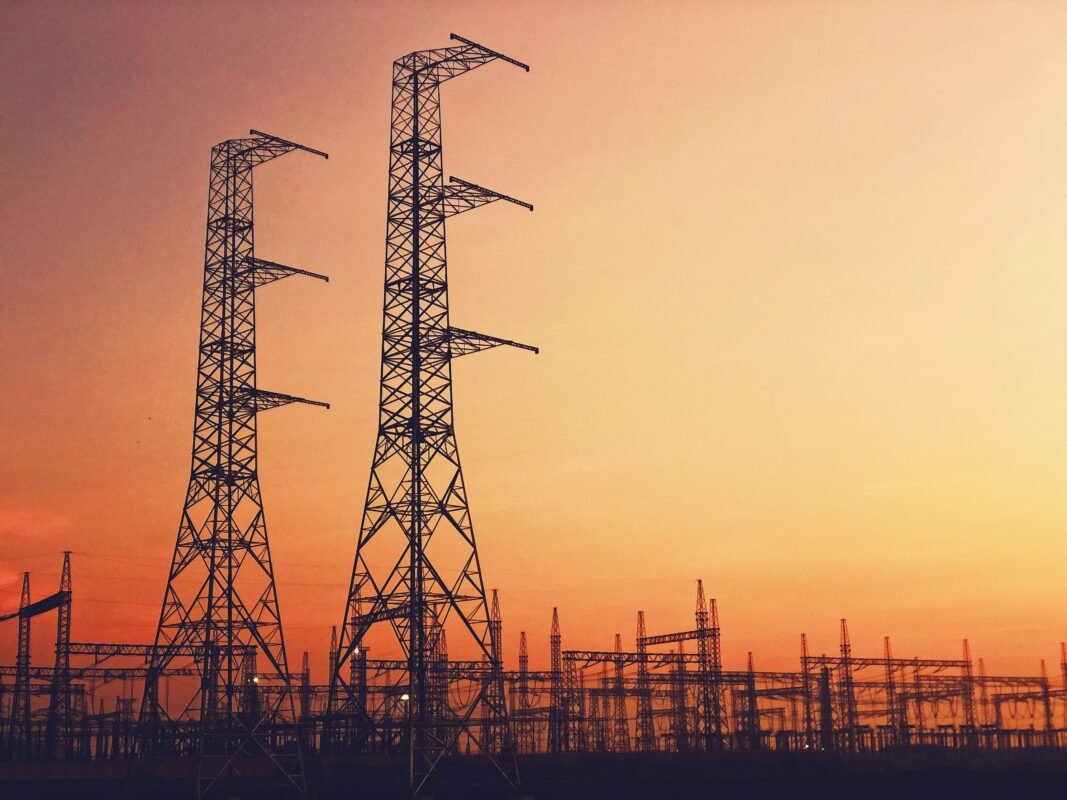
For power-hungry plants (electronic components, batteries, plastics, dyeing), industrial electricity prices can decide whether the factory goes to Vietnam, China or India. Is Vietnam cheaper? — the answer depends on pricing mechanics (peak/off-peak), supply reliability and each country’s price trajectory. This article compares all three dimensions so Chinese investors model energy costs correctly when choosing locations.
Industrial power prices: three things beyond the number
1. Pricing mechanics: Vietnam time-of-use, China–India tiered
Vietnam uses time-of-use tariffs (peak/normal/off-peak) — night-shift plants enjoy much cheaper off-peak rates. China prices power by province and sector, with major industrial provinces historically offering manufacturing discounts now reforming toward markets. India’s industrial tariffs are fragmented by state, varying widely. Conclusion: no single “standard price” exists — model on your plant’s actual shift pattern.
2. Supply reliability: the cost of outages
Cheap power means nothing with frequent blackouts. Vietnam suffered regional dry-season shortages in the north (2023) — teaching investors to price in backup costs (generators, UPS, flexible scheduling). China has a strong grid but power rationing under dual-carbon targets. Some Indian states remain unreliable. One blackout day can devour a year of tariff savings — this line belongs in every model.
3. Price trajectory and DPPA: Vietnam is opening up
Vietnamese power prices follow a market-adjustment trajectory (no more artificially cheap power forever) — investors must run rising-price scenarios. In exchange, Vietnam now offers DPPA (direct power purchase): FDI firms can buy renewable power directly from generators — locking long-term costs (fixed-price contracts) while meeting global customers’ “green power” demands (Apple, Samsung require renewable supply chains). Pure tariff comparisons miss this advantage.
Modelling energy costs correctly
(1) Model on actual shift patterns (peak/off-peak ratios); (2) add outage backup costs (generators, UPS) per regional history; (3) run 5–10 year rising-price scenarios; (4) assess renewable DPPA availability (price stability + green credentials); (5) for ultra-power-intensive sectors (smelting, chemicals), negotiate preferential power pricing within large-project incentive packages. Principle: don’t ask “which country has the cheapest power” — ask “where is my plant’s total energy cost (price + reliability + green) lowest”.
Due diligence on Vietnamese suppliers — never sign “blind”
Four inspection layers
Layer 1 — Legal: business licence, whether registered scope covers your needed production, violation history (tax, environment). Layer 2 — Financial: 2-year financials (consecutive losses? — a supplier going bankrupt mid-stream stops your line). Layer 3 — Capability: visit the plant (machines, processes, QC) — never trust the brochure. Layer 4 — Compliance: labour (any child labour?), environment (discharges?) — because you answer for the supply chain to end customers.
Small trials first — never “bet” big
Trial orders: give new suppliers small orders (1–3 months) — assess quality + timeliness + cooperation before long-term contracts. Pass criteria: defect rates below threshold, on-time delivery above 95%, incident response within 24 hours. Don’t: sign a 1-year contract immediately with an untested supplier — risking everything on one “gamble”.
Developing suppliers — “raise” instead of “replace”
Vietnamese suppliers below standard — two options: replace (find another) or raise (train them up). “Raising” wins when the supplier has the right attitude + the gap to standard isn’t too wide. How: second engineers to help (QC, processes), commit long-term orders (so they dare invest in machines), increase order share with progress. Result: loyal suppliers + your own supply chain (hard for rivals to “poach”).
Dual sourcing — never single-thread critical inputs
Even a great supplier can fail (fire, bankruptcy, quality crisis). Rule: every critical input needs two qualified suppliers (70/30 or 60/40 split) — the second keeps the first honest on price and gives you a backup. Cost: dual sourcing costs slightly more (split volumes, double qualification) — but one line stoppage costs more than years of dual-sourcing premiums. Exception: truly unique inputs (one global source) — then hold safety stock and negotiate priority supply clauses instead.
Industrial power prices — the real comparison
Vietnam: manufacturing power priced by time (peak/off-peak — 2–3× gaps) + voltage level. China: provincial pricing (each province differs) + sectoral discounts (some provinces cut for manufacturing). India: cheap but unstable (outages). Conclusion: Vietnam is not cheapest — but steadier than India + more transparent than China (published tariffs). Compute actual power costs (price × output × time factors) — never compare headline rates.
Power security — the cost of darkness
Price means nothing without reliability: (1) negotiate supply commitments (industrial zones’ written power guarantees — capacity reserved for your plant); (2) backup generation (diesel gensets for critical loads — one outage ruining a batch costs more than years of generator capex); (3) schedule around peaks (energy-intensive processes at off-peak — halving power bills is operational, not negotiated); (4) monitor grid investment (Vietnam’s power plan — new capacity coming where your plant is?). 2023’s northern outages taught the lesson: cheap power you can’t get is the most expensive power of all.
Energy cost checklist for site selection
(1) Get current time-of-use industrial tariffs (peak/normal/off-peak); (2) model on actual plant shift patterns; (3) check regional outage/shortage history (the 2023 northern lesson); (4) price backup (generators, UPS); (5) run 5–10 year rising-price scenarios; (6) assess renewable DPPA (long-term fixed pricing + green criteria); (7) power-intensive sectors: negotiate within the investment package. Principle: the tariff is one line in total energy cost — one blackout day costs more than a year of cheap power.
Contact us
FLAT Law Firm advises Chinese investors in Vietnam across the full lifecycle: investment structuring, IRC/ERC procedures, tax, labour, intellectual property and dispute resolution. Contact us for advice tailored to your case.
This article has been quality-reviewed by the FLAW AI Legal Council