
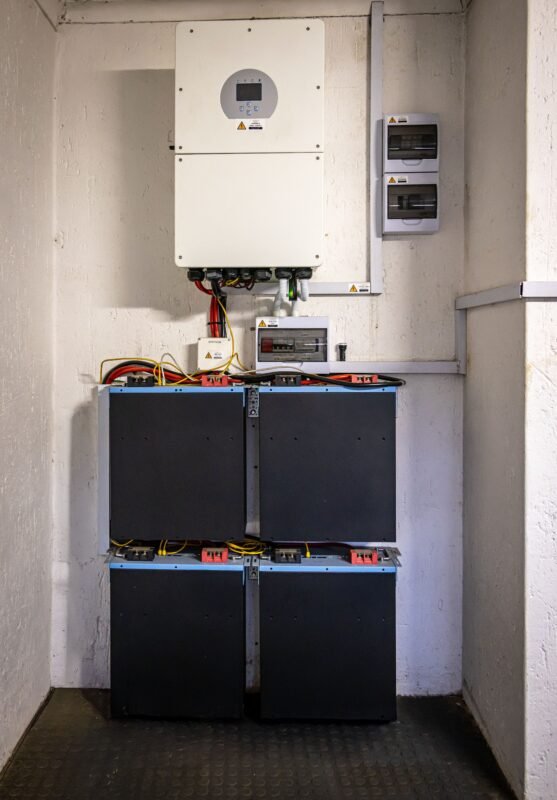
Batteries and EV components — the hottest front of China + 1: global automakers demand diversified-beyond-China battery supply chains, while China holds most of the world’s battery capacity. Where is Vietnam’s opening — pack assembly, component manufacturing, or recycling? This article maps Vietnam’s feasible positions in the battery value chain plus a checklist for Chinese battery/EV-component investors.
The battery value chain: where does Vietnam stand?
1. Mining and refining: not Vietnam’s game
Lithium, nickel, cobalt — Vietnam holds no resource advantage versus mining countries. Deep refining won’t locate in Vietnam. Chinese battery investors shouldn’t plan mine-to-pack chains in Vietnam — design cross-border chains instead: raw materials from mining regions, deep processing in China or third countries, final assembly in Vietnam.
2. Cell manufacturing: hard, but not impossible
Cell plants demand massive capital, core technology, high-skill talent — only a handful of giants play. Vietnam may attract one or two large cell projects (precedents exist), but this is a billion-dollar-group game, not for mid-size suppliers. Barriers: enormous power consumption (cell plants are electricity “monsters” — revisit the industrial power math), thin battery engineering talent.
3. Pack assembly and components: the widest door
Pack assembly, casings, cooling systems, BMS (hardware), high-voltage cabling — the segment best fitting Vietnam: medium labour intensity, transferable technology, proximity to regional auto assembly. Chinese tier-2 and tier-3 suppliers following automakers into Vietnam/Thailand/Indonesia — this is the actual wave underway.
4. Battery recycling: the “urban mine” of the next decade
End-of-life EV batteries create a huge spent-battery stream — recycling recovers lithium, nickel, cobalt. Vietnam’s fast-growing domestic EV fleet will generate domestic spent batteries within 8–10 years. Chinese firms lead in recycling technology — entering early to lay foundations in Vietnam’s recycling market is a worthwhile long move.
Checklist for battery/EV-component investors
(1) Pick the right segment: cells (only for giant groups), packs/components (wide door), recycling (long game); (2) model power costs fully — battery plants devour electricity; (3) check battery origin rules in destination-market FTAs (batteries have their own, stricter rules than garments); (4) meet automakers’ green-supply-chain demands (carbon traceability, renewable power — DPPA helps); (5) incentives: high-tech, large-scale projects earn CIT holidays under Investment Law 143/2025/QH15; (6) technical staffing plan: training or inbound specialists early.
The overcapacity warning nobody wants to hear
China’s battery sector carries significant overcapacity — and some of it is looking for an outlet in Southeast Asia. Vietnamese pack-assembly capacity is growing faster than confirmed regional EV demand, which means margin compression for late entrants competing on price alone. Three implications: (a) don’t build generic pack capacity hoping demand appears — anchor the investment to named automaker offtake or export contracts; (b) differentiation beats scale at entry — specialised packs (two-wheelers, energy storage, marine) face less competition than standard EV packs; (c) watch for trade-defence spillover — battery components have already faced anti-dumping and origin scrutiny in Western markets, and Vietnamese-origin batteries will not stay exempt from questioning forever. The winning posture is contracted demand first, differentiated product second, and scale only third — the reverse of how most entrants sequence it.
Supply-chain “freeze” scenarios — responses by severity
Level 1 — Short disruption (under 2 weeks)
Causes: border jams, surprise quarantines, extended holidays. Response: safety stock (pre-built) + expedite in-transit shipments (switch transport modes) + resequence production (run orders less dependent on missing parts first). Not needed: switching suppliers (costly, slow).
Level 2 — Medium disruption (2 weeks – 3 months)
Causes: natural disasters, epidemics, escalating trade tensions. Response: activate backup suppliers (pre-qualified) + build stocks of substitute parts + negotiate with customers (delayed/partial deliveries). Needed: a response team (supply chain + procurement + production) meeting daily.
Level 3 — Long rupture (over 3 months)
Causes: sanctions, conflict, systematic “decoupling”. Response: restructure the supply chain (shift sourcing to third countries / localise) + redesign products (substitute components) + renegotiate customer contracts (force majeure). This is: strategy (board-level), not operations (procurement).
The playbook principle — decide before the crisis
Every scenario above needs a written playbook — prepared in calm times, executed in crisis. Contents: trigger definitions (what counts as Level 2?), decision owners (who activates backup suppliers?), pre-negotiated backup terms (dormant contracts with alternates), communication templates (customer notices, staff briefings). Drill it: tabletop exercises twice a year — the team that has rehearsed Level 2 responds in hours; the team improvising takes weeks. Reality: supply-chain resilience is bought before the disruption, not during it — during it, you only spend what you prepared.
Batteries and EV components — the hottest China+1 play
Batteries/EV components are the hottest China+1 sector today: (1) exploding demand (global EVs); (2) Chinese chain dominance (70–80% of world batteries) — customers (Tesla, VW…) forcing diversification; (3) incentives (high-tech — tax holidays). Challenges: huge capital (battery plants cost billions), high technical barriers (not everyone can), environment (chemicals — strict EIAs).
De-risking the mega-investment — phasing the billions
Never build the full gigafactory on day one: (1) phase 1 (pack assembly — lower capex, faster revenue, learning the market); (2) phase 2 (cell production — once demand is proven and workforce trained); (3) phase 3 (materials processing — the deepest integration, only when scale justifies). Each phase needs its own investment decision (not one blind commitment). Partner smartly (Vietnamese industrial groups for land/permits; global OEMs for offtake agreements — contracted demand de-risks capacity). Reality: the graveyard of battery projects is full of all-in bets — phased builders survive demand cycles.
Battery/EV Vietnam checklist
(1) Pick a fitting segment (packs/components/recycling over cells unless a giant); (2) fully model power costs; (3) check battery origin rules per destination FTA; (4) meet green supply-chain demands (DPPA, carbon traceability); (5) model high-tech CIT incentives; (6) technical staffing plan; (7) IRC under Investment Law 143/2025/QH15 + Decree 96/2026/ND-CP. Principle: in batteries, Vietnam wins at packs, components and recycling — don’t fight battles that aren’t yours.
Contact us
FLAT Law Firm advises Chinese investors in Vietnam across the full lifecycle: investment structuring, IRC/ERC procedures, tax, labour, intellectual property and dispute resolution. Contact us for advice tailored to your case.
This article has been quality-reviewed by the FLAW AI Legal Council


