
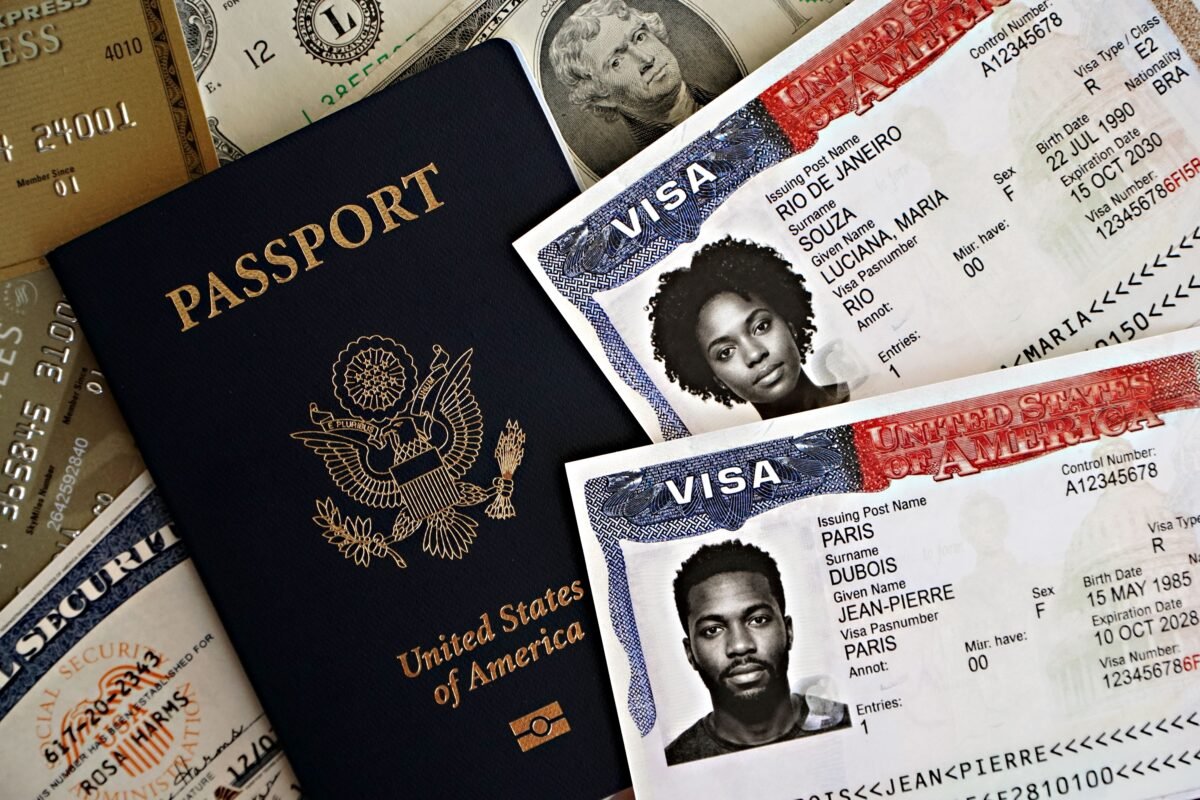
A team of Chinese specialists heading to a factory in Bac Ninh or Bac Giang — travelling overland through the Lang Son or Lao Cai border gates instead of flying — saves cost and adds schedule flexibility. But overland entry has particularities air travel doesn’t: not every gate accepts every visa type, group procedures differ from individual ones, and carrying equipment/samples across the border involves customs. This article lists everything to prepare so the team crosses smoothly, without being held up.
Which visa types work at land border gates?
Check the gate list before every trip
The first and most important rule: not every land gate processes every visa type. Vietnam’s Government publishes the list of gates where foreigners may enter on e-visas — including major international land gates. Teams must check the current list before each trip, as it can change. With sticker visas from Vietnamese missions in China, or DN business visas sponsored by the Vietnamese company, entry through international land gates is normally straightforward — but documents must match: passport, visa, invitation/sponsorship letter, and the team roster.
E-visas overland: particularities
The e-visa (up to 90 days, multiple entries) is the most flexible option for frequent travellers. Entering overland on an e-visa: (1) carry a printout (the QR code works, but paper speeds things at busy gates); (2) ensure the entry gate is on the e-visa list; (3) declare the correct entry purpose — a tourist e-visa doesn’t cover long-term work. For large groups: each member needs an individual e-visa — there is no collective “group visa”; the team leader should hold copies of everyone’s documents for troubleshooting.
Carrying equipment and samples across the border
Specialist teams often carry measuring instruments, sample components, technical documents — all within customs jurisdiction at the gate. The rule: declare valuable equipment in full; equipment brought in for installation/repair and taken back out (temporary import–re-export) needs the matching customs procedure; technical documents containing trade secrets should be protected (encryption, access control) as customs inspection may require opening them. For large quantities or specialised equipment, engage a customs broker at the gate in advance — don’t let the whole team wait three to four hours over one undeclared crate.
Contingency planning for overland teams
One — flexible scheduling: land gates keep fixed hours and clog at holidays and peaks — arrive early, avoid rush hours, keep backups (switch gates, shift dates). Two — a fluent team leader: assign at least one Vietnamese-speaking person (or hire an interpreter) to deal with gate authorities when needed. Three — backup documents: notarised copies of passports, visas, work permits (if any), sponsorship letters — in paper and digital. Four — factory liaison: notify the plant’s admin of the expected arrival for pickup and complete temporary residence registration on day one (the duty to register with local police).
When things go wrong at the gate
Even well-prepared teams get stopped. First, stay calm and compliant: arguing with border officers never improves outcomes — the team leader handles all communication. Second, diagnose quickly: is it a document mismatch (wrong gate for the visa type, expired printout), a customs issue (undeclared equipment), or a system issue (network outage at the gate)? Each has a different fix. Third, have escalation contacts ready: the sponsoring company’s legal/admin hotline, the customs broker’s number, and — for genuine emergencies — the company’s retained counsel. Fourth, document the incident: note the officer’s name or counter number, the reason given, and the time lost — the record feeds back into the pre-trip checklist so the same problem never repeats. Fifth, protect the schedule: if the delay threatens installation milestones, activate the contingency (reroute specialists, reschedule the commissioning window) rather than letting one gate delay cascade into a project delay. Border friction is a known risk of the overland route; treating it as a managed risk rather than a surprise is what separates experienced operators from first-timers. Build a named contact at the border post before peak season — the operators who can phone a familiar officer clear jams in hours, not days.
Chinese specialist groups entering via land borders (Lang Son, Lao Cai) — practical notes
Border-gate visas — not for everyone
Some land border gates offer visa on arrival — but with tight conditions, and not every gate has it. Reality: a 20-person Chinese specialist group arriving at Huu Nghi gate (Lang Son) without an entry approval letter — stuck at the gate (can’t enter, can’t immediately return). Right approach: obtain the entry approval letter before departure — stating the exact entry gate (never apply for one gate and use another).
Temporary residence declaration — the forgotten duty
Land-entry specialists staying in hotels/rented houses near plants — hosts must declare temporary residence for foreigners. Reality: company-rented houses in industrial zones with nobody declaring — inspections fine both host and foreigner. Fix: the company centrally declares for all specialists (never leave it to individuals) — with periodic checks (declarations track stay duration).
Domestic travel — papers always on hand
Chinese specialists travelling between provinces (Lang Son → Bac Ninh → Hai Phong) — administrative checks may demand passport + visa + work permit anytime. Reality: many specialists leave passports at hotels (“afraid of losing”) — checks become trouble. Fix: carry notarised copies + keep originals in the company safe; brief specialists on the rules day one (never let “ignorance” be the excuse).
Expert groups entering by land — practical organisation
Prepare: (1) the roster (names, passport numbers, visas — sent ahead to the Vietnamese contact); (2) split into groups (each 5–10 people with a leader speaking Vietnamese/English); (3) time the crossing (avoid peak hours, avoid both countries’ holidays). At the crossing: queue by group, the leader interfaces with officers (never let the whole group crowd the counter).
Contingency planning — when the border says no
Have a plan for refusals: (1) one member denied entry — the group proceeds (leader stays with the denied member, rest continue); (2) whole group delayed — activate the air alternative (nearest airport, emergency e-visa applications); (3) document issues (expired invitation letter) — keep digital backups + a Vietnamese contact who can reissue within hours. Never let a border hiccup cascade: the project timeline should not depend on a single crossing on a single day. Buffer critical arrivals by 3–5 days — border unpredictability is the one certainty.
Overland entry checklist for specialist teams
Before the trip: (1) verify the gate accepts the team’s visa type; (2) individual valid visas for each member (print e-visas); (3) invitation/sponsorship letters and team roster; (4) pre-declare equipment/samples with customs; (5) assign a Vietnamese-speaking team leader. At the gate: (6) arrive early, avoid peak hours; (7) stay orderly, present complete documents; (8) handle queries calmly — the leader deals with authorities. After entry: (9) register temporary residence immediately; (10) track visa validity and plan renewal/conversion (to residence cards once work permits issue).
Contact us
FLAT Law Firm advises Chinese investors in Vietnam across the full lifecycle: investment structuring, IRC/ERC procedures, tax, labour, intellectual property and dispute resolution. Contact us for advice tailored to your case.
This article has been quality-reviewed by the FLAW AI Legal Council
Related articles
- Registering Internal Labor Rules: Dossier and Deadlines at the Department of Home Affairs
- 2026 Collective Bargaining: Process and Grassroots Union Role
- Legal Strikes: 3-Step Process and Workers' Rights
- Periodic OSH Training: Mandatory Subjects and Penalties
- Underage Workers in Factories: Prohibited Job List


