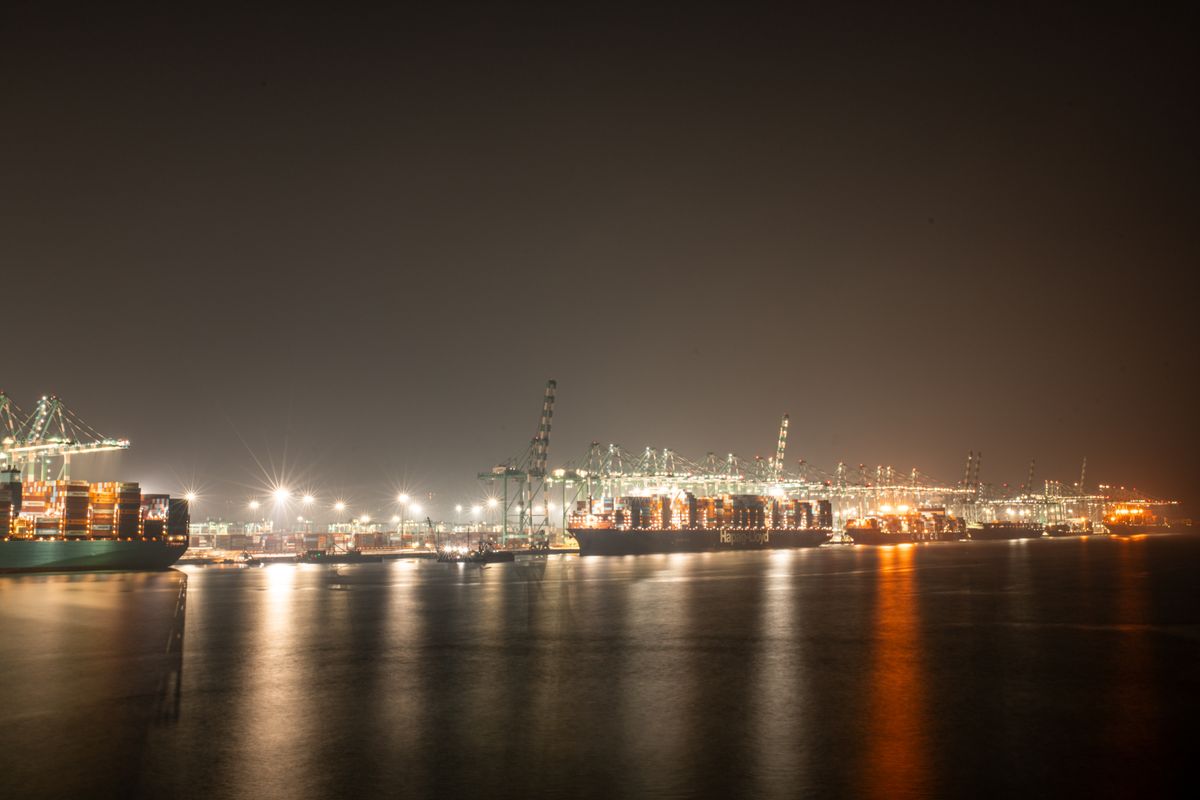
Image: Container port at night — Source: Pexels, by Oleksiy Yeshtokyn (Pexels License).
“Almost the same as the EVFTA” is not “the same file twice”
After Brexit, the UK and Vietnam signed the UKVFTA (in force since 1 May 2021), largely replicating the EVFTA (in force since 1 August 2020). Many exporters therefore assume one formula covers both markets: same tariff schedules, same origin rules, same standards. In reality, the UKVFTA contains differences big enough that a consignment can clear preferentially in the EU but run into trouble in the UK — or vice versa.
Here are the seven differences exporters should master before signing contracts with UK buyers.
1. Tariff phase-out: same script, different cast
Tariff reduction roadmaps in the UKVFTA essentially copy the EVFTA. However, the UK’s post-Brexit MFN tariff schedule differs from the EU’s common external tariff. The practical effect: for the same HS code, the UKVFTA preferential rate and the UK MFN rate can produce a different “preference margin” than in the EU. Always look up the UK’s own tariff for each HS code — never infer it from the EU schedule.
2. Tariff-rate quotas: 12 farm product groups play by different rules
The sharpest visible difference is in tariff-rate quotas. The UK’s quota commitments for 12 Vietnamese agricultural product groups differ from the EU’s — notably the quota for fragrant rice, which Vietnam negotiated specifically to gain a competitive edge in the UK market. Farm exporters must track the UK’s remaining annual quota independently of the EU’s.
3. Cumulation with EU materials: a UKVFTA-only advantage
The UKVFTA allows extended cumulation: materials originating in EU member states (plus certain related territories) can be used to manufacture finished products in Vietnam for export to the UK while retaining UKVFTA preference. This is a structural difference from the EVFTA — where UK-origin materials no longer cumulate for goods shipped to the EU after Brexit. Exporters using EU inputs (fabrics, components, chemicals) should exploit this aggressively for UK-bound goods.
4. Rules of origin: inherited, not identical
The UKVFTA inherits most of EVFTA Protocol 1 on origin and administrative cooperation, with adjustments for the extended cumulation mechanism and the UK’s status as an independent party. Origin documentation for the UKVFTA (EUR.1 certificates and origin declarations) must comply with UKVFTA rules — a dossier prepared for the EU market cannot simply be reused. Businesses serving both markets need two separate documentation streams.
5. Technical standards: UKCA instead of CE
Post-Brexit, the UK requires UKCA marking for many product groups instead of the EU’s CE mark. A product certified with CE marking for the EU is not automatically compliant for the UK without conformity assessment under UK rules. This is a technical-barrier (TBT) issue independent of tariff preferences — and where many exporters get stuck at UK ports despite holding valid origin documents.
6. Services commitments: not a carbon copy
Vietnam’s services market-opening commitments to UK firms are not identical to those for EU firms, because UK companies’ strengths and market-access demands differ from the EU’s. Exporters of services (logistics, consulting, technology) should read the UKVFTA’s specific schedules rather than defaulting to EVFTA assumptions.
7. Geographical indications and accompanying commitments
The UKVFTA protects UK-origin geographical indications (such as Scotch Whisky and others) in Vietnam, separately from the EU GI system in the EVFTA. The two agreements also have distinct transitional provisions and review mechanisms (for example, the review of the cumulation arrangement). Businesses in food, agriculture, and beverages using geographical names should check each agreement’s protection list.
What exporters should do
- Separate dossiers by market: origin documents, tariff lookups, and technical standards for the UK and the EU must be handled independently.
- Exploit cumulation with EU materials for UK-bound exports — an advantage unavailable for EU-bound goods.
- Track the UK’s TRQs separately, especially for rice and farm products.
- Confirm UKCA marking before shipment; never assume CE certification suffices.
- Consider agreement choice: the UK joined the CPTPP (2024), and Vietnam is a CPTPP member — for some goods, comparing UKVFTA and CPTPP terms can yield the better deal.
Conclusion
The UKVFTA is the EVFTA’s sibling, not its clone. Seven differences — from tariff-rate quotas and cumulation with EU inputs to UKCA marking and services commitments — can each become real costs if exporters apply one formula to both markets. Understanding each agreement on its own terms is the cheapest way to protect margins.
Frequently asked questions
Do goods enjoying EVFTA preference in the EU automatically get UKVFTA preference in the UK?
No. Each agreement has its own scope and documentation. UK-bound consignments must satisfy UKVFTA origin rules and paperwork even for products previously shipped to the EU.
Can EU-origin materials be cumulated for goods exported to the UK?
Yes, under the UKVFTA’s extended cumulation mechanism. Conversely, UK-origin materials no longer cumulate under the EVFTA for EU-bound goods after Brexit.
Is CE marking accepted in the UK?
In principle, the UK requires UKCA marking for covered product groups. Check current UK rules per product group — never assume CE marking is enough.
How does the UK fragrant-rice quota differ from the EU’s?
The UK has its own quota commitment for Vietnamese fragrant rice, distinct from the EU’s. Track the UK’s remaining annual quota separately.
Should UK-bound exports use the UKVFTA or the CPTPP?
It depends on the product: compare preferential rates, origin rules, and conditions under each agreement for the specific HS code and choose the better option. It is a commercial calculation per shipment.
This article has been quality-reviewed by the FLAW AI Legal Council
Related articles
- EU Anti-Dumping Duties on Vietnamese Goods: How Exporters Can Defend Themselves
- Why French Investors Choose Vietnam: Energy, Retail and a Long Partnership
- Why Wooden Furniture Exporters Keep Losing EVFTA Preferences: 5 Recurring Origin Mistakes
- EVFTA Self-Certification of Origin on Invoices for Machinery and Bicycles Shipped to the EU: the 6,000 EUR Threshold and What's New in 2026
- Origin Cumulation under EVFTA vs UKVFTA for Seafood (shrimp, pangasius): What Changed after Brexit?