
Shrimp and pangasius are flagship Vietnamese exports to the EU — and also among the products EU customs selects most often for origin verification. When a consignment is held for verification, EVFTA preferences can be denied not because the goods lack originating status, but because the exporter cannot prove it. This article explains how the EU verification mechanism works and which document dossier exporters need to survive it.
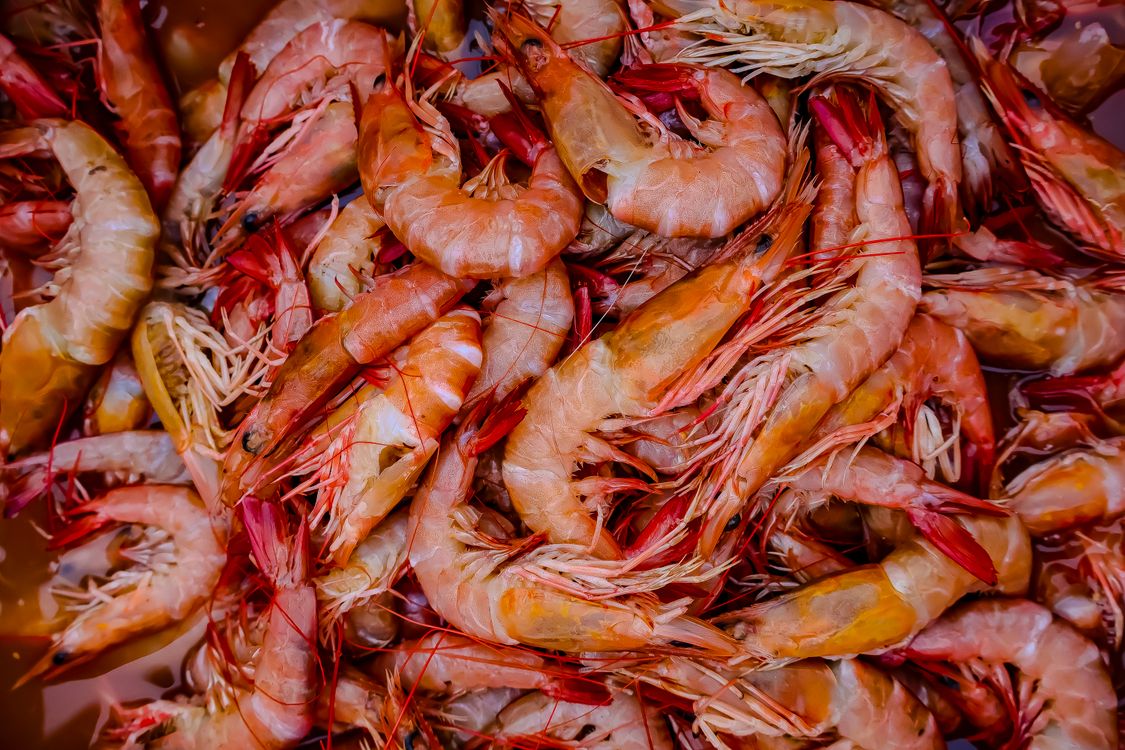
Image: ManojMk Brucelee / Pexels — free stock photo.
1. Why Vietnamese seafood draws scrutiny
Three factors make shrimp and pangasius priority verification targets for EU customs. First, large trade volumes and a significant gap between preferential and MFN duty rates create incentives for origin fraud. Second, seafood supply chains are complex: inputs pass through collection, pre-processing and freezing stages, with risks of mixing non-originating raw material. Third, for wild-caught fish, the EU applies its anti-IUU (illegal, unreported and unregulated fishing) regime in parallel, so origin files are often examined together with catch documentation.
2. How EU origin verification works
Under the verification mechanism in EVFTA’s Protocol on rules of origin (implemented domestically by Circular 14/2026/TT-BCT — effective 10 May 2026, replacing Circular 11/2020/TT-BCT), the customs authority of the importing party (the EU) may, where doubts arise, request verification of the authenticity of origin documents and the accuracy of origin information. The process runs as follows:
- EU customs sends a verification request to Vietnam’s competent authority (the Ministry of Industry and Trade and authorised C/O-issuing bodies).
- The Vietnamese side inspects the exporting enterprise: cross-checking production records, input invoices and accounting books, and possibly visiting the production site.
- Findings are reported back to the EU. If no satisfactory reply arrives within the time limit, or the findings show the goods do not meet origin rules, EU customs may deny the preference and recover duties.
The critical point: the exporter is the party actually inspected, even though the request travels through government channels. The files kept at the company decide the outcome.
3. How origin is determined for shrimp and pangasius
Under Article 6 of Circular 14/2026/TT-BCT on wholly obtained goods, the two common cases for Vietnamese seafood are:
- Farmed in Vietnam: black tiger shrimp, whiteleg shrimp and pangasius raised in Vietnamese ponds or cages are wholly obtained (criterion “P”). This is the most favourable case — no tariff-shift or value-content calculation needed.
- Caught at sea: fish caught by vessels of a Party (flying its flag, registered there and meeting crew/ownership conditions) are wholly obtained. For wild-caught inputs, exporters must additionally satisfy the EU’s IUU rules (catch certificate).
For deeper processing (e.g., breaded shrimp, seasoned pangasius fillets), origin follows the product-specific rules in Annex II — typically a change of tariff heading. Exporters must identify the correct criterion for each finished-product HS code and state it accurately on the origin document (“P” or “W + HS code”).
4. The verification-proof dossier: checklist by group
Group 1 — Exporter credentials: exporter registration number (REX or self-certification scheme number), business registration certificate, and copies of issued origin documents (C/O EUR.1 or statements on origin on invoices/commercial documents).
Group 2 — Input origin: for farmed shrimp/pangasius — purchase contracts, invoices, pond diaries, farming-zone confirmations; for caught inputs — catch certificates, vessel logs; for imported inputs (if any) — import declarations, invoices and origin evidence from the input’s country of export.
Group 3 — Production process: process flowcharts, bills of materials (fresh-to-frozen yield ratios — customs uses these to sanity-check quantities), batch traceability records from input to finished export consignment, proving no mixing of non-originating inputs into consignments declared as Vietnamese origin.
Group 4 — Trade and transport: export contracts, commercial invoices, packing lists, bills of lading, export customs declarations. For goods transiting third countries, evidence that no further processing occurred (direct transport rule).
Group 5 — Accounting: books clearly segregating originating and non-originating inputs where both are used (accounting segregation method), audit reports where available.
5. Three recurring scenarios
Scenario 1 — The company both farms and buys from outside. Segregate consignments strictly: a consignment declared as wholly obtained may only use inputs from its own farms or purchases with complete farm-zone documentation. One batch of undocumented input mixed in taints the whole consignment.
Scenario 2 — Using Indian-imported shrimp for processing and re-export to the EU. Criterion “P” is unavailable; origin must be assessed under the product-specific rule (tariff shift) and preference claimed only if met. If not met, ship under MFN rates rather than misdeclaring Vietnamese origin — false declarations attract penalties and risk profiling.
Scenario 3 — Notified that EU customs is verifying a consignment shipped six months ago. Cooperate calmly: submit all five dossier groups to the Vietnamese authority within the deadline; do not contact EU customs directly; re-audit the consignment’s documents before submission. The more complete the file, the shorter the preference suspension.
Frequently asked questions
1. Can EU customs deny EVFTA preference while verification is pending?
While awaiting results, EU customs may apply safeguard measures (suspending preference, requiring a guarantee). If the Vietnamese side fails to reply satisfactorily within the time limit, or verification shows non-compliance, the preference is denied and duties recovered.
2. Is Vietnamese-farmed shrimp automatically entitled to EVFTA preference?
On origin: yes — farmed shrimp is wholly obtained (criterion “P” under Article 6 of Circular 14/2026/TT-BCT). But “preference” additionally requires a valid origin document (C/O EUR.1 or statement on origin) and complete farming-origin evidence if checked.
3. How long must origin records be kept?
They must be retained for the period prescribed by law to serve post-clearance verification by both sides. In practice, verification requests can arrive months after clearance, so EU-bound consignment files need systematic, batch-level archiving.
4. What extra paperwork do wild-caught inputs need versus farmed?
Beyond origin files, a catch certificate under the EU’s IUU regulation proving lawful capture. Without it, goods may be refused entry independently of origin issues.
5. What is the difference between self-certification and C/O EUR.1?
C/O EUR.1 is issued by Vietnam’s competent authority on the basis of the exporter’s application file; a statement on origin is made out by the exporter itself on the invoice or another commercial document per the model in Circular 14/2026/TT-BCT, with the exporter liable for accuracy. Both can be subject to verification.
6. Does transiting via Singapore before reaching the EU affect origin?
Possibly. Goods must satisfy the direct-transport rule: transit through a third country is accepted if the goods undergo no further processing beyond preservation and this is evidenced by the transit country’s customs documents. Ask the forwarder for complete transit documentation.
Conclusion
For shrimp and pangasius shipped to the EU, genuinely having origin is only half the story — proving it on paper is the other half. Build batch-level traceability from pond or vessel to export container today, rather than scrambling for documents after a verification request arrives. A proper dossier always costs far less than a consignment denied preference.
—
This article has been quality-reviewed by the FLAW AI Legal Council


