
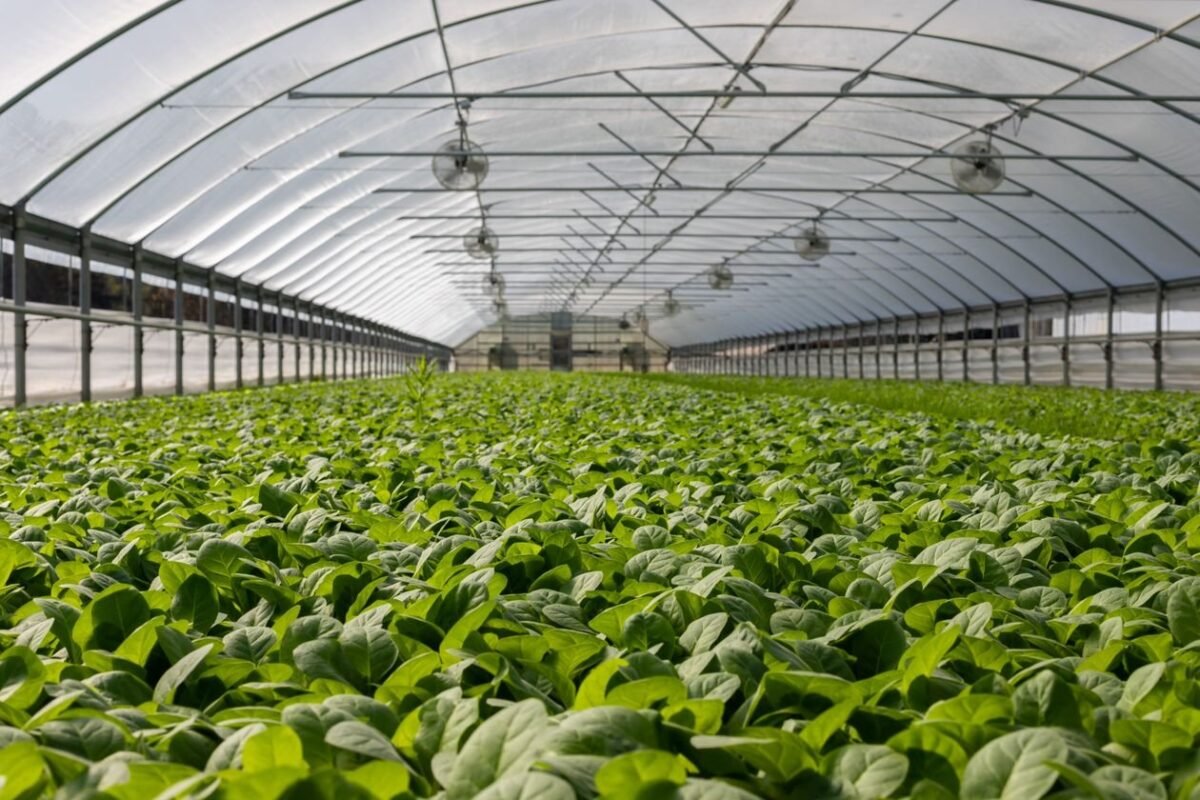
Scenario: a Mekong Delta rice cooperative hears “low-emission rice sells carbon credits” and asks: “can our paddies sell, to whom — and does the money reach farmers or middlemen?” The question hits the hotspot: Vietnamese agriculture is both a major emission source and a potential carbon-credit “mine” — but the road from paddy to tradable credit crosses legal conditions and organizational models farmers can’t walk alone.
Why agriculture is a carbon-credit “mine”
Agriculture accounts for roughly 30% of Vietnam’s total GHG emissions: flooded rice emits methane (CH4), livestock emits from waste and enteric fermentation, synthetic fertilizers emit N2O. But large emissions mean large reduction headroom: alternate wetting and drying (AWD) cuts paddy methane by tens of percent; biogas digesters turn livestock waste into energy, capturing methane; afforestation and scattered tree planting absorb CO2. Every tonne of CO2e reduced under a recognized methodology can become a credit — and Vietnam has millions of rice hectares and millions of livestock households: the potential scale is enormous.
Three classic agricultural credit models
Model 1 — Low-emission rice: farmers adopt “1 must, 5 reductions” packages with AWD (mid-season drainage), cutting seeds, fertilizer and pesticides — lowering costs and methane; projects aggregate thousands of households into one programme for registrable scale. Model 2 — Livestock biogas: farm-scale digesters capturing methane from waste — already widespread in Vietnam, well-suited for carbon-project packaging. Model 3 — Forestry and scattered planting: new forests on bare land, trees on farmland — absorbing CO2, generating forestry credits; requiring long-term forest-maintenance commitments (forest credits carry permanence requirements).
Legal conditions and the organization puzzle
Legally, agricultural credit projects must meet general carbon-project registration conditions: additionality (farmers wouldn’t widely adopt without the project), recognized methodologies, no double counting, and clear ownership of emission reductions — especially sensitive for farmland: who owns credits from a farmer’s paddy — the farmer, the cooperative, or the project developer? Contracts must spell out benefit-sharing ratios. Organizationally: smallholders can’t register alone — aggregation models via cooperatives or project companies must handle PDDs, validation, monitoring and revenue distribution. Farmers should beware of “carbon projects” with extravagant promises, signing away credit rights under contracts they don’t understand.
Conclusion
Agricultural carbon credits are a real opportunity: low-emission rice, biogas and forestry all have methodologies and international precedents. But farmers shouldn’t expect to “sell credits from their own paddy” solo — the right path is joining cooperatives and legally-sound project programmes with transparent benefit-sharing contracts. For businesses, agricultural carbon is dual-impact investing: cutting emissions while improving rural livelihoods — exactly the project type high-quality credit markets are hunting.
Frequently asked questions
1. Can rice paddies generate carbon credits?
Yes — if low-emission techniques (like AWD) apply within a registered project demonstrating additionality and methodology-based measurement.
2. Can smallholders register carbon projects alone?
Very difficult in practice due to verification and monitoring costs; aggregation via cooperatives or project companies is needed.
3. Who owns credits from a farmer’s paddy?
Contracts decide — benefit-sharing ratios among farmers, cooperatives and developers must be explicit.
4. How do forest credits differ from other agricultural credits?
Forest (removal) credits carry permanence requirements — forests must be maintained against reversal of absorbed CO2.
This article has been quality-reviewed by the FLAW AI Legal Council