
FLAT LAW FIRM’s legal article library is organized by need groups rather than gathered into one long news feed. Readers can start from their issue group, then go deeper into specific guidance articles, checklists and risk analyses.
How to read the legal article library
The library is organized by legal need rather than publication date so readers move from a real issue to the closest article.
Existing articles link to the corresponding service pages, while serving as background for in-depth topic groups that will continue to expand.
Recently updated

FLAT LAW FIRM Cooperation Network
FLAT LAW FIRM Cooperation Network FLAT LAW FIRM serves as a legal-services point of contact in Vietnam. Where appropriate, we coordinate with relevant professional resources within the FLAT…
Read article ↗
Tax Compliance for Chinese Companies in Vietnam
Tax Compliance for Chinese Companies in Vietnam is a practical Vietnam-law topic for companies, investors an
Read article ↗
Drafting Vietnamese-chinese Bilingual Contracts
Drafting Vietnamese-chinese Bilingual Contracts is a practical Vietnam-law topic for companies, investors an
Read article ↗
Governing Law in Vietnam-china Contracts
Governing Law in Vietnam-china Contracts is a practical Vietnam-law topic for companies, investors and management t
Read article ↗
Payment Clauses in Vietnam-china Contracts
Payment Clauses in Vietnam-china Contracts is a practical Vietnam-law topic for companies, investors and manageme
Read article ↗
Force Majeure Clauses in Vietnam-china Contracts
Force Majeure Clauses in Vietnam-china Contracts is a practical Vietnam-law topic for companies, investors
Read article ↗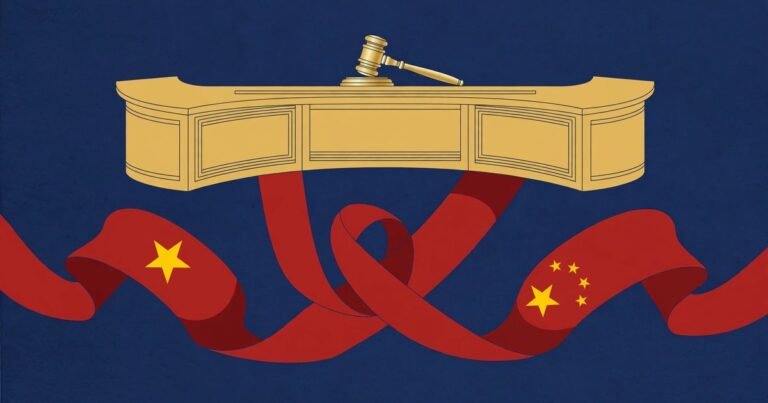
Arbitration Clauses for Vietnam-china Contracts
Arbitration Clauses for Vietnam-china Contracts is a practical Vietnam-law topic for companies, investors an
Read article ↗
Corporate Governance in Vietnam
Corporate Governance in Vietnam is a practical Vietnam-law topic for companies, investors and management teams. The Vietname
Read article ↗
Reviewing Company Charters in Vietnam
Reviewing Company Charters in Vietnam: legal basis, document checklist, risks, authority issues and how FLAT LAW FIRM can assist clients.
Read article ↗Quick entry points by need
Foreign investment
IRC, capital contributions, workshops, checklists and FDI operating conditions.
Corporate law
Contracts, periodic compliance, governance and operations.
Private & Family
Divorce, assets, inheritance and real estate disputes.
M&A
Capital acquisition transactions, investment structuring and post-transaction matters.
Labour
Work permits for foreign specialists and managing personnel with foreign factors.
Dispute resolution & arbitration
Litigation, VIAC arbitration and enforcement of awards.
Commercial contracts
Drafting, reviewing and negotiating commercial contracts.
Real estate & construction
Projects, transactions and construction law.
Background pages for each topic group
Each article in the library belongs to a practice area. If you need the full picture instead of a specific question, start from the corresponding practice page:
- Foreign investment in Vietnam and Enterprise formation and company law
- Trade and contracts and M&A for foreign investors
- Real estate, construction and projects and Energy and renewable energy
- Labour law advisory and Enterprise Registration Certificate (ERC)
- Dispute resolution and arbitration and Ongoing legal advisory
- Divorce and division of substantial assets, Inheritance, wills and estate division and Private real estate disputes
Legal reference sources
The library is edited by the FLAT LAW FIRM team; real situation groups are summarized separately in advisory experience. The library articles cite Vietnamese normative legal documents. Readers can look up the full text at the Government’s system of normative legal documents to check the validity of cited instruments, as regulations may be amended after the article’s publication date.
When to move from reading articles to talking with a lawyer
If the dossier has foreign elements, large transaction values, multiple parties or tight deadlines, reading more articles should only be preparation, not a replacement for case-specific assessment.
An early exchange helps identify which articles truly apply, which documents are missing and which risks to prioritize.
Frequently asked questions
Does the hub replace formal legal advice?
No. The hub orients content; specific dossiers still need separate review.
Which article should I start with?
Choose the article closest to the decision you need to make, then cross-check with the relevant background page.
What if there is no article for my need?
That topic is recorded for further additions; in the meantime, clients can contact us for direct assessment.
Need assessment of a specific dossier?
Disclaimer
The content of the articles is for general reference only and does not replace formal legal advice for each specific case.
Library editorial principles
Each article should serve a clear purpose: explaining regulations, helping prepare dossiers, comparing options, identifying risks, or guiding readers to the right service page. Articles that merely repeat general definitions without helping decision-making will not be prioritized for expansion.
The library also helps recognize needs not yet fully presented: if a need group repeats many times in actual advisory work but has no dedicated article, that topic will be prioritized for addition.
How to use articles with service pages
In-depth articles help readers understand issues; service pages help them know when to move from self-research to working with a lawyer. These two content layers complement each other rather than duplicating the same search need.
Standards before large-scale expansion
Before adding new articles, each topic group needs a sufficiently strong background page, real links to related content, a working contact route, suitable illustrative images and clear language routing. This avoids growing article counts while sending readers into dead ends or to service pages not ready to receive requests.
The role of related articles
Related articles in the same cluster help readers check an issue from multiple angles: process, risks, dossiers, disputes and when to use the service. When the content cluster is dense enough, navigation becomes more natural and readers have more touchpoints before contacting.