
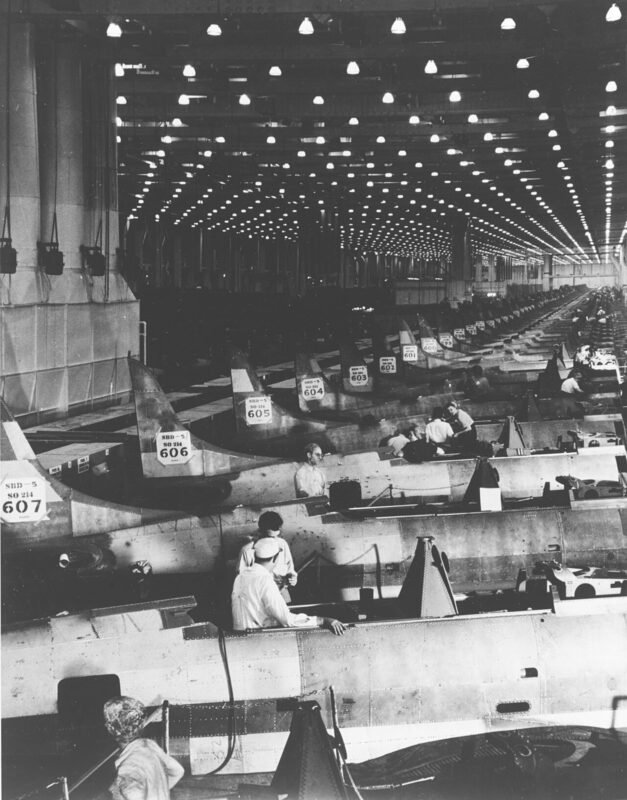
Mexico attracts export factories with IMMEX — duty-free temporary imports for re-export; Vietnam uses the export processing enterprise (DNCX/EPE) model inside industrial and export processing zones. Both serve export manufacturing, but their legal logic and compliance burdens differ sharply.
IMMEX Mexico: temporary import for re-export
IMMEX (the programme promoting manufacturing, maquiladora and export services) is administered by Mexico’s Ministry of Economy (Secretaria de Economia). A licensed IMMEX company may temporarily import raw materials, components and machinery free of import duty and VAT (IVA), on condition the finished goods are exported (in full or at the committed ratio).
The key point: IMMEX is a licence attached to the company and its export programme, not to a zone location. Companies must maintain inventory-control systems (Anexo 24/31) proving temporarily imported inputs were re-exported — Mexican customs audits without warning, and violations can mean licence revocation plus back taxes.
Vietnam’s EPE: a separate customs territory
A DNCX/EPE under the Investment Law 143/2025 and Decree 96/2026/ND-CP is an enterprise specialising in export production, located in an export processing zone, industrial park or economic zone, operating as a separate customs territory: transactions between the EPE and the domestic market count as import/export and require customs procedures.
Core benefits: import-duty exemption on materials, inputs and machinery serving export production; no VAT on goods and services purchased for production (under tax and customs law). Unlike IMMEX’s company-attached licence, Vietnam’s EPE is location-bound — it must sit inside a planned export processing or industrial zone.
Compliance compared
- Customs: IMMEX — inventory control of temporarily imported inputs under Anexo 24/31 with periodic reporting; EPE — customs declarations for every domestic transaction, bonded warehousing, post-clearance audits.
- Tax: both exempt import duty on inputs; but domestic-market sales in either regime trigger full import duty/VAT as ordinary imports — no shortcut exists.
- Labour: IMMEX follows Mexico’s Federal Labour Law (including mandatory 10% profit-sharing, PTU); EPEs follow Vietnam’s Labour Code 2019.
- Revocation risk: IMMEX can be suspended for failing to prove re-export; an EPE can lose its IRC/licence for breaching EPE conditions.
Choosing for an Asian investor
Choose IMMEX Mexico when: the main market is the United States (leveraging USMCA and overland logistics), factory-location flexibility matters, and you can live with strict inventory controls.
Choose Vietnam’s EPE when: the supply chain is Asian, export markets are the EU, CPTPP and ASEAN (leveraging Vietnam’s FTAs), you want CIT incentives tied to industrial parks, and you value a stable legal environment with competitive labour costs.
Note: Vietnam has no tax treaty with Mexico — cross-ownership structures need withholding-tax planning under each country’s domestic law.
Frequently asked questions
Must an IMMEX plant sit inside an industrial park?
No. IMMEX is a licence attached to the company and its export programme and may operate anywhere in Mexico — unlike Vietnam’s EPE, which is tied to export processing/industrial zones.
Can a Vietnamese EPE sell domestically tax-free?
No. EPE goods sold into the domestic market must complete import procedures and pay full import duty and VAT as ordinary imports.
What happens if IMMEX re-export obligations are breached?
Failure to prove temporarily imported inputs were re-exported can lead to IMMEX licence revocation, back-assessed import duty and IVA, plus fines under Mexican customs law.
Do Vietnam and Mexico have a double tax treaty?
No. Under the current legal watchlist, Vietnam has no tax treaty with Mexico; cross-border payments bear withholding tax under each country’s domestic law.
Contact FLAT Law Firm
FLAT Law Firm advises on choosing an export-manufacturing model: an IMMEX licence in Mexico or a DNCX/EPE in Vietnam — from legal structuring and tax incentives to customs compliance. Contact us for a detailed comparison for your supply chain.
This article has been quality-reviewed by the FLAW AI Legal Council