
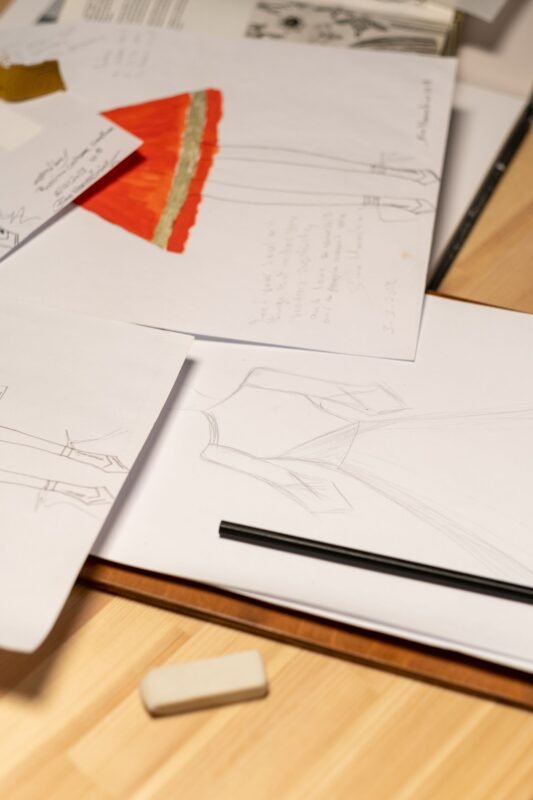
A jacket collection is about to launch at Fashion Week: the foreign-invested design house fears its embroidery motifs will be copied by the sewing contractor and sold at wholesale markets before launch day. The question is not whether protection exists, but which layer of rights can stand in the owner’s name before the products are publicly revealed.
Legal framework and pinpoint provisions
Three layers of rights overlap on one fashion design: an industrial design under the Intellectual Property Law (worldwide novelty, creativity and industrial applicability), whose patent lasts five years from filing and may be renewed for at most two consecutive terms; copyright in motifs and patterns as works of applied art, arising automatically once the work is fixed and not depending on registration; and trademarks for logos and monograms identifying origin. The current Intellectual Property Law is Law 50/2005/QH11 as amended several times, most recently by Law 131/2025/QH15, so provisions must be read in the consolidated post-amendment text.
The specific risk of fast fashion is a three-to-six-month life cycle, shorter than design examination itself; publishing the collection before filing can destroy novelty through the owner’s own disclosure. The safe sequence is therefore always: file design and trademark applications before the disclosure date, record copyright to obtain a certificate as prima facie evidence, and lock the contractor in with confidentiality clauses plus a list of the samples it may access.
Answering each question raised
Can a fashion design be registered as an industrial design in Vietnam?
Yes, if the design is the outward appearance visible during use, is novel worldwide and was not disclosed before the filing date. For fashion, file product sets covering the whole collection and file before the runway show, public lookbook shoot or sales livestream, because every early reveal becomes evidence against novelty.
Can fabric patterns be protected by copyright?
Yes. Patterns printed or embroidered on fabric are protected as works of applied art as soon as they are fixed in a drawing or design file, even before registration. Copyright recording with the Copyright Office does not create the right but yields a certificate usable as prima facie evidence when complaining to e-commerce platforms or enforcement bodies, which decides how fast counterfeits come down.
What combined protection strategy works for a fashion collection?
A layered strategy by speed: file trademarks immediately for the collection name and logo because they endure; industrial designs for the five to ten hero pieces with the highest revenue; copyright across all motifs and lookbook photos; and trade secrets for unreleased samples. Each layer fills a gap: a trademark cannot stop copying of the shape, while designs expire after at most fifteen years when the trademark still lives.
How do you act fast against copied fashion designs given short product cycles?
Because cycles are short, do not wait for a court case: use the copyright certificate and design patent or application to have platforms remove listings within days, ask market surveillance to inspect offline sellers, and record with customs if copies are imported. In parallel, send a warning letter with comparison evidence; the practical goal is to cut off the copier’s seasonal revenue, not to win a judgment two years later.
A safe implementation sequence
- Map the intangible assets layer by layer before choosing protection tools.
- Check the prior art and disclosure history to settle novelty.
- File registrations for registrable objects before any further public reveal.
- Lock the human relationships by contract: employment, collaboration, manufacturing, licensing.
- Set up market monitoring and a ready infringement notice template for immediate use.
Frequently asked questions
Can a fashion design be registered as an industrial design in Vietnam?
Yes, if the design is the outward appearance visible during use, is novel worldwide and was not disclosed before the filing date.
Can fabric patterns be protected by copyright?
Yes.
What combined protection strategy works for a fashion collection?
A layered strategy by speed: file trademarks immediately for the collection name and logo because they endure; industrial designs for the five to ten hero pieces with the highest revenue; copyright across all motifs and lookbook photos; and trade secrets for unreleased samples.
How do you act fast against copied fashion designs given short product cycles?
Because cycles are short, do not wait for a court case: use the copyright certificate and design patent or application to have platforms remove listings within days, ask market surveillance to inspect offline sellers, and record with customs if copies are imported.
The practical conclusion for fashion design protection vietnam: do not start from forms, start from the evidence file proving your own rights and duties in fashion design protection vietnam; once that evidentiary layer stands, the remaining remaining work is follow-on procedure. Conversely, every shortcut at the start of fashion design protection vietnam returns as repair cost at the end.
Related articles
- First-Year Office/Headquarters Rent for an FDI Company
- Total Cost of Setting Up a Manufacturing FDI Company: Sample Budget
- Total Cost of Setting Up a Trading/Service FDI Company: Sample Budget
- Hidden Formation Costs: What Investors Forget
- Investor Passports: Legalization, Translation and Validity
This legal analysis has been verified against current Vietnamese regulations and cross-border FDI transaction practices by the attorneys at FLAT LAW FIRM.

