
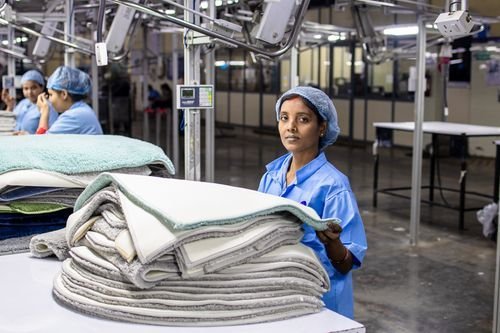
Scenario: a Korean-funded electronic-components group plans a factory in an industrial park in Bac Ninh: 2 hectares of land, 300 workers. Management asks the CFO for a total budget covering the whole journey “from zero to trial production.” The sample budget below lists every cost group — from state fees of a few hundred thousand dong to industrial-park land rent in the tens of billions — so nothing is missed.
The legal framework of a manufacturing FDI project
A foreign investor’s manufacturing project needs two foundation licenses: the investment registration certificate (IRC) under the Law on Investment 143/2025/QH15 (effective 1 March 2026, still in force at the time of writing) and the enterprise registration certificate (ERC). For projects inside industrial parks, the park management board is usually the IRC issuer — the practice at most parks. Contributed capital must be fully contributed within 90 days of ERC issuance; foreign-currency contributions flow through the company’s direct investment capital account (DICA).
The core difference from trading and service projects: “asset-heavy” costs — land, workshops, fire-safety systems, environmental treatment systems and machinery dominate the budget, while “soft” licensing costs are only a small part. The table below follows exactly that logic.
Sample budget — nine cost groups
Mandatory note: every figure in the “Reference level” column below is a market reference compiled by the writing team, unverified against official documents; investors must obtain actual quotations from providers and check current legal documents before deciding.
| Cost item | Reference level (market, unverified) | Notes |
|---|---|---|
| State fees (IRC, ERC, publication, seal…) | VND 1–5 million | Itemised in EXP-1047. |
| Full legal consultancy (IRC + ERC + sub-licenses) | VND 150–500 million | Depends on project scale; see EXP-1048. |
| Translation, notarization, legalization | VND 20–80 million | See EXP-1049. |
| Industrial-park land/workshop lease, year one (deposit, prepayment, infrastructure fees) | VND 2–20 billion | The largest item; the lease is part of the IRC dossier. |
| Environmental permit (dossier consultancy, monitoring, trial operation of treatment works) | VND 200–800 million | Environmental Protection Law 72/2020/QH14; permit valid 7 years (Group I) or 10 years (Clause 4, Article 40). |
| Fire safety (design appraisal, alarm and suppression installation, inspection) | VND 300 million – 2 billion | Decree 105/2025/ND-CP (effective 1 July 2025); facility dossier per Clause 1, Article 4. |
| Machinery and equipment (purchase, freight, installation, import duty, import VAT) | Per line scale | Verify import-duty incentives for incentivised projects before finalising the budget. |
| Staffing and first-year operations (recruitment, work permits under Decree 219/2025/ND-CP, social insurance, DICA, banking) | VND 500 million – 3 billion | Decree 219/2025/ND-CP replaces Decree 152/2020/ND-CP (Board watchlist). |
| Contingency (10–15% of total) | — | Manufacturing projects routinely overrun on environmental and fire-safety timelines. |
Three costs manufacturing investors underestimate
First, time is money: environmental permitting and fire-safety design appraisal can run four to eight months alongside construction — each month of delay means loan interest and fixed costs with no revenue. Second, industrial-park infrastructure fees: management charges, power and water connections, centralised wastewater treatment — usually billed per sqm per year and rising on the infrastructure developer’s schedule; many investors count only the land rent and forget these fees. Third, trial operation of environmental treatment works: a mandatory step before the official permit is granted, incurring real operating costs while commercial production is not yet allowed.
How to use this budget
Fill in actual figures from each provider’s quotation in the reference column; use the ranges in the table only to check the order of magnitude — if a quote deviates far from the reference range, ask again instead of signing hastily. Update the table once the IRC is issued (official total investment) and once quotations for the fire-safety and environmental-treatment systems arrive — the two most volatile items. This table is fundamentally different from the trading/service version (EXP-1055): here costs concentrate on assets and technical permits, with no inventory or distribution-license costs.
Frequently asked questions
Does total investment capital on the IRC include prepaid land rent?
Total investment comprises the investor’s contributed capital plus mobilised capital; prepaid land rent is a use-of-capital component shown in the project proposal. The presentation of capital components in the IRC dossier must be consistent — verify directly with the IRC issuer before finalising figures.
Can used machinery be imported for installation?
Separate rules govern imports of used machinery and equipment (equipment age, technical standards) — investors must verify the current text before budgeting, because non-qualifying machinery will be denied customs clearance and the entire installation schedule collapses.
Ready-built workshop vs leasing land to self-build: which is cheaper in year one?
Ready-built: lower first-year cost and faster start-up, but fixed area and functions, hard to expand. Self-build on leased land: larger total investment and longer timeline (adding fire-safety appraisal and construction permits), but full design control. There is no universal answer — compare on five-year total cost, not year one alone.
Do industrial-park projects get land-rent exemption or reduction?
There are land-rent exemption and reduction policies for incentivised projects (framework: Law on Investment 143/2025/QH15 and current land law). Specific conditions — sector, location, scale — are recorded in the incentive decision and verified per park; do not put “land-rent exemption” into the budget without a confirming document.
This article has been quality-reviewed by the FLAW AI Legal Council