
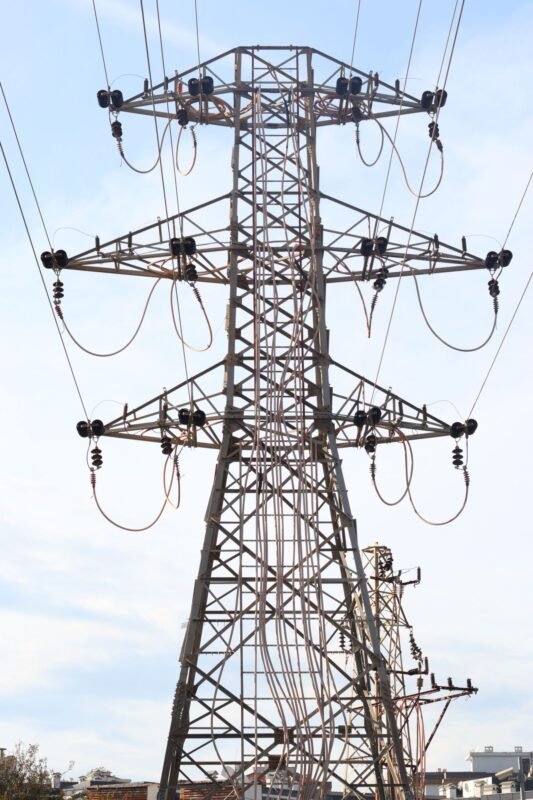
Scenario: Why use a BCC instead of a joint venture in power? — the opening question on “Business Cooperation Contracts (BCC) in power: Splitting Management Rights and Profits”, with a reference situation of around 113,750 USD, under the law on 20 October 2026.
1. The current legal basis for EXP-0835
The directly governing framework is Electricity Law 61/2024/QH15 (effective 1 February 2025) and Investment Law 143/2025/QH15 (replacing Law 61/2020/QH14 from 1 March 2026) on business cooperation contracts (BCC) — an investment form creating no new legal entity.
Power is a conditional sector with electricity activity licences and an offtake anchored to a power purchase agreement with EVN’s buyer or the competitive power market: a BCC power plant lets the foreign party contribute capital and technology alongside the Vietnamese partner holding the project and licences, avoiding incorporation and fresh licensing of a new project entity while revenue stays secured by the long-term PPA in the project holder’s name.
2. Applying the rules to the concrete situation
Control in a power BCC concentrates on three points: approval of the plant’s operating and major-maintenance budget, decisions on power offers and market participation, and appointing the plant director — all recorded in the BCC as a consent list because there is no members’ council; power revenue is shared after operating costs and tax, each party declaring its own share, and on termination the plant assets follow a transfer arrangement tied to the remaining term of the licences and the PPA — the transferee must itself qualify to hold an electricity activity licence.
The client’s questions on this topic — Why use a BCC instead of a joint venture in power?; How does the foreign party control operations in a power BCC?; How are power BCC profits split and taxed?; What happens to shared assets when a power BCC ends? — form a single decision chain: a wrong answer at the first link distorts every later link, so this article keeps the chain’s order and always returns to the file, the BCC with its plant-operation consent list, the PPA and electricity activity licences held by the project party, and the plant-transfer annex tied to the remaining licence term, to prove its conclusions.
The riskiest promise in a power BCC is fixing the revenue-share ratio before the electricity price and PPA conditions are confirmed: plant revenue is anchored to the buyer’s tariff and payment mechanism, and a ratio over nominal revenue can turn into a real loss when the selling price is adjusted down or dispatch runs below plan, so the BCC needs sharing over actually collected revenue with a ratio-reopener clause when the power price frame changes.
3. Working through the questions companies actually ask
Why use a BCC instead of a joint venture in power?
Power is a conditional sector with electricity activity licences and an offtake anchored to a power purchase agreement with EVN’s buyer or the competitive power market: a BCC power plant lets the foreign party contribute capital and technology alongside the Vietnamese partner holding the project and licences, avoiding incorporation and fresh licensing of a new project entity while revenue stays secured by the long-term PPA in the project holder’s name. The risk on this point falls only when the BCC with its plant-operation consent list, the PPA and electricity activity licences held by the project party, and the plant-transfer annex tied to the remaining licence term is completed under Electricity Law 61/2024/QH15.
How does the foreign party control operations in a power BCC?
Control in a power BCC concentrates on three points: approval of the plant’s operating and major-maintenance budget, decisions on power offers and market participation, and appointing the plant director — all recorded in the BCC as a consent list because there is no members’ council; power revenue is shared after operating costs and tax, each party declaring its own share, and on termination the plant assets follow a transfer arrangement tied to the remaining term of the licences and the PPA — the transferee must itself qualify to hold an electricity activity licence. The action consequence is to complete the BCC with its plant-operation consent list, the PPA and electricity activity licences held by the project party, and the plant-transfer annex tied to the remaining licence term before applying Electricity Law 61/2024/QH15.
How are power BCC profits split and taxed?
Control in a power BCC concentrates on three points: approval of the plant’s operating and major-maintenance budget, decisions on power offers and market participation, and appointing the plant director — all recorded in the BCC as a consent list because there is no members’ council; power revenue is shared after operating costs and tax, each party declaring its own share, and on termination the plant assets follow a transfer arrangement tied to the remaining term of the licences and the PPA — the transferee must itself qualify to hold an electricity activity licence. This answer is tied closely to the BCC with its plant-operation consent list, the PPA and electricity activity licences held by the project party, and the plant-transfer annex tied to the remaining licence term within Electricity Law 61/2024/QH15.
What happens to shared assets when a power BCC ends?
Control in a power BCC concentrates on three points: approval of the plant’s operating and major-maintenance budget, decisions on power offers and market participation, and appointing the plant director — all recorded in the BCC as a consent list because there is no members’ council; power revenue is shared after operating costs and tax, each party declaring its own share, and on termination the plant assets follow a transfer arrangement tied to the remaining term of the licences and the PPA — the transferee must itself qualify to hold an electricity activity licence. Applied to the file, the BCC with its plant-operation consent list, the PPA and electricity activity licences held by the project party, and the plant-transfer annex tied to the remaining licence term shows this conclusion holds against Electricity Law 61/2024/QH15.
4. Handling process and the file to prepare
- The opening step is identifying which Electricity Law 61/2024/QH15 framework directly governs the situation and recording it on the file’s first page.
- Next, test the BCC with its plant-operation consent list, the PPA and electricity activity licences held by the project party, and the plant-transfer annex tied to the remaining licence term against that framework’s requirements and list what is still missing.
- Implement only once the gaps are filled or a written risk acceptance exists.
- Close the EXP-0835 file with an internal acceptance record signed by someone not directly involved.
5. A worked figure and the action conclusion
Figures settle decisions faster than principles: 113,750 USD at 5% is 5,687 USD of potential duty, so this topic’s file must be finished before the transaction closes.
Conclusion: the point to remember on EXP-0835 is: Power is a conditional sector with electricity activity licences and an offtake anchored to a power purchase agreement with EVN’s buyer or the competitive power market: a BCC power plant lets the foreign party contribute capital and technology alongside the Vietnamese partner holding the project and licences, avoiding incorporation and fresh licensing of a new project entity while revenue stays secured by the long-term PPA in the project holder’s name.
Executive summary of EXP-0835: Control in a power BCC concentrates on three points: approval of the plant’s operating and major-maintenance budget, decisions on power offers and market participation, and appointing the plant director — all recorded in the BCC as a consent list because there is no members’ council; power revenue is shared after operating costs and tax, each party declaring its own share, and on termination the plant assets follow a transfer arrangement tied to the remaining term of the licences and the PPA — the transferee must itself qualify to hold an electricity activity licence. Alongside this, keep in view the foundation of the whole analysis above: power is a conditional sector with electricity activity licences and an offtake anchored to a power purchase agreement with EVN’s buyer or the competitive power market: a BCC power plant lets the foreign party contribute capital and technology alongside the Vietnamese partner holding the project and licences, avoiding incorporation and fresh licensing of a new project entity while revenue stays secured by the long-term PPA in the project holder’s name. These two layers — the Electricity Law 61/2024/QH15 framework and the file, the BCC with its plant-operation consent list, the PPA and electricity activity licences held by the project party, and the plant-transfer annex tied to the remaining licence term — are what make the EXP-0835 conclusion safe to apply in practice.
Frequently asked questions
1. Why use a BCC instead of a joint venture in power?
Power is a conditional sector with electricity activity licences and an offtake anchored to a power purchase agreement with EVN’s buyer or the competitive power market: a BCC power plant lets the foreign party contribute capital and technology alongside the Vietnamese partner holding the project and licences, avoiding incorporation and fresh licensing of a new project entity while revenue stays secured by the long-term PPA in the project holder’s name. The accompanying file for this question alone: the BCC with its plant-operation consent list, the PPA and electricity activity licences held by the project party, and the plant-transfer annex tied to the remaining licence term.
2. How does the foreign party control operations in a power BCC?
Control in a power BCC concentrates on three points: approval of the plant’s operating and major-maintenance budget, decisions on power offers and market participation, and appointing the plant director — all recorded in the BCC as a consent list because there is no members’ council; power revenue is shared after operating costs and tax, each party declaring its own share, and on termination the plant assets follow a transfer arrangement tied to the remaining term of the licences and the PPA — the transferee must itself qualify to hold an electricity activity licence. The accompanying file for this question alone: the BCC with its plant-operation consent list, the PPA and electricity activity licences held by the project party, and the plant-transfer annex tied to the remaining licence term.
3. How are power BCC profits split and taxed?
Power is a conditional sector with electricity activity licences and an offtake anchored to a power purchase agreement with EVN’s buyer or the competitive power market: a BCC power plant lets the foreign party contribute capital and technology alongside the Vietnamese partner holding the project and licences, avoiding incorporation and fresh licensing of a new project entity while revenue stays secured by the long-term PPA in the project holder’s name. The accompanying file for this question alone: the BCC with its plant-operation consent list, the PPA and electricity activity licences held by the project party, and the plant-transfer annex tied to the remaining licence term.
4. What happens to shared assets when a power BCC ends?
Control in a power BCC concentrates on three points: approval of the plant’s operating and major-maintenance budget, decisions on power offers and market participation, and appointing the plant director — all recorded in the BCC as a consent list because there is no members’ council; power revenue is shared after operating costs and tax, each party declaring its own share, and on termination the plant assets follow a transfer arrangement tied to the remaining term of the licences and the PPA — the transferee must itself qualify to hold an electricity activity licence. The accompanying file for this question alone: the BCC with its plant-operation consent list, the PPA and electricity activity licences held by the project party, and the plant-transfer annex tied to the remaining licence term.
Related articles
- After Getting IRC/ERC in Ba Ria-Vung Tau: 10 Immediate Follow-Up Steps (Tax, Invoicing, Labor, Banking)
- After Getting IRC/ERC in Vinh Phuc: 10 Immediate Follow-Up Steps (Tax, Invoicing, Labor, Banking)
- After Getting IRC/ERC in Nghe An: 10 Immediate Follow-Up Steps (Tax, Invoicing, Labor, Banking)
- After Getting IRC/ERC in Long An: 10 Immediate Follow-Up Steps (Tax, Invoicing, Labor, Banking)
- After Getting IRC/ERC in Quang Ninh: 10 Immediate Follow-Up Steps (Tax, Invoicing, Labor, Banking)
This legal analysis has been verified against current Vietnamese regulations and cross-border FDI transaction practices by the attorneys at FLAT LAW FIRM.

