
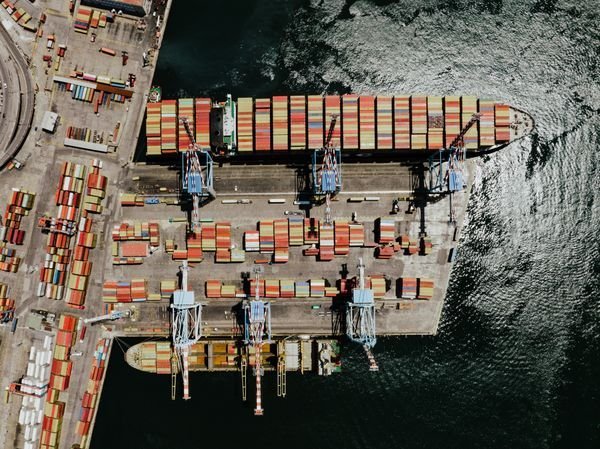
Scenario: a 100% Singapore-owned company developing a logistics hub and warehousing project at the Phu My 3 specialized industrial park (Phu My, Ba Ria–Vung Tau — now part of Ho Chi Minh City following the merger under Resolution 202/2025/QH15, effective 12 June 2025), about 2 km from the Cai Mep–Thi Vai deep-water port cluster, has just received its Investment Registration Certificate and Enterprise Registration Certificate. For a capital-intensive logistics project, management does not ask “what to do” but “which delays cost fines and which only cost time”. This article ranks the ten procedures by the risk of being late.
High-risk group: late means fines or retroactive collection
Task 1 — fully contribute charter capital within 90 days of issuance of the Enterprise Registration Certificate (Clause 2 of Article 47 for multi-member LLCs, Clause 2 of Article 75 for single-member LLCs, Clause 1 of Article 113 for joint-stock companies, Enterprise Law 59/2020/QH14; excluding time for transporting or importing contributed assets and completing ownership transfers). Missing the deadline without contributing in full requires registering a charter-capital reduction; members who did not contribute lose membership proportionally. Task 2 — the license-fee (mon bai) declaration: due no later than 30 January of the year following establishment under Clause 1, Article 10 of Decree 126/2020/ND-CP (first year exempt under Decree 22/2020/ND-CP, but the declaration must still be filed); late filing draws administrative tax penalties. Task 3 — first-time registration for social, health and unemployment insurance under the Social Insurance Law 41/2024/QH15 (effective 1 July 2025) as soon as labor contracts are signed; arrears are collected retroactively with late-payment interest, and for a large Phu My workforce the linked tax-insurance data exposes gaps quickly. These three have a legal clock running from the issuance date — no postponement possible.
Foundation group: without these, everything else stalls
Task 4 — open the foreign investment capital account in Vietnam (ICA account) and a VND payment account at a licensed bank. Current framework: Circular 38/2026/TT-NHNN (effective 18 August 2026) replacing Circular 06/2019/TT-NHNN in full; the old “direct investment capital account (DICA)” is now the “foreign investment capital account in Vietnam (ICA)”. New point: the capital account may be opened right after the Enterprise Registration Certificate is issued, where the company is established before the investment registration procedure. All contribution inflows and profit remittances to Singapore pass through this account. Task 5 — buy a public digital signature; Task 6 — register to use e-invoices under Decree 123/2020/ND-CP (19 October 2020), as amended by Decree 70/2025/ND-CP (effective 1 June 2025), via the tax authority’s electronic portal, issuing invoices only after acceptance. Task 7 — engrave the seal and issue a regulation on seal management, use and custody: Article 43 of the Enterprise Law 59/2020/QH14 lets the company decide the seal’s type, quantity, form and content; the seal-specimen notification has been gone since 1 January 2021. These four carry no direct fine for a few days’ delay, but without them you cannot sign contracts, issue invoices or receive capital — the whole project stands still.
Port and heavy-industry group: sub-licenses decide the go-live date
Task 8 — register an import-export code and a customs digital signature for electronic declarations; project cargo will clear through the Cai Mep–Thi Vai port cluster and the Phu My dry port (the province’s first dry port, the “extended arm” of the deep-water cluster). Exporters meeting the conditions for electronically transmitting commercial-invoice data to the tax authority use commercial e-invoices under Clause 2a, Article 8 of Decree 123/2020/ND-CP (added by Decree 70/2025/ND-CP); otherwise electronic VAT invoices or sales invoices. Task 9 — fire-prevention design appraisal and acceptance for warehouses and the logistics hub; warehouses storing special goods (chemicals, dangerous goods) face extra requirements on safety distances and firefighting plans, so engage the fire police early. Task 10 — the environmental dossier matching project scale and construction acceptance before commissioning; mount the signboard at the premises inside the industrial park showing the exact name and enterprise code. An advantage at Phu My 3: the park developer (Thanh Binh Phu My JSC) runs a “one-stop” approach supporting investors from investment and construction procedures until the plant operates — use this focal point instead of visiting each agency yourself.
Foreign labor: work permits for port and warehouse operations experts
Singaporean experts coming to run the logistics hub need work permits under Decree 219/2025/ND-CP (replacing Decree 152/2020/ND-CP); the dossier includes documents prepared abroad, so start in week one. Foreign employees within the statutory scope must join compulsory social insurance under Decree 158/2025/ND-CP (effective 1 July 2025, replacing Decree 143/2018/ND-CP). Also adopt internal labor regulations and a salary scale before hiring local general labor.
Frequently asked questions
Where does a Phu My logistics company handle customs procedures?
Declare electronically via the customs digital signature; cargo clears through the Customs Sub-department administering the Cai Mep–Thi Vai cluster and the Phu My dry port. Engage a customs broker familiar with this port corridor early so the document set is standard from the very first shipment.
Is an IRC issued by the Ba Ria–Vung Tau Industrial Parks Management Board still valid after the merger?
Yes. Documents issued before the merger remain valid under Resolution 202/2025/QH15 (effective 12 June 2025). Later amendments and new filings go to the competent authority of Ho Chi Minh City under current delegation rules.
What extra attention do warehouses for special goods need?
Beyond standard fire-prevention appraisal, warehouses for chemicals and dangerous goods must meet extra requirements on safety distances, incident response plans and a higher-level environmental dossier. Engage the fire police and the environmental agency at the design stage, because retrofitting after construction costs many times more.
What procedural support does a Phu My 3 project receive?
The park developer applies a “one-stop” approach: supporting the investor throughout project implementation, from investment and construction procedures until the plant operates. For projects with complex investment processes, having a single support focal point cuts deployment time and cost — contact this desk in the very first week.

