
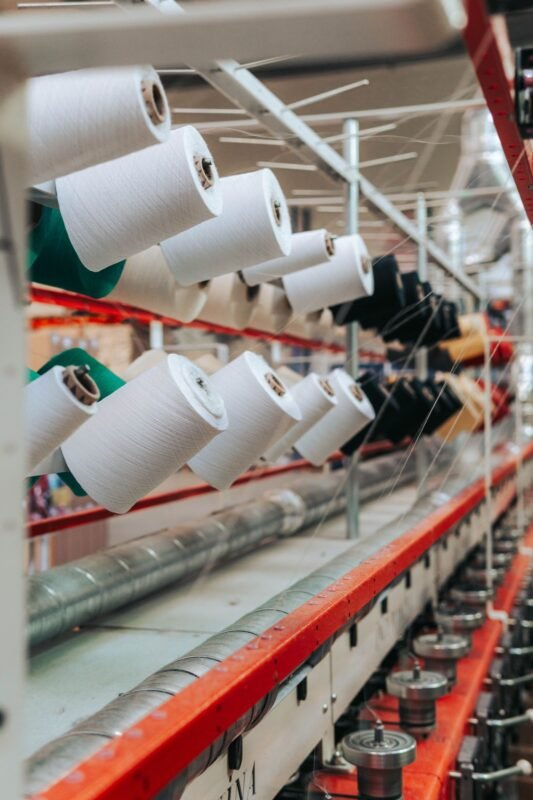
An enterprise imports raw materials, organises production in Vietnam and exports the finished products abroad — this is export production (SXXK). Its biggest attraction is import-duty exemption on materials and supplies imported to manufacture export goods. In return, enterprises must strictly follow customs procedures from notifying the production facility to filing the annual finalization report — the step where many enterprises are penalised for late filing or incorrect figures.
How SXXK differs from processing and temporary import for re-export
- SXXK ≠ processing: SXXK — the enterprise imports materials, produces and exports on its own account with its own ownership, filing finalization reports (Article 60 of Circular 38/2015/TT-BTC) by total import–export–inventory value; processing — performed under a foreign trader’s order, products belonging to the ordering party’s disposal, finalization reports by quantity;
- SXXK ≠ temporary import for re-export (TNTX): SXXK involves actual production in Vietnam from imported materials; TNTX is importing then re-exporting without substantial production;
- Tax-suspension warehouse ≠ bonded warehouse: SXXK materials may be stored in a tax-suspension warehouse — but tax-suspension warehouses will be abolished from 01/3/2027 (see the transitional note below); a bonded warehouse is a different regime (storing goods pending export).
Import-duty exemption for SXXK materials
Clause 7, Article 16 of Law 107/2016/QH13 on Export and Import Duties (per consolidated document 96/VBHN-VPQH dated 31/3/2026) and Article 12 of Decree 134/2016/ND-CP (amended by Clause 6, Article 1 of Decree 18/2021/ND-CP, effective 25/4/2021): import-duty exemption for goods imported to manufacture export goods, including:
- Raw materials and supplies (including packaging materials or packaging for export products), components and semi-finished products imported to directly constitute export products or directly participate in production without being directly transformed into goods;
- Finished products imported for packing, labelling, assembling into export products or packed together into synchronised items;
- Components and spare parts imported to warranty export products;
- Goods imported solely as samples; goods imported for SXXK that are permitted to be destroyed in Vietnam and have actually been destroyed.
Exemption conditions
Under Clause 2, Article 12 of Decree 134/2016/ND-CP, the taxpayer must:
- Have ownership or use rights over the export-production facility, machinery and equipment at the production site in Vietnam;
- Notify the production facility, machinery and equipment; notify the production facility/contract and sub-processing to the customs authority under customs law.
Late notification only attracts administrative penalties — the exemption right is not lost if the substantive conditions are met.
Products must actually be exported (point dd, Clause 2, Article 12): products manufactured from imported materials must actually be exported; if diverted to domestic consumption or the use purpose changes, a new customs declaration must be registered and tax declared and paid (Article 17 of Law 107/2016/QH13, per consolidated document 96/VBHN-VPQH).
SXXK customs procedures (checklist)
- Notify the production facility to the customs authority (Article 57 of Circular 38/2015/TT-BTC, as amended) — before completing material import procedures;
- Production-facility inspection (Article 59 of Circular 38/2015/TT-BTC) — customs inspects actual production capacity;
- Complete import procedures for materials and supplies (open SXXK declarations — check declaration codes in Circular 121/2025/TT-BTC, do not infer), export the products;
- Change of use purpose (if any): declare a new customs declaration, applying the tax policy in force at the time of the new registration (Article 17 of Law 107/2016/QH13; Clause 5, Article 25 of Decree 08/2015/ND-CP as amended, per consolidated document 46/VBHN-BTC).
Finalization reports (BCQT) — the obligation enterprises care about most
Article 60 of Circular 38/2015/TT-BTC (amended by Clause 39, Article 1 of Circular 39/2018/TT-BTC; point b, Clause 32, Article 1 of Circular 121/2025/TT-BTC, effective 01/02/2026 — the new amendments should be checked directly against the original Circular 121/2025/TT-BTC before applying the details):
- Scope: all organisations and individuals engaged in processing or SXXK (including export-processing enterprises) — tracking imported materials and exported products in accounting books;
- Deadline: annually, no later than the 90th day from the end of the fiscal year (or before merger, consolidation, division, split, dissolution, or change of the customs office handling material imports);
- Where to file: the Customs Sub-department managing the production facility (from the 2026 period, the receiving focal point is assigned by the regional Customs Sub-department — check Circular 121/2025/TT-BTC);
- Forms: 15/BCQT-NVL/GSQL (import–export–inventory of materials and supplies), 15a/BCQT-SP/GSQL (import–export–inventory of finished products), 16/DMTT-GSQL (actual consumption norms for export products); may be amended or supplemented within 60 days of the first filing;
- Content: reporting on the principle of total import–export–inventory value of materials, supplies, semi-finished products and finished products; figures must match accounting vouchers;
- Sanctions: late filing, reports inconsistent with reality or with accounting vouchers/declarations → administrative penalties under Decree 128/2020/ND-CP (do not state fine amounts without checking the current text); the enterprise is also placed in a high-risk group with more frequent post-clearance audits.
Mandatory transitional note: abolition of tax-suspension warehouses
Law 11/2026/QH16 (passed 23/8/2026, effective 01/3/2027): repeals all of Article 47 of the Customs Law (tax-suspension warehouses) and the concept of tax-suspension warehouses. Transitional provision (Clause 1, Article 4): raw materials and supplies imported to manufacture export goods currently stored in tax-suspension warehouses as of 01/3/2027 may continue under the old Law for 06 months from the Law’s effective date — after which the storage form must be converted. Enterprises currently storing SXXK materials in tax-suspension warehouses should proactively plan the conversion rather than treating tax-suspension warehouses as a permanent regime.
Frequently asked questions
Is late filing of the finalization report penalised?
Yes — late filing, reports inconsistent with reality or with accounting vouchers/declarations attract administrative penalties under Decree 128/2020/ND-CP (check the current text for specific levels), and the enterprise is placed in a high-risk group with more frequent post-clearance audits.
Can an enterprise doing both SXXK and processing file a combined finalization report?
This should be checked against current customs guidance — do not infer; enterprises should consult before filing.
Does late notification of the production facility lose the SXXK material exemption?
No — late notification only attracts administrative penalties; the exemption right remains if the substantive conditions are met (ownership/use rights over the facility, products actually exported).
Applicable legal documents
- Law on Export and Import Duties 107/2016/QH13 — per consolidated document 96/VBHN-VPQH dated 31/3/2026 (Clause 7, Article 16; Article 17);
- Decree 134/2016/ND-CP (amended by Clause 6, Article 1 of Decree 18/2021/ND-CP) — Article 12;
- Circular 38/2015/TT-BTC (amended by Clause 39, Article 1 of Circular 39/2018/TT-BTC and point b, Clause 32, Article 1 of Circular 121/2025/TT-BTC, effective 01/02/2026) — Article 60 (finalization reports); Articles 56, 57, 58, 59 (facility notification, facility inspection);
- Decree 08/2015/ND-CP — per consolidated document 46/VBHN-BTC dated 24/11/2025 (Clause 5, Article 25; amended by Decree 167/2025/ND-CP);
- Law 11/2026/QH16 (passed 23/8/2026, effective 01/3/2027) — abolition of tax-suspension warehouses, 06-month transition.
Note: this article reflects the law in force as of 14/10/2026. Specific provisions (especially the amendments in Circular 121/2025/TT-BTC) should be checked directly against the original text before applying.
Need support preparing SXXK finalization reports or reviewing material exemption conditions? Contact FLAT Law Firm for advice.
The information above is for reference only and does not constitute legal advice.
For reference only, not legal advice. Content quality-checked by the AI Legal Council; not yet reviewed by a human lawyer.