
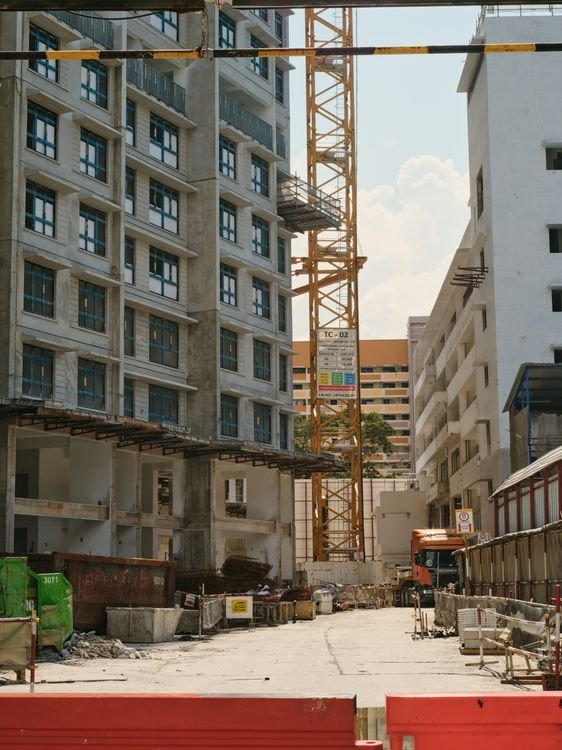
Material prices fluctuate and quantities change — a construction contract signed today may no longer fit after a few months of work. From 01/7/2026, amendments to construction contracts — including price amendments — are governed by Article 84 of Construction Law 135/2025/QH15, detailed by Decree 210/2026/ND-CP (Article 24 of which governs “Adjustment of unit prices and construction contract prices”). The new law uses the term “amendment” of contracts, replacing the old law’s term “adjustment”. Here are six points for signing a price-amendment appendix.
1. Amendment Grounds: Check Article 84 and Note Contracts Signed Before 01/7/2026
Article 84(2) of Law 135/2025/QH15 lists the cases in which the parties may agree to amend a construction contract:
- a) The State changes policies or laws in a way that directly affects contract performance — note: the new law no longer contains the carve-out “unless otherwise agreed by the contracting parties” found in Article 143 of the old law;
- b) Changes or adjustments to the agreed requirements on work content and scope, technical specifications, product quality, implementation schedule, advance payment and payment terms — this provision details the old law’s “project is adjusted” case;
- c) Force majeure events under Article 13(1) (natural disasters, fires, epidemics, states of emergency, strikes/lockouts/embargoes/blockades, discovery of antiquities/archaeological finds…);
- d) Fundamental change of circumstances under Article 13(2) (the State changes policies or laws; unforeseeable abnormal geological conditions…) — an entirely new ground that the old law did not have;
- đ) Other cases agreed by the parties in accordance with this Law and related laws.
Article 84(1) requires: contract amendments apply only during the contract’s validity period and must be made in writing.
Transitional note: under Article 95(7) of Law 135/2025/QH15, construction contracts signed before 01/7/2026 remain performed under Construction Law 50/2014/QH13, and the new Law’s provisions may be applied only in cases of force majeure or fundamental change of circumstances. Before signing an appendix, determine clearly when the original contract was signed so that the correct legal basis is cited.
Practice: before signing an appendix, cross-check the price-amendment clause in the original contract (escalation, unit-price adjustment, variations) — the appendix must cite that clause precisely and cite the correct item a–đ of Article 84(2) as its legal basis.
2. Distinguish Contract Types: Broader Scope for Unit-Price Amendment
Decree 210/2026/ND-CP (Article 6(2)) classifies contracts by price form and sets different principles:
- Lump-sum contracts: the contract price is fixed at the time of signing and does not change during performance for the agreed work content, scope, technical requirements, quality and schedule — except in cases of force majeure, fundamental change of circumstances, changes to the work scope, or other cases agreed by the parties in accordance with law;
- Fixed unit-price contracts: unit prices do not change during performance, except in the case specified at Article 24(2)(b) of Decree 210/2026/ND-CP (quantity-variation thresholds), force majeure, fundamental change of circumstances, or other agreements consistent with law;
- Adjustable unit-price contracts: unit prices and the contract price may be adjusted under the contractual agreements for the entire work content.
Important new point: Article 84(3)(a) broadens the contract types eligible for unit-price adjustment in public investment projects and PPP projects: in addition to adjustable unit-price contracts and time-based contracts (old law), mixed contracts and “other construction contracts permitted to adjust unit prices” are now included.
Common mistake: applying an adjustable-unit-price adjustment mechanism to a lump-sum contract — the investor may refuse to pay the difference if the original contract is lump-sum without a suitable amendment clause.
3. Thresholds and Methods: 20% – 0.25% – 1% and the Price Adjustment Coefficient Pn
Article 24 of Decree 210/2026/ND-CP details the adjustment of unit prices and construction contract prices. Clause 1 requires the parties to agree specifically on the cases eligible for unit-price and contract-price adjustment under Article 84(2) and (3) of the Construction Law; the adjustment method must suit the nature of the work, the contract price type, the payment currency, and be agreed by the parties.
For contracts under public investment projects and PPP projects (Article 24(2)), note the following rules:
- a) Unit-price adjustment applies only to work quantities for which the parties had already agreed at the time of contract signing that unit prices could be adjusted — i.e., this clause must be “planted” in the original contract;
- b) The triple threshold (all three conditions simultaneously): the actually performed quantity increases or decreases by more than 20% compared with the contracted quantity, and the impact changes the contract price by more than 0.25% and the unit price by more than 1% for that work item → the parties shall agree on a new unit price under the principles set in the contract. The new unit price applies to the portion of quantity exceeding 120% of the contracted quantity; where the quantity decreases by more than 20%, the new unit price applies to the entire actually completed and accepted quantity;
- c) Quantity increases or decreases of 20% or less → the contract unit prices apply (including unit prices already adjusted by agreement, if any);
- d) Arising work quantities with no unit price in the contract → the parties shall agree on a new unit price under the principles set in the contract for unit prices of arising quantities;
- đ) Adjustment methods: direct clearing or the price adjustment coefficient (Pn) under the Appendix to the Decree — the two may be combined in one contract; Pn may be applied to the whole contract or to each work item/group of works/cost element (where it is not applied to the whole contract, the parties must agree the formula for determining Pn);
- e) The price/index sources for adjustment must suit the work content, nature and cost structure and the contract price type, and must be agreed by the parties and specified in the contract. Where price indices published by the Ministry of Construction or the provincial People’s Committee are unsuitable or unavailable, the employer shall organize their determination under construction cost management law, or refer to sources of the Ministry of Finance or another competent authority;
- g) Management and payment of the adjusted price value specifically agreed by the parties in the contract do not require signing a written contract amendment.
Scope note: The 20%/0.25%/1% thresholds above sit in Article 24(2)(b) — scoped to contracts under public investment projects and PPP projects (verified against the full text of Decree 210/2026/ND-CP). For private contracts, Article 24(1) leaves the parties to agree. The detailed Pn formula is in the Appendix to the Decree — check the official text directly when preparing an actual appendix.
4. Decision-Making Authority: The New Law Strongly Decentralizes Power to the Investor
This is a major change from the old law (exceeding the package price required the investment decider’s approval). Under Article 84(3):
- Item c: where an amendment changes the implementation time but does not exceed the approved project implementation time (approval adjusted), or exceeds the package price (including contingency) but does not exceed the approved total investment (approval adjusted) → the investor may consider and decide the contract amendment, without seeking the investment decider’s permission;
- Item d: in cases of force majeure or fundamental change of circumstances → the investor may consider and decide the contract amendment under the principles: no change to investment objectives or scale; no excess over the approved total investment; investment efficiency ensured; losses and waste prevented. Notably, amendments in these cases include amending the contract type, the contract price form, the price adjustment method, and the data sources for contract price adjustment — which the old law did not permit.
Practice: when drafting the appendix, state clearly within which authority limit of the investor the amendment falls (item c or item d) and attach evidence showing it does not exceed the approved total investment/project time — this is your “shield” at audit and final settlement.
5. Timing and Procedure: Written Form Required, Reply Within 7 Working Days
- Timing: Article 84(1) — contract amendments may only be made during the contract’s validity period and must be in writing. Signing a price-amendment appendix after the contract has expired/been liquidated has no basis in principle — if the contract is about to expire with work incomplete, extend the contract first, then amend prices;
- Amendment procedure for contracts under public investment projects and PPP projects (Article 22(4) of Decree 210/2026/ND-CP — verified against the full text):
- The proposing party sends a written request stating the proposed amendment with supporting dossiers and documents; clearly stating the grounds and basis and an impact assessment on time, schedule, contract price and product quality;
- Within 7 working days, the receiving party must reply in writing; if it does not agree, it must state its reasons;
- The parties negotiate and enter into a written contract amendment as the basis for performance; if negotiation fails, the employer shall organize implementation under procurement law;
- If the amendment requires adjusting the investment policy, design, investment costs… the employer must organize adjustment of these items before entering into the written amendment;
- Exception: under Article 24(2)(g), where the price adjustment value has been specifically agreed by the parties in the contract, its management and payment do not require a written amendment — which is why the price adjustment mechanism must be written in great detail in the original contract.
6. Appendix Content: State Old vs. New Clauses, Attach Calculation Sheets and Price Sources
Article 3(5) of Decree 210/2026/ND-CP defines the contract appendix: “Where a contract appendix supplements the contents of a construction contract, that term in the contract shall be deemed amended” — a price-amendment appendix therefore has the legal force of a contract term. (Article 82(5) of Law 135/2025/QH15 lists the appendix as a component of the contract dossier.) Practice for drafting the appendix:
- Put it in writing, signed by both parties’ lawful representatives and sealed (if applicable) — Article 84(1) requires written form; Article 421 of the 2015 Civil Code on contract amendment also requires compliance with the form of the original contract where the law so requires;
- State exactly which clause of the original contract is amended (clause number, old text → new text) — avoid vague “adjust prices per actual conditions”;
- Attach a detailed calculation sheet: quantities, old/new unit prices, amounts, calculation bases (price indices, policy documents) and the agreed price index sources per Article 24(2)(e);
- For public investment and PPP projects: attach the impact assessment of the amendment on time, schedule, contract price and product quality per the procedure in point 5;
- Number appendices sequentially (Appendix 01, 02…) and file them with the original contract dossier for inspection and audit.
General basis: Article 84 of Construction Law 135/2025/QH15 on construction contract amendments is the legal basis to cite together with Decree 210/2026/ND-CP (notably Article 24 on adjustment of unit prices and construction contract prices).
Frequently Asked Questions
Can a lump-sum contract’s price be amended?
In principle the price does not change, except in cases of: force majeure, fundamental change of circumstances, changes to the work scope, or other cases agreed by the parties in accordance with law — Article 6(2)(a), Decree 210/2026/ND-CP.
What are the unit-price adjustment thresholds for quantity variations?
For contracts under public investment projects and PPP projects: all three simultaneously — quantity change >20%, impact >0.25% of contract price, >1% of unit price (Article 24(2)(b), Decree 210/2026/ND-CP). The new unit price applies to the quantity exceeding 120%; where quantity decreases by >20%, it applies to the entire accepted quantity.
What procedure applies when the amendment exceeds the package price?
If it exceeds the package price (including contingency) but not the approved total investment, the investor may consider and decide — the old law’s requirement of the investment decider’s permission no longer applies (Article 84(3)(c), Law 135/2025/QH15).
Can a price-amendment appendix be signed after contract liquidation?
In principle no — amendments may only be made during the contract’s validity period and must be in writing (Article 84(1)).
Which law applies to contracts signed before 01/7/2026?
They remain performed under Construction Law 50/2014/QH13 (Article 143), and the provisions of Law 135/2025/QH15 may be applied only in cases of force majeure or fundamental change of circumstances (Article 95(7)).
Legal Basis
- Construction Law 135/2025/QH15 (effective 01/7/2026): Article 84 (amendment of construction contracts), Article 13 (force majeure and fundamental change of circumstances), Article 82(5) (contract dossier); Article 3(5) of Decree 210/2026/ND-CP (appendix definition), Article 95(7) (transitional provisions).
- Decree 210/2026/ND-CP (effective 01/7/2026, replacing Decrees 37/2015/ND-CP and 50/2021/ND-CP): Article 24 (adjustment of unit prices and construction contract prices), Article 6(2) (classification of contracts by price form), detailed rules on Article 84(4) regarding the method, content and procedure of amending construction contracts.
- 2015 Civil Code 91/2015/QH13: Article 421 (contract amendment).
- Decrees 37/2015/ND-CP and 50/2021/ND-CP expired on 01/7/2026 — do not cite them in newly signed contracts.
Need a construction contract reviewed, a price-adjustment appendix drafted, or a site dispute resolved? Contact FLAT Law Firm via the Contact page.
The information above is for reference only and does not constitute legal advice.
Transparency note: This article was drafted by FLAT Law Firm’s AI content production system and pending review by the QA Council. It has not been reviewed by a human lawyer.