
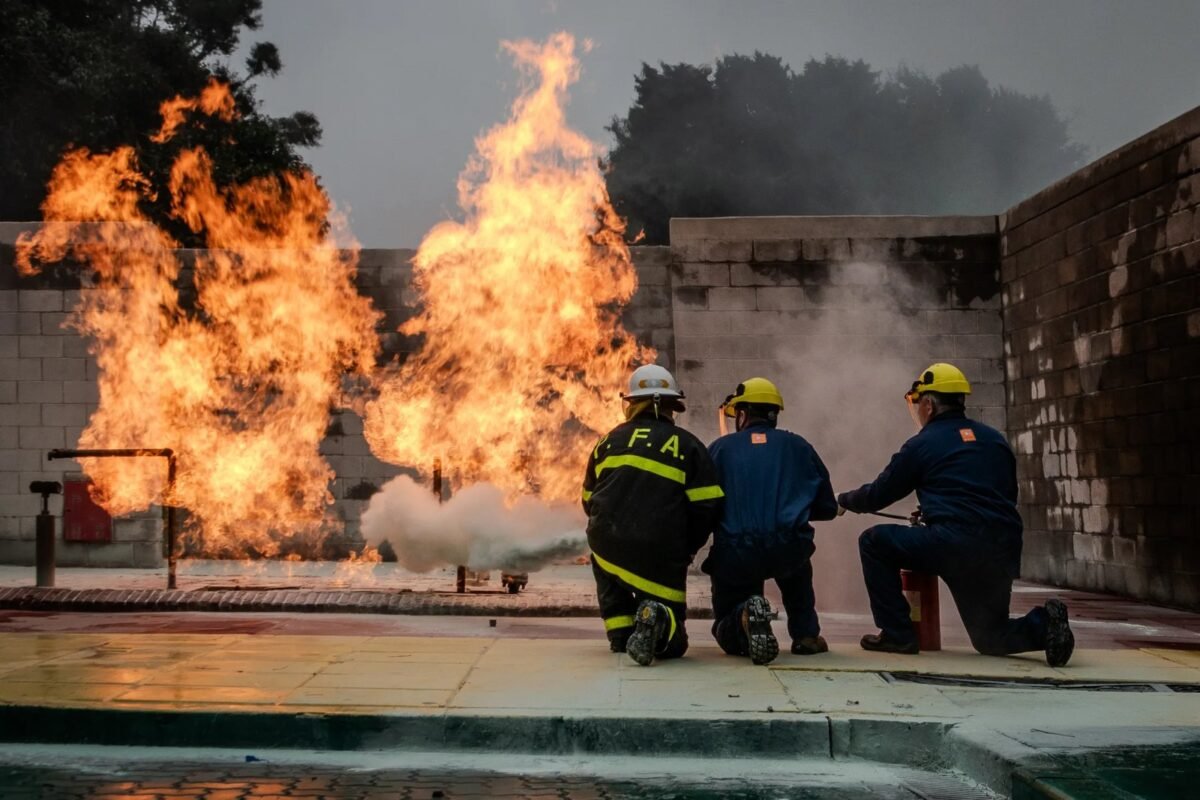
Fined for skipping periodic fire drills — sounding ‘light’ versus other fire violations, but the most avoidable violation many businesses still commit. Fire drills aren’t admin procedures but ‘survival exercises’: in real fires, drilled responses decide who lives. This article analyzes proper fire-drill planning.
Why businesses ‘forget’ fire drills
Four common reasons. One, underestimation: leadership thinking ‘fires just need calling 114’, missing drill value — until real fires leave everyone panicking cluelessly. Two, fearing production impacts: drills stop lines and mobilize workers — ‘costing’ half production days, hence procrastination. Three, token drills: drilling but only ‘roll-calling and photographing’ — no scenarios, no extinguisher practice, no evacuation drills — inspectors spot tokenism instantly. Four, nobody responsible: no designated fire-safety heads, no annual plans — drills ‘fall’ through management cracks.
Consequences exceed fines: when inspected without periodic drill dossiers (plans, minutes, photos), businesses draw administrative violation records. But greater consequences lie in real fires: workers not knowing evacuation routes or extinguisher use, facility fire teams uncoordinated — human and asset damages multiplying versus well-drilled facilities. Drill-skipping fines are just the ‘tip’ — the submerged part is life risk.
A drill mistake is treating the exercise as a photo opportunity: the regulation requires periodic fire drills — and the ‘forgotten’ drill is usually the drill that was never genuinely planned. The company that drills for the camera discovers during a real fire that nobody knows the assembly point, the extinguishers are expired, and the fire team exists only on paper. A second error is no drill records; undocumented drills are, for enforcement purposes, drills that didn’t happen.
Teams ask how often drills are required (check the regulation — the frequency depends on facility type and risk; diary it) and who must participate (everyone on site — the drill that excludes shifts or contractors isn’t a drill of the facility).
Checklist: diary the required frequency, plan genuinely, include everyone, and document every drill — the record is the compliance.
Red flags of drill formalism: the drill always follows the same script, the same people play the same roles, the equipment is checked only on drill day, and the debrief produces no actions. Each is the signature of the photo-opportunity drill — the drill that trains nothing and proves nothing.
Teams ask whether to vary the drill without notice (yes — but build up to it; the first unannounced drill will fail, and that’s the point) and whether to drill at night (yes — the night shift faces the same fire risk with fewer people; the drill must cover them).
Template: the drill variation plan — scenarios rotated, shifts covered, difficulty increased. Variation builds readiness.
Planning fire drills: required contents
Proper fire-drill plans include: purposes, requirements (what skills for whom), timing, venues, participating forces (all or partial — combining facility-wide and workshop-level drills), scenario scripts (fire locations, severities, trapped persons), practice contents (fire alarms, power cuts, extinguisher use, hose deployment, evacuation, victim rescue, outside-force coordination), and specific task assignments (who alarms, who cuts power, who guides evacuation…).
On frequency: regulations require periodic drills — businesses must check specific rules for their facility types (high fire-risk facilities drill more), with minimum annual comprehensive drills plus interspersed thematic drills (firefighting, evacuation, rescue). On dossiers: post-drill minutes (timing, contents, participants, results, fixable gaps) and photos or videos — evidence for inspector queries. An advanced point: inviting fire police to join or witness major drills — gaining professional guidance while building good authority relations.
Planning the drill means real content: the scenario (fire in a specific location with specific complications), the roles (fire team, evacuation guides, first aid, communication), the equipment check (extinguishers, hydrants, alarms — before the drill), the timeline (detection to assembly, measured), and the debrief (what failed, what to fix). The drill plan is a training document, not a ceremony script.
Teams ask whether to surprise the staff (announced drills train procedures; unannounced drills test readiness — do both, in sequence) and whether to involve the fire authority (for major facilities, yes — coordination builds the relationship that matters during real incidents).
Checklist: scenario with complications, roles assigned, equipment checked first, timed execution, honest debrief — the plan trains, the debrief improves.
On the equipment check: the drill-day equipment check discovers expired extinguishers — which means the monthly checks weren’t happening. The equipment program needs its own schedule: extinguishers inspected monthly, hydrants tested periodically, alarms tested regularly, all with records. The drill tests the response; the equipment program ensures the tools.
Teams ask whether to combine the checks with the drill (no — the equipment must work before the drill; the drill isn’t the maintenance program) and who owns the equipment (assign it — the fire-safety officer; the extinguisher nobody owns is the extinguisher nobody checks).
Template: the equipment schedule — item, check frequency, owner, records. The schedule keeps the tools ready.
From token to substantive drills
For drills beyond ‘roll-call photographing’: one, surprise scenarios: not pre-announcing details to everyone (organizers only know) — real fires don’t announce; drills should simulate surprise (within safety limits). Two, real practice: everyone personally using extinguishers on real fires (controlled burns), personally walking evacuation routes (not just lectures), facility fire teams genuinely deploying hoses. Three, post-drill evaluation: timing responses (how long for full evacuation, how long to control simulated fires), recording gaps (blocked evacuation routes, expired extinguishers, non-users…), and immediate fixes.
Four, grounding in facility reality: drill scenarios must reflect actual facility fire risks (chemical warehouses drilling chemical-leak fires, wood workshops drilling fast-spreading fires…) — generic drills don’t prepare for real situations. Five, integrated training: drills as opportunities to retrain fire knowledge (extinguisher types, fire numbers, evacuation routes) — especially for new workers. Six, maintaining ‘fire-safety culture’: regularly reminded fire rules, clear signage, always-clear evacuation routes — drills are ‘exams’, but ‘daily study’ decides results. The lesson: don’t wait for fines to drill — drill so you never regret in real fires.
From formalistic to substantive means measuring and improving: time the evacuation, test the equipment under drill conditions, rotate the scenarios (night shift, blocked exit, injured person), track the failures across drills, and report the trends to management. The drill program that improves yearly is the one that saves lives; the drill program that repeats the same script yearly is the photo opportunity.
Teams ask whether to benchmark against other facilities (yes — industry practice informs the standard of care) and what to do with consistent failures (fix them — the failure that repeats across drills is the failure that kills in a real fire; the debrief must produce actions, not just observations).
Checklist: measure every drill, rotate scenarios, track failures to closure, report trends upward — substantive drills are a program, not an event.
The management review: the drill trends — evacuation times, failure counts, corrective actions — belong in the management meeting. The leadership that reviews drill performance signals that drills matter; the leadership that doesn’t signals that drills are theater. The review turns the drill program from an event into a system.
Teams ask what metrics to track (evacuation time, equipment failures, role performance, corrective action closure — the trend matters more than any single drill) and how often to review (quarterly — the review rhythm matches the drill rhythm).
Template: the drill dashboard — metrics, trends, actions, owners. The dashboard makes the program visible.
Legal bases to keep on file
The situation in this article is governed by the Fire Prevention Law 55/2024/QH15 (in force from 01/7/2025) and guiding instruments on fire drills and training, plus administrative-violation handling law. Verified at time of writing (16/10/2026).
- Build annual fire-drill plans with specific scenarios and assignments
- Ensure regulation-compliant drill frequencies for facility types
- Keep complete post-drill dossiers: minutes, photos, evaluations
- Practice genuinely: extinguishers, evacuation routes, hose deployment
- Evaluate post-drill and immediately fix discovered gaps
- Designate fire-safety heads maintaining daily fire-safety culture
Contact FLAT Law Firm
Fined for skipping fire drills? The FLAT Law Firm team, with 30+ years of experience, supports drill planning, dossier completion and fire-authority liaison. Contact us for detailed advice.
This article has been quality-reviewed by the FLAW AI Legal Council


