
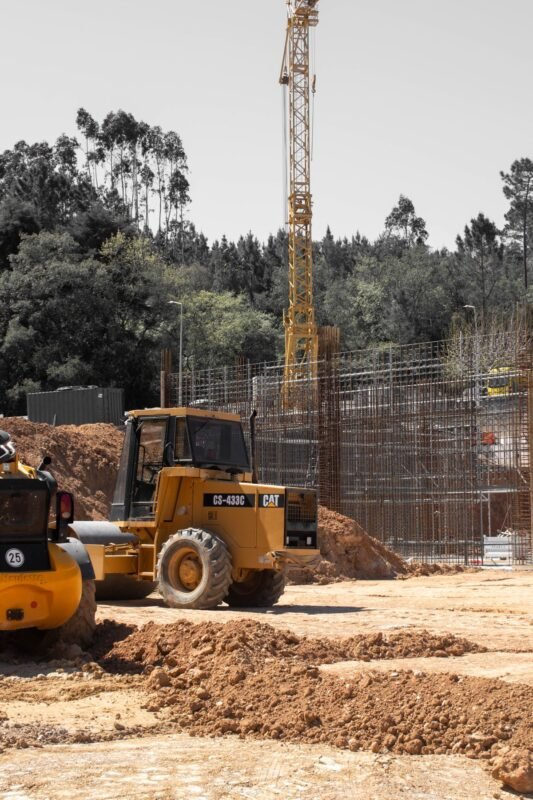
A refused land lease extension over project delay usually comes from two stacked decisions, not one: the land layer — the term is expiring and the natural resources authority finds the project has not put the land to use on schedule; and the investment layer — the project term in the investment registration certificate must be adjusted in step. Article 172 of Land Law 31/2024/QH15 allows extension on expiry where the land user still needs the land and the use fits planning; but for a delayed project the authority first measures against Article 81(8): a project that has not put land to use, or is behind schedule, may be granted a 24-month extension of land use on paying a corresponding sum, and if the land is still not in use after that window the State recovers it without compensation for the land. Unlike the piece on VAT refunds for delayed projects (EXP-1509), which is a tax story, this article is about saving the land — the project’s foundation.
Why delay gets extension files refused
Appraisal looks at three things: actual progress against the schedule in the investment registration certificate and the lease decision; the cause of delay (objective — site clearance, planning changes, epidemics — or subjective, where the investor simply did not implement); and the record of financial obligations and of any unpermitted construction on the land. Delays with evidenced objective causes are commonly still extended against a new committed schedule; a project left idle for years without notice has almost no chance.
The frequently missed point is term matching: land term and project term must align. Extending the land without first adjusting the project term under Investment Law 143/2025/QH15 (which replaced Investment Law 61/2020/QH14 from 1 March 2026) gets the land file returned for lack of a valid investment basis.
The 24-month extension: a conditional lifeline
Article 81(8) of Land Law 31/2024/QH15 gives delayed projects a 24-month land use extension window, conditional on paying an amount corresponding to the land use levy or rent for the delayed period. This mechanism should be proposed by the company in its own file rather than awaited: attach a quarter-by-quarter implementation plan, proof of financing for the remaining works, and milestone commitments with voluntary consequences. If, after those 24 months, the land is still not genuinely in use, the State’s right to recover without land compensation arises — and negotiation leverage is then nearly gone.
Spend within the window must concentrate on what changes the legal state of the land: completing basic construction and bringing the core area into operation, not thin spreads over paperwork.
After a refusal: complaint and fallback options
A refusal decision can be complained against under Complaint Law 02/2011/QH13 or challenged in an administrative lawsuit, centred on proving the delay was caused by the State side or objective events, that the company notified and sought schedule adjustment in due form, and that refusal is disproportionate where most of the project value is genuinely invested. In parallel, prepare fallbacks in priority order: adjust the investment project schedule first and re-file the land application; transfer the project to a capable investor through the project transfer procedure; or scale down and return the unused area to keep the built part.
FAQ
What are the conditions for extending a land lease?
Under Article 172 of Land Law 31/2024/QH15, on expiry the land user is considered for extension if it still needs to use the land, the use conforms to planning and statutory conditions are met; for investment projects the project term in the investment registration certificate must also remain valid or be adjusted correspondingly, and land financial obligations must be fulfilled.
How long a delay in progress leads to refusal?
There is no single number of months that triggers refusal; what matters is whether the project falls into the delayed category of Article 81(8) of Land Law 31/2024/QH15 and whether the cause is objective or subjective. A delayed project may receive a 24-month extension on paying the corresponding amount; years of unexplained idleness with no substantive implementation make refusal and recovery highly likely.
Will a new commitment be accepted?
A commitment can be accepted if it is evidenced rather than rhetorical: a quarterly implementation plan, proof of funds for the remaining scope, a performance guarantee or deposit, and voluntarily accepted milestones including return of unfinished area. A bare commitment letter with no financial documentation behind it rarely changes an appraisal outcome.
Where do I file a complaint?
Complain first to the authority that issued the refusal under Complaint Law 02/2011/QH13; if dissatisfied, complain to the immediate superior level or file an administrative lawsuit with the competent people’s court. The complaint file should prove the objective causes of delay and that the company notified and sought schedule adjustments in due process.
Related articles
- Industrial Park Management Fee Disputes in Vietnam: Negotiation and Board Complaints
- Limitation Periods for Land Disputes in Vietnam
- Valuing Compensation Upon Land Recovery in Vietnam: Independent Appraisal
- Overseas Vietnamese Inheriting Land Use Rights in Vietnam: Rights and Procedures
- Protecting Project Timelines Against Slow State Site Clearance in Vietnam: Petitions
This legal analysis has been verified against current Vietnamese regulations and cross-border FDI transaction practices by the attorneys at FLAT LAW FIRM.

