
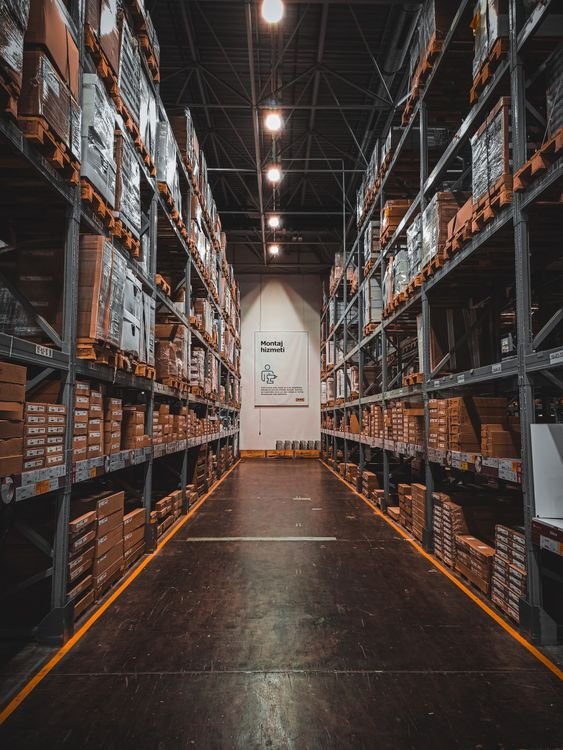
Rather than building their own warehouses, many FDI enterprises in Vietnam lease space in licensed bonded warehouses — flexible on scale and backed by favorable customs treatment: goods stored in a bonded warehouse are not yet subject to import duty until they enter the domestic market. This guide explains the legal conditions, the leasing process, and the customs procedures FDI enterprises need to know.
1. What is a bonded warehouse and where can it be located?
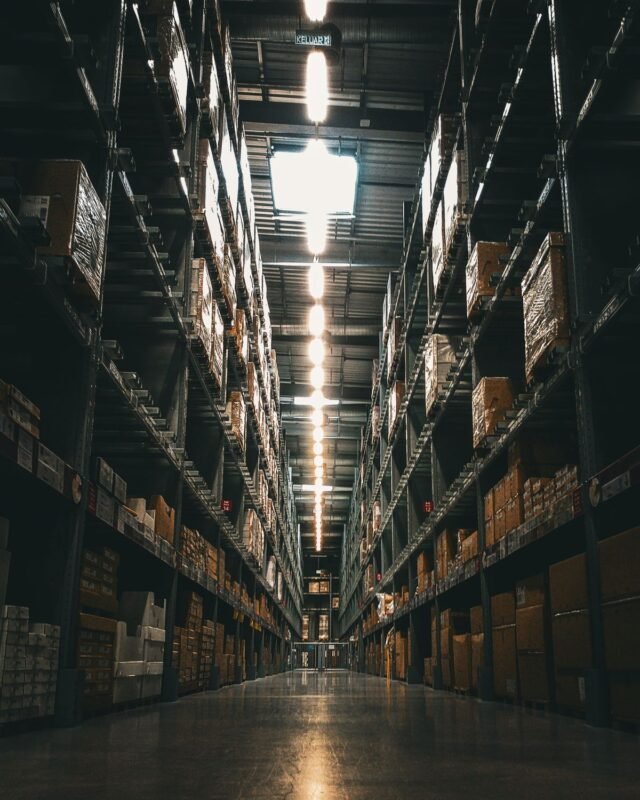
A bonded warehouse is a storage area for goods that have completed customs formalities and are held pending export, or goods brought from abroad held pending export overseas or import into Vietnam. Under Article 62 of the 2014 Customs Law, bonded warehouses may be established at seaports, international civil airports, border gates, international rail stations, industrial parks, high-tech parks, non-tariff zones, and other prescribed locations.
The key tax point: goods in a bonded warehouse are deemed not yet imported into domestic circulation — the enterprise pays import duty only on the portion actually brought into the Vietnamese market. Goods re-exported abroad bear no Vietnamese import duty.
2. Licensing conditions: what FDI tenants must verify

A leasing FDI enterprise does not itself need to meet the licensing conditions, but it must lease from a warehouse operator licensed by customs. Under Article 10 of Decree 68/2016/ND-CP (amended by Decree 67/2020/ND-CP), a licensed bonded warehouse must satisfy:
- Minimum area of 5,000 m² (storage sheds minimum 1,000 m²; specialized yards minimum 10,000 m²);
- Fencing separating it from surrounding areas and working facilities for customs officers;
- Warehouse-management software producing online data extracts for customs;
- 24/7 camera surveillance with data retained at least 12 months and connected directly to customs.
When selecting an operator: ask for the bonded-warehouse license issued by customs; check the location against your logistics routes; and confirm the warehouse management system meets customs supervision requirements to avoid clearance bottlenecks.
3. Leasing process and customs procedures for moving goods in and out
Commercially, the FDI enterprise signs a bonded-warehouse lease with the warehouse operator — the contract is registered with the customs authority supervising the warehouse. For customs, each inbound movement requires a bonded-warehouse entry declaration with supporting documents (lease contract, bill of lading, detailed packing list); customs inspects and supervises the warehousing.
When bringing goods into the domestic market: complete import procedures as for ordinary imports and pay import duty and VAT (if any) at the time of removal. When exporting from the warehouse abroad: complete export procedures; the goods bear no Vietnamese import duty. During storage, the enterprise may sort, repack, relabel, and reinforce packaging — but may not alter the nature of the goods.
4. Storage time limits: 12 months now, 24 months from 1 March 2027
Under Article 61(1) of the 2014 Customs Law: goods sent to a bonded warehouse may be stored for no more than 12 months from the date of warehousing; with legitimate reasons, the Director of the supervising Customs Department may grant one extension of no more than 12 months.
However, Law No. 11/2026/QH16 amending the Customs Law (effective 1 March 2027) raises the maximum storage period to 24 months and abolishes the extension procedure — no more extension dossiers for long-stay cargo. Goods already in storage before 1 March 2027 without an extension will be governed by the new rule counted from the warehousing date. This directly benefits FDI enterprises with long inventory cycles.
Do not confuse bonded warehouses with tax-suspension warehouses (an older regime for priority enterprises) — Law 11/2026 abolishes the tax-suspension warehouse regime. Enterprises still using it must switch storage arrangements before 1 March 2027.
Bonded-warehouse leasing checklist for FDI enterprises
- Verify the operator’s bonded-warehouse license; check location and surveillance systems.
- Sign a detailed lease: area, term, fees, custody responsibilities, and cargo insurance.
- Register the lease with the supervising customs authority.
- File a bonded-warehouse entry declaration for each inbound consignment.
- Track storage deadlines per consignment (12 + 12 months now; 24 months from 1 March 2027).
- On domestic removal: complete import procedures and pay duties in full and on time.
Legal references
- Customs Law No. 54/2014/QH13 — Article 61 (storage period), Article 62 (warehouse locations).
- Decree 68/2016/ND-CP, amended by Decree 67/2020/ND-CP — Articles 10–11 (licensing conditions and dossiers).
- Law 11/2026/QH16 amending the Customs Law (effective 1 March 2027) — 24-month period, no extension procedure, abolition of tax-suspension warehouses.
This article is for general information only and does not replace legal advice for specific cases. Bonded-warehouse rules will be detailed in guidance implementing Law 11/2026; enterprises should check the latest instruments and consult professionals before acting.
Contact FLAT Law Firm: if your company needs a review of bonded-warehouse leases, help with in/out customs procedures, or a storage transition plan before 1 March 2027, our team is ready to assist. See more articles on foreign investment on flaw.vn.
This article was prepared by the FLAW AI Legal Council, has passed internal QA review, and is pending owner approval. It is not the opinion of a licensed human lawyer and does not replace direct legal advice.


