
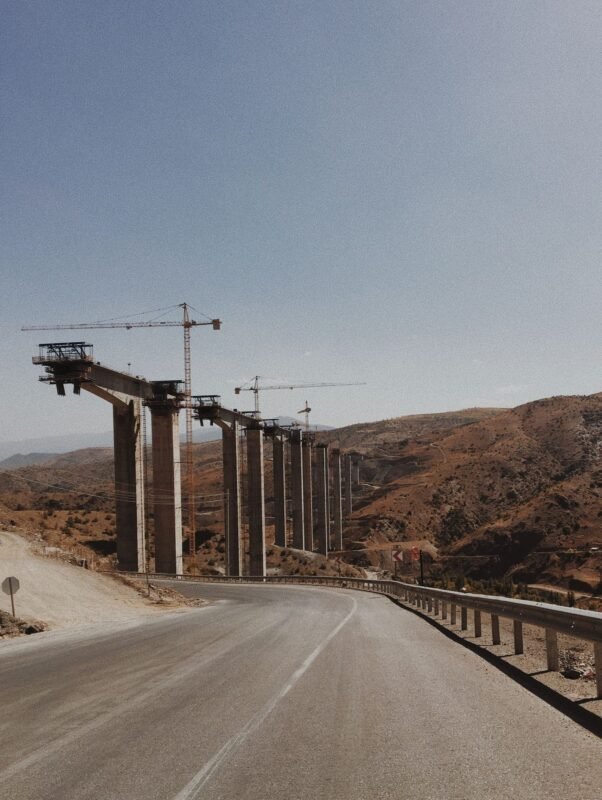
The BT contract was removed from the PPP Law in 2020 and disappeared from infrastructure projects for years. Law No. 90/2025/QH15, amending a series of investment-related laws, brought BT back into the PPP legal framework from 1 July 2025, with a two-branch payment mechanism — in land funds or from the state budget — built on a value-equivalence principle. For investors, the question is no longer whether BT may be used, but how the value of the payment land fund is determined and which details still await decree guidance.
Legal basis
- PPP Law No. 64/2020/QH14: PPP project contracts comprise BOT, BTO, BLT, BOO, BTL, O&M and mixed contracts; the BT contract was absent from the original list and returned only after the 2025 amendment.
- Law No. 90/2025/QH15 — the Law amending and supplementing articles of the Bidding Law, the PPP Law, the Customs Law, the VAT Law, the Export and Import Tax Law, the Investment Law, the Public Investment Law and the Law on Management and Use of Public Assets (effective 1 July 2025): reinserts the build-transfer (BT) contract into the PPP Law, allowing the investor to be paid in land funds or from the state budget.
- National Assembly Resolution No. 170/2024/QH15 on special mechanisms to remove difficulties and obstacles for projects and land in inspection and audit conclusions and court judgments in Ho Chi Minh City, Da Nang City and Khanh Hoa Province — a dedicated unblocking channel for stalled projects, not a substitute for the ordinary BT mechanism.
- Land Law No. 31/2024/QH15: allocating land to an investor implementing a BT project is a case of land allocation without land-use-right auction where the land fund is used for payment; the specific land price under Article 160 is the basis for valuing the payment land fund.
BT returns: what actually changed compared with the pre-2021 regime?
Before 2021, BT operated under a dedicated decree on build-transfer investment and was a familiar channel for roads, bridges and office buildings exchanged for land. The 2020 PPP Law removed BT mainly over concerns about leakage in valuing payment land funds and off-budget payment obligations incurred without competitive selection. On its return, the law places BT under the same governance frame as other PPP contracts: the project must fall within prescribed sectors and scales, pass investment preparation, pre-feasibility or feasibility appraisal, investor selection under bidding law, and — most importantly — the payment mechanism is recorded right in the investment policy decision rather than negotiated loosely after construction completes.
The two payment methods are now clearly statutory. Payment from the state budget applies to public-service projects and works for which the State has an identified funding source. Payment in land funds applies to infrastructure-for-land exchanges, where the value of the BT work and the value of the land fund must be balanced at equivalence on the same price basis at the time of payment.
Valuing the payment land fund: the equivalence principle and its execution bottleneck
Equivalence means the investor may not receive land worth more than the audited final value of the completed work, and the State may not underpay in a way that structurally losses the investor. The land fund’s value is determined at the specific land price decided by the provincial People’s Committee under clause 2 of Article 160 of the 2024 Land Law at payment time, and the payment land must be cleared land with approved planning and an identified use purpose. If the land is worth more than the work, the investor pays the difference into the budget; if less, the State arranges additional land or pays the shortfall in cash as agreed in the contract.
Investors should stay alert on one point: the framework law exists, but the guiding decree detailing BT project preparation sequence, the method for fixing the work value used for offsetting, and the treatment of land price movements between contract signing and payment is still being finalised at the time of writing. Signing a BT contract in this window demands stronger self-protective clauses than usual: the date for fixing the payment land price, the remedy where the land fund is cleared late, and the adjustment mechanism when detailed guidance is issued after signing.
The boundary with Resolution 170/2024: two channels, do not confuse them
Resolution No. 170/2024/QH15 is not a basis for launching new BT projects. It is a special mechanism for clearing backlogs: allowing projects and land transactions already caught in inspection and audit conclusions and court judgments in three localities — Ho Chi Minh City, Da Nang and Khanh Hoa — to continue, be adjusted or be terminated. An old BT project with a land-payment problem in one of these three localities may be unblocked through the Resolution 170 channel; a new BT project starting from 2025 follows the amended PPP Law and ordinary land law. Mixing the two channels in a project’s legal file is an error investors and their advisers should avoid from the very first document.
The housing bridge: cross-province labour and social housing conditions
Infrastructure projects under the BT form typically pull a workforce across provinces, and buying social housing in the province hosting the project is a recurring question for engineers and project staff on assignment. Housing law tests the no-home condition by the province where the project sits, not nationwide — the details are answered in the questions below.
Conclusion and recommendations
BT has returned as a full PPP contract, with land-fund payment made statutory and value equivalence as its axis. Investors interested in this channel should direct their appraisal capacity at three points: the identifiability of the payment land fund in the policy decision, the method for fixing the specific land price at offsetting time, and transitional clauses in the contract guarding against the detailed guiding decree arriving after signing.
Frequently asked questions
Can a person who already owns a house in their home province buy social housing in another province?
Yes, if they meet the conditions in the province where the project is located. The 2023 Housing Law tests a social housing buyer’s housing condition within the province or centrally run city hosting the project: the buyer must not yet own a home, must not have bought or lease-purchased social housing, and must not have received housing support policy benefits in that very province. Owning a private house in a different province is not an exclusion under current law, but the buyer must still satisfy the income condition, belong to an eligible beneficiary group, and declare non-ownership of housing in the purchasing province in the application file.
Is the ‘no home ownership’ condition assessed by locality or nationwide?
By the locality hosting the project, not nationwide. Decree No. 100/2024/ND-CP interprets the condition uniformly: the applicant must not own a home within the province or city where the social housing project is located. After the 2025 provincial mergers, Resolution No. 201/2025/QH15 allows merged localities to assess housing status by reference to the pre-merger provincial boundary, combined with a distance criterion between current residence and workplace set by the provincial People’s Committee, so that workers are not treated as housed merely because a provincial border moved. Buyers should obtain a housing-status confirmation for the exact territory the locality applies at the time of sale opening.
Which authority certifies housing status and income for a social housing buyer?
The two certifications come from two different issuers. Housing status is certified by the commune-level People’s Committee of the buyer’s permanent or temporary residence, on the statutory form and based on the locality’s land and housing data. Income is certified by the agency, unit or enterprise employing the buyer for contracted workers; for applicants without a labour contract, the commune-level People’s Committee certifies based on the applicant’s declaration and supporting documents under Decree No. 100/2024/ND-CP. The project developer receives the file, cross-checks the certifications and submits the list of eligible buyers to the Department of Construction for verification and publication before sale contracts are signed.
What extra conditions must a buyer prove when purchasing social housing in a province different from their workplace?
Beyond the housing and income conditions required of every buyer, a person buying in a province other than their workplace province usually must prove a real connection with the project’s locality: working at an enterprise or agency in that province, evidenced by a labour contract and employer confirmation, or being transferred there by assignment, or holding temporary residence registration tied to working in the province. Under the pilot mechanism of Resolution No. 201/2025/QH15, some localities add a distance criterion between current home and workplace to prioritise workers living far from work. Because detailed criteria are set by each province in its project announcement decision, buyers should read the specific project’s sale notice carefully rather than inferring from their home province’s rules.
Related articles
- Renovating Your Apartment: What Foreign Owners Must Get Approved
- Pets in Apartments: Rules Foreign Owners Must Know
- Parking Space Disputes: Cars, Motorbikes and Your Rights
- Buying an Officetel: Foreigners and the 50-Year Certificate
- Incentives for Social Housing Developers: Land-Use Fee Exemption, Taxes and the 10% Norm Profit — Conditions and Post-Project Inspection
This legal analysis has been verified against current Vietnamese regulations and cross-border FDI transaction practices by the attorneys at FLAT LAW FIRM.

