
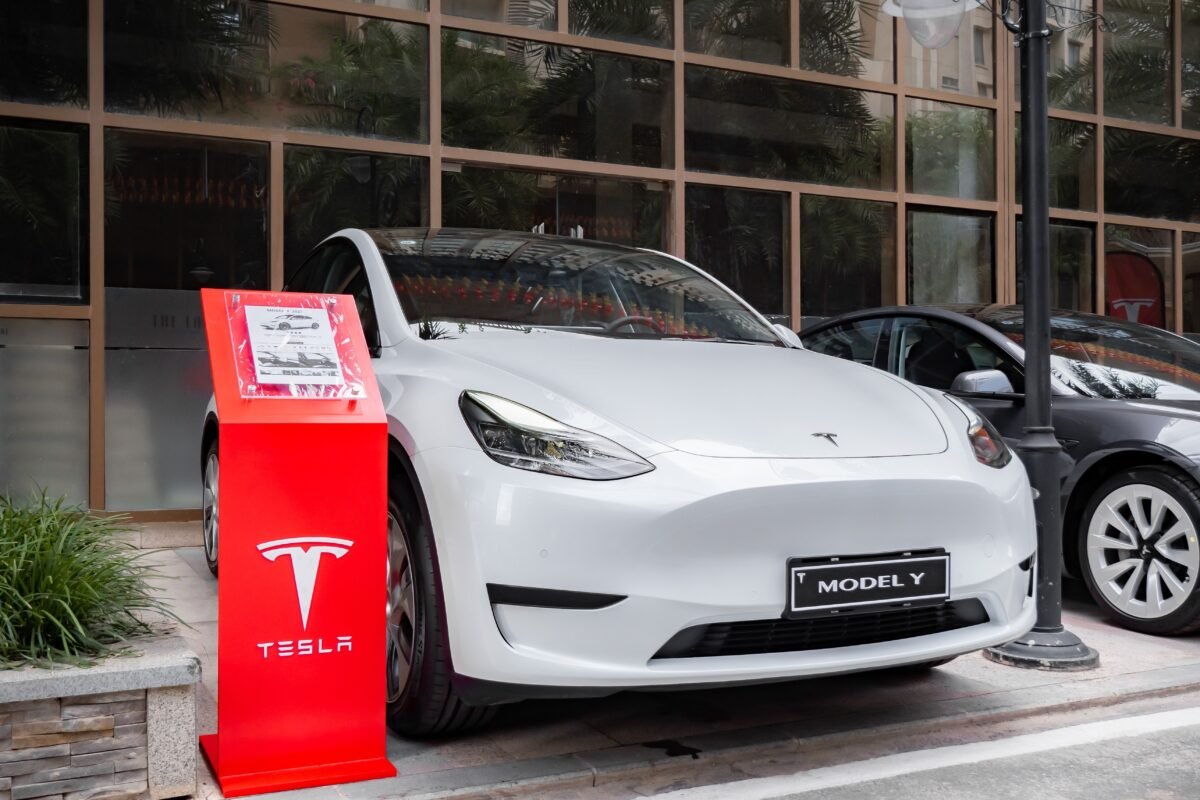
A Chinese automaker selling EVs in Vietnam faces the chicken-and-egg question: no chargers means no car sales, but building chargers is expensive and not the car business. Two paths: building its own chargers, or partnering with Vietnamese players (power utilities, real estate, retail chains). This article compares the two models head-to-head — cost, control, speed, risk — so Chinese automakers pick the right model for their stage in Vietnam.
Model 1: building your own chargers
How: the automaker sets up a Vietnamese subsidiary (or division) that finds sites, permits, invests in equipment and operates a branded charging network.
Advantages: (1) Experience control: fast, reliable charging integrated with the brand’s app — the charging experience is part of the car product; (2) Data: owning charging data (user behaviour, battery health) — a strategic asset; (3) Brand: logo-bearing chargers are billboards nationwide; (4) No dependence: no partner to squeeze on power/service pricing later.
Disadvantages: (1) Huge capital: one DC fast charger (60–120kW) costs VND 1–3 billion (equipment + grid connection + site); a 100-station network = VND 100–300 billion — before land rent and operations; (2) Not the core business: automakers excel at cars, not at grid-connection permits, land-lease negotiation and 24/7 operations; (3) Slow: 12–24 months from scratch to a minimum network; (4) Utilisation risk: few cars sold means idle chargers — prolonged operating losses.
Model 2: partnering with Vietnamese players
How: JV/contractual partnership with local utilities, property owners (malls, apartment complexes, parking lots) and retail chains (petrol stations, convenience stores) — the partner contributes sites + grid connections, the automaker equipment + brand + operations (or vice versa).
Advantages: (1) Speed: leveraging the partner’s sites and relationships — a network in 6–12 months; (2) Capital-light: shared investment, each side contributing strengths; (3) Local knowledge: Vietnamese partners know permits, grid connections and land leases — painfully slow for foreign automakers; (4) Shared risk: idle stations hurt both.
Disadvantages: (1) Lost control: charging quality, pricing and experience depend on the partner — skipped maintenance damages the automaker’s brand; (2) Conflicting interests: the partner wants to charge every brand (maximise revenue); the automaker wants priority for its cars; (3) Partner risk: financially weak partners, ownership changes, or acquisition by a rival; (4) Data sharing: charging data (a strategic asset) must be shared or is lost to the partner.
Head-to-head: six criteria
(1) Capital: self-build needs 3–5× the capital of partnering. (2) Speed: partnering is twice as fast (6–12 vs 12–24 months). (3) Control: self-build wins outright. (4) Risk: partnering shares risk; self-build takes it all. (5) Expansion: self-build expands on your terms; partnering depends on the partner. (6) Exit: partnering exits more easily (stake sale); self-build exit means selling the whole network (hard to find buyers).
Recommendations by stage
Stage 1 (new entrant, under 5,000 cars/year): PARTNER. Prioritise speed and capital-light — partner with 2–3 players (utility + property + retail) for fast major-city coverage. Conditions: contracts specifying charging quality standards, pricing, priority rights for the brand’s cars, and buy-back rights on the infrastructure.
Stage 2 (5,000–20,000 cars/year): HYBRID. Keep partnerships at partner sites; self-build at strategic locations (expressway corridors, big-city centres) — where brand experience matters most. Start building your own operations team.
Stage 3 (over 20,000 cars/year): expand SELF-BUILD. At scale, buy back partner infrastructure (exercising buy-back rights) or build new — moving to a fully controlled network. Capital is no longer the binding constraint; experience and data are the deciding assets.
The utilisation math — when does a station pay for itself?
A charging station only profits when the buy-sell electricity spread covers its costs. Buying: stations buy power at commercial/service tariffs (above residential rates), plus hefty upfront connection fees — the biggest fixed cost after equipment. Selling: charging fees must compete with home charging (far cheaper), so per-kWh margins are thin. Breakeven math: a fast-charging station needs roughly 15–25% utilisation (each plug serving customers ~4–6 hours/day) to cover operating costs — below that, it loses money monthly. Hence: (1) don’t build where it’s “prestigious” but few EVs pass; (2) night-time charging (cheap power) plus time-of-use charging prices (peak/off-peak) is the main profit lever; (3) don’t expect charging revenue profit in the first 3–5 years — the real value is selling cars (chargers are a marketing/sales cost, not a profit centre).
Four “survival” clauses in charging partnerships
(1) Service SLA: minimum uptime (e.g. 98%), maximum repair time for broken chargers — penalties for breach. Penalties should escalate with downtime duration rather than being flat — otherwise the partner treats them as a cost of doing business. (2) Charging price: pricing mechanism (who decides increases? what band?) — preventing sudden partner price hikes that drive customers away. (3) Priority and data: do the brand’s cars get booking priority? Who owns charging data? — settled upfront. (4) Exit and buy-back: when can infrastructure be bought back? At what price (depreciation? independent valuation?)? Can the partner sell its stake to a rival (right of first refusal)? Missing any one of these four — don’t sign.
The grid is the real gatekeeper — power access strategy
Chargers are useless without megawatts: a 20-stall DC fast-charging hub draws as much power as a small factory, and Vietnam’s grid in many areas can’t deliver it on demand. Site selection is power selection: rank candidate sites by available transformer capacity first and foot traffic second — a perfect retail location with no grid headroom is a stranded asset. Negotiate grid connection as a package with the local power company: connection fees, timeline (6–12 months for high-capacity links), and time-of-use tariffs that make night-time charging profitable. Battery-buffered charging (on-site storage charged off-peak, discharged at peak) cuts both connection-capacity needs and electricity costs — the capex pays back where peak/off-peak spreads are wide. Future-proof the electrical design for 2–3× current capacity: trenching and substations are cheap to oversize during construction and ruinously expensive to retrofit. Automakers that treat charging as a power business with cars attached — rather than a car business with chargers attached — consistently build faster and cheaper.
Checklist: Chinese automaker choosing a charging model
1. Assess your stage: current and 3-year car sales — it decides the model. 2. Model the capital: what does self-building 100 stations cost? Is cash flow sufficient? 3. Survey partners: utilities, property, retail — who has sites and capability? 4. Negotiate the four survival clauses (SLA, pricing, priority/data, buy-back). 5. Check the legals: power tariffs for charging, fire permits, land leases (Land Law 31/2024). 6. Design the network: expressway corridors and big cities first. 7. Build an operations team (partnered or self-built — your own people must supervise). 8. Integrate the app: find, book, pay — digital experience is half the value. 9. Plan staged expansion (partner → hybrid → self-build). 10. Reassess the model yearly against actual car sales. 11. Treat power access as the primary site criterion — no megawatts, no chargers.
Contact us
FLAT Law Firm advises Chinese investors in Vietnam across the full lifecycle: investment structuring, IRC/ERC procedures, tax, labour, intellectual property and dispute resolution. Contact us for advice tailored to your case.
This article has been quality-reviewed by the FLAW AI Legal Council
Related articles
- Chinese-Vietnamese bilingual schools with foreign investment: establishment conditions
- Industrial Power Prices: Is Vietnam Cheaper Than China and India?
- The "China + 1" Strategy: Why Do Multinationals Pick Vietnam as Their Second Base?
- Investing in Vietnam or China: Comparing Labor and Operating Costs
- The "China + 1" Supply Chain Shift: How Does Vietnam Benefit?