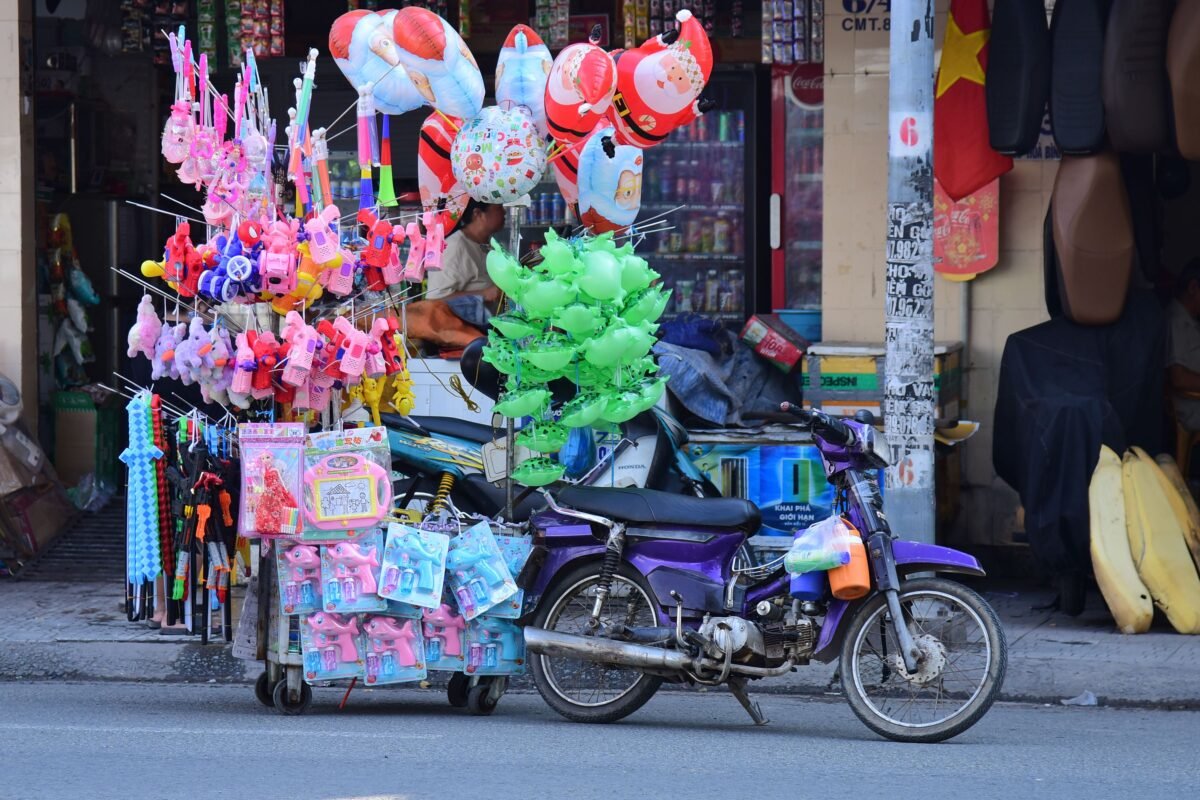
Toys are leaving China — Vietnam, India and Indonesia are the three contenders. Toys have their own specifics: strict safety standards (children!), seasonal production, constantly changing designs. This article compares on toy-specific criteria.
1. What do toys need? Industry criteria
- Labour: much manual assembly — dexterous, low-cost;
- Safety: meeting EN71 (EU) and ASTM F963 (US) — testing;
- Flexibility: fast-changing designs — agile line changeovers;
- Seasonality: peaking before Christmas — flexible capacity;
- Plastics/textiles: simple plastic, fabric and electronic inputs.
2. Vietnam: the rising toy cluster
- Pro: many toy plants already moved from China — cluster effects;
- Pro: dexterous workers at reasonable cost;
- Pro: near Chinese component and plastics supply;
- Pro: toy testing labs growing in number;
- Con: weak design and R&D — dependent on buyers’ designs.
3. India: domestic market + labour
- Pro: abundant, cheap labour;
- Pro: a huge domestic market — many children;
- Pro: policies encouraging domestic toy manufacturing;
- Con: weaker supply cluster — components and plastics imported;
- Con: far from US/EU customers — pricier logistics.
4. Indonesia: cheap labour, domestic market
- Pro: cheap labour, large population;
- Pro: a large domestic market;
- Con: a small toy cluster — little export experience;
- Con: lacking international testing and certification;
- Fit: low-cost toys for domestic/regional markets.
5. Comparison table
| Criterion | Vietnam | India | Indonesia |
|---|---|---|---|
| Assembly labour | Good | Excellent | Good |
| Supply cluster | Best | Average | Weak |
| Testing/certification | Good | Average | Weak |
| Near US/EU customers | Good | Weak | Average |
| Domestic market | Small | Huge | Large |
6. Safety standards: the technical barrier
- EU: EN71 — the EU toy directive, chemical and physical tests;
- US: ASTM F963 plus CPSIA — lead, phthalates;
- Practice: plants need in-house QC plus independent testing;
- Vietnam: accredited labs growing — an advantage;
- Note: toy-safety violations mean recalls and lost brands.
7. Seasonal production: flexible management
- Peak: Q3 yearly — preparing for Christmas;
- Seasonal labour: hiring thousands of seasonal workers — each country’s labour law;
- Vietnam: abundant seasonal labour — experienced in seasonal industries;
- Inventory: seasonal-inventory management — large working capital;
- Planning: lock buyer contracts early — not close to the season.
8. Design protection against knockoffs
- Problem: toys are easily copied — hot designs cloned within weeks;
- Protection: register industrial designs in the producing country and markets;
- Contracts: NDAs with suppliers and staff — new-design confidentiality;
- Enforcement: each country’s IP enforcement capacity differs — research it;
- Speed: launch designs fast — toy life cycles are short.
9. If you may pick only one
- US/EU exports needing a supply cluster: Vietnam;
- Domestic market + cheap labour: India;
- Low cost, regional markets: Indonesia;
- Smart play: Vietnam (exports) + India (domestic).
10. Decision checklist
- Key market — exports or domestic?
- Safety standards — EN71, ASTM F963?
- Seasonal labour needs — covered?
- Testing labs — nearby?
- Design protection — registered?
- Total seasonal cost — computed?
11. Toy plastics: material safety
- Issue: toy plastics touch children — lead, phthalates, BPA;
- Control: certified resin suppliers — certificates;
- Incoming QC: test every material batch — never blind-trust;
- Paint: toy paint — lead-free, certified;
- Records: trace materials — for inspections.
12. Electronic toys: the trend
- Trend: electronic, smart toys rising — electronic components needed;
- Vietnam: near the electronics chain — an advantage;
- Batteries: toy batteries — battery safety (fire);
- EMC: electromagnetic compatibility — extra certification;
- Opportunity: electronic toys earn higher margins than ordinary toys.
13. Seasonal order management
- Forecast: buyers give forecasts — plan production;
- Flexibility: modular lines — scale fast;
- Warehouse: large finished-goods storage — pre-season buildup;
- Capital: peak working capital before season — bank credit;
- Risk: cancelled post-season orders — contract terms.
14. Labour law for seasonal hiring
- Contracts: fixed-term contracts for seasonal workers — within legal limits;
- Overtime: peak-season overtime — respecting caps;
- Termination: clean end-of-season exits — severance per law;
- Vietnam: flexible seasonal hiring — established practice;
- Advice: local labour counsel — seasonal rules differ.
15. Quick answers
- Best for US/EU toy exports? Vietnam — testing labs and clusters;
- Cheapest? India or Indonesia — but check certification capacity;
- Biggest risk? Safety failures — one recall kills the brand.
16. Toy IP: where to register?
- Designs: register industrial designs — producing country plus markets;
- Trademarks: toy brands — register early;
- Copyright: characters and artwork — automatic but registration is safer;
- Enforcement: each country’s customs — register so customs blocks knockoffs;
- Cost: IP registration is cheaper than litigation.
17. Toy-plant startup costs
- Factory: rent a ready-built factory — toys need no special plant;
- Machines: injection moulders and sewing machines — moderate;
- Moulds: plastic moulds — the biggest upfront cost;
- Working capital: seasonal materials — peaking before Q3;
- Total: toys need lower startup capital than many industries.
18. Final advice
- Safety first: EN71/ASTM — no compromise;
- Seasonality: prepare 6 months ahead — not last-minute;
- Designs: launch fast — short life cycles;
- Market: exports or domestic — decides the location.
19. One-page decision
- US/EU exports: Vietnam — labs, clusters, buyers;
- Domestic markets: India — huge home demand;
- Low-cost regional: Indonesia — cheap and local;
- Combo: Vietnam + India — exports plus domestic.
20. Toy distribution channels
- Exports: FOB — buyers handle freight;
- Domestic: supermarkets and toy stores — distribution;
- Online: e-commerce — the growth channel;
- Private label: OEM/ODM — making for brands;
- Own brand: hard — needs big marketing.
21. Sustainability in toys
- Trend: wooden and recycled toys rising;
- Regulation: plastic restrictions spreading;
- Opportunity: eco toys — premium prices;
- Certification: FSC for wooden toys;
- Future: sustainable lines — the growth segment.
22. Crisis management: recalls
- Plan: a recall plan — before you need it;
- Traceability: batch traceability — find affected lots fast;
- Communication: honest and fast — cover-ups kill brands;
- Insurance: product-liability insurance — essential;
- Learn: every near-miss improves the system.
23. Partnering with distributors
- Agents: domestic distributors — the fast channel;
- Terms: exclusive or not — weigh it;
- Support: joint marketing — moving goods;
- Control: pricing — no price erosion.
24. The winning formula
- Safety certified — EN71 and ASTM;
- Seasonal agility — scale up and down;
- Fast design cycles — launch quickly;
- Right market — exports or domestic, decided upfront.
25. Key contacts to line up
- Testing labs — EN71 and ASTM F963 certification;
- Buyers — brand sourcing offices;
- Material suppliers — certified resin and paint;
- Local counsel — labour law for seasonal hiring.
26. Seasonal calendar: the toy year
- Q1: design and sampling — new collections;
- Q2: ramp-up — hiring seasonal workers;
- Q3: peak production — maximum output;
- Q4: shipping and sell-through — then wind down;
- Plan: cash flow follows this cycle — finance it.
Remember: safety certification is non-negotiable, seasonality is the rhythm, and fast design turnover is the edge — master all three.
Visit testing labs in person before committing — their capacity decides your launch dates.
27. Buyer concentration risk
- Risk: one big buyer means one big vulnerability;
- Mitigate: three-plus buyers — no one above 40%;
- Contracts: minimum commitments — in writing;
- Pipeline: always developing the next buyer.
Final note: the toy industry rewards speed and punishes complacency — the winners launch new designs every season while keeping safety perfect.
Contact us
FLAT Law Firm advises Chinese investors throughout the Vietnam investment cycle — from deal structuring and licensing to operations and compliance. Contact us for advice tailored to your project.
This article has been quality-reviewed by the FLAW AI Legal Council