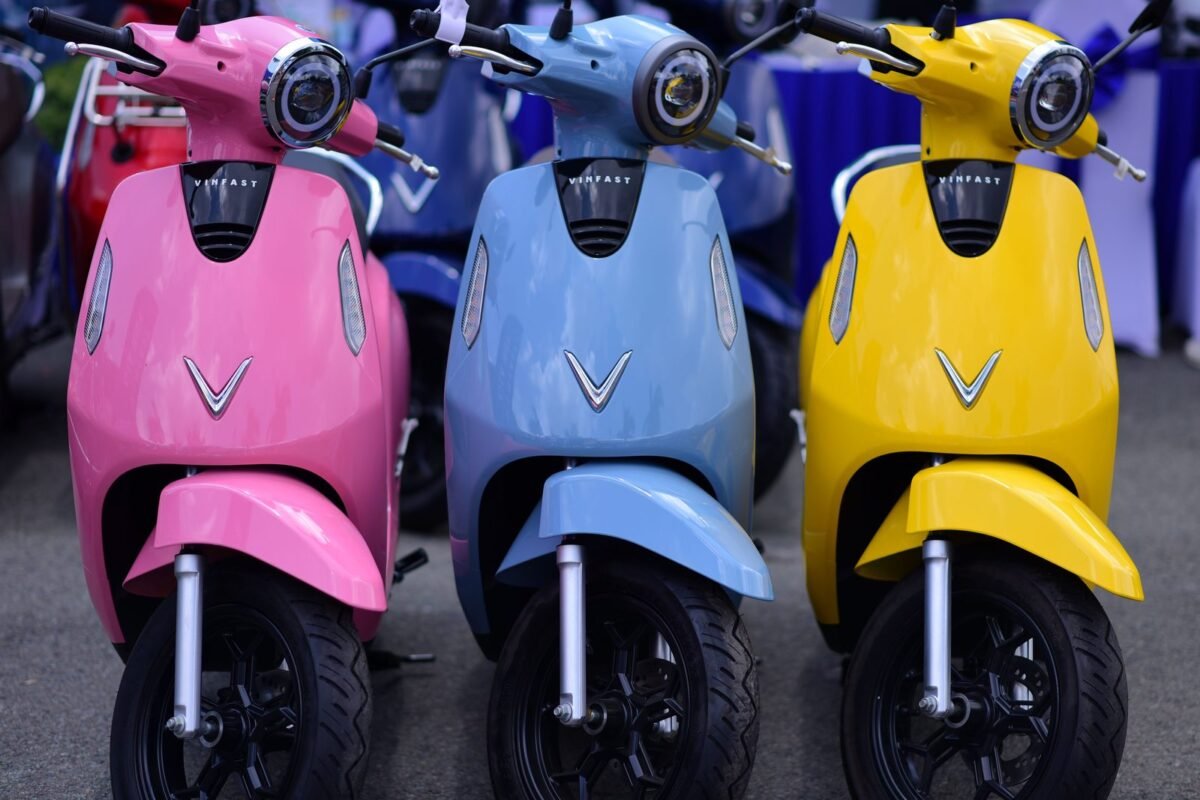
EV components and batteries are the hottest front of China + 1: China dominates the global battery supply chain, and Southeast Asian nations are racing to become the second battery stronghold. The three contenders — Vietnam, Indonesia, Thailand — each hold a different card: Vietnam has VinFast and a growing supplier base, Indonesia has nickel (battery feedstock), Thailand has the EV3.5 package and the region’s most complete auto cluster. This article scores the three on eight battery/EV-specific criteria — an industry where a wrong call on feedstock can turn a whole plant into scrap metal.
Criteria 1–2: battery feedstock and supply chains
(1) Battery-material access (nickel, lithium, cobalt). Indonesia is the nickel king — the world’s largest reserves, a raw-ore export ban forcing domestic processing, with nickel-smelter and precursor plants (CATL, LG, Huayou projects) already rising. This is an irreplaceable edge: batteries need nickel, and nickel is in Indonesia. Vietnam and Thailand have no meaningful battery materials — all imported. Scores: Indonesia 10/10, Vietnam 4/10, Thailand 4/10.
(2) EV-component supply chains. Thailand has Southeast Asia’s most complete auto cluster (Toyota, Honda, Ford plus hundreds of tier-1/2 suppliers) — shifting to EV components is a “menu change” on a ready base. Vietnam has the VinFast ecosystem (Hai Phong plant, a forming supply chain) but it is young. Indonesia’s auto cluster is smaller and still building. Scores: Thailand 9/10, Vietnam 6/10, Indonesia 5/10.
Criteria 3–4: policy and incentives
(3) National EV policy. Thailand: EV3.5 — direct subsidies for locally made EVs, import-duty relief on components, a 30%-of-auto-output EV target for 2030. Indonesia: ore-export ban + battery-park incentives (Morowali, Weda Bay), 0% tax rates for some domestic EV lines. Vietnam: registration-fee exemption for electric cars (a policy applied before — check current validity), investment incentives for auto supporting industries under Investment Law 143/2025. Scores: Thailand 9/10, Indonesia 8/10, Vietnam 6/10.
(4) Investment incentives for battery plants. Battery plants are billion-dollar projects — incentives decide. Indonesia: “super” incentives for battery/nickel projects (long tax holidays, dedicated park land). Thailand: high BOI incentives for batteries and EV components. Vietnam: high-tech/supporting-industry incentives under Investment Law 143/2025 — but no dedicated battery package on Indonesia/Thailand’s scale. Scores: Indonesia 9/10, Thailand 8/10, Vietnam 6/10.
Criteria 5–6: safety, environment and talent
(5) Fire-safety and environmental management. Lithium batteries are fire/explosion hazards + hazardous waste: battery plants need special fire protection (storage, dedicated suppression) and waste-battery/chemical handling under the Environmental Protection Law 72/2020/QH14 (in Vietnam). Indonesia: concentrated battery parks (shared treatment costs) but uneven enforcement. Thailand: clear industrial standards, stable enforcement. Scores: Thailand 8/10, Vietnam 6/10, Indonesia 6/10.
(6) Battery/auto engineering talent. Battery technology is high-skill — chemical and process engineers needed. All three are short, but Thailand can convert its auto-engineer base; Indonesia imports Chinese/Korean specialists for battery projects; Vietnam trains fast but lacks depth. Scores: Thailand 7/10, Indonesia 6/10, Vietnam 6/10.
Criteria 7–8: markets and chain position
(7) Domestic consumer market. Indonesia: 280 million people, Southeast Asia’s largest motorcycle/car market — electric two-wheelers booming, replacement batteries a giant market. Thailand: the region’s largest auto market (domestic sales + exports). Vietnam: 100 million people, an EV market VinFast is “pioneering”. Scores: Indonesia 9/10, Thailand 8/10, Vietnam 6/10.
(8) Position in the global battery chain. Indonesia: upstream (materials → precursors → batteries). Thailand: midstream (battery assembly → vehicles). Vietnam: downstream/assembly (today). Chinese investors (battery-strong) should site by existing advantage: battery tech → Indonesia; auto components → Thailand; low cost + market proximity → Vietnam. Scores (chain position): Indonesia 8/10, Thailand 8/10, Vietnam 6/10.
Verdict: choose by the battery chain’s “segment”
Totals (out of 80): Indonesia 63, Thailand 62, Vietnam 46 — Indonesia and Thailand clearly ahead; Vietnam lags on feedstock and dedicated policy. Nickel smelting/precursors → Indonesia (no alternative). Cells/packs → Indonesia (near feedstock) or Thailand (near auto customers). EV components (motors, controllers, chargers) → Thailand (auto cluster) or Vietnam (low cost, near China). Electric two-wheeler assembly → Indonesia (market) or Vietnam (cost). The Chinese battery giants’ playbook (CATL, BYD, Gotion): upstream in Indonesia, mid/downstream spread around — Vietnam needs a dedicated battery package competitive with EV3.5 and Indonesia’s nickel incentives to get in the game.
Warning: three “killer” risks of battery plants
(1) Fire. Lithium-battery fires can’t be put out with ordinary water — fire protection must be designed in from day one, and fire insurance for battery plants costs multiples of ordinary plants. (2) Nickel/lithium price swings. 50–100% annual feedstock swings are normal — long-term feedstock contracts and price pass-through mechanisms are survival tools. (3) Battery-tech disruption. Solid-state and sodium-ion batteries could strand current lines within 5–10 years — design plants modular and convertible; never pour concrete for a single chemistry.
Structuring the investment — what Chinese battery investors negotiate
Battery projects are too big for standard incentive templates — negotiate a package deal: (1) land (dedicated battery-park plots with pre-approved environmental licences — 12–18 months saved); (2) power (battery plants are power-hungry — secure dedicated substation capacity in writing, not verbal assurances); (3) talent visas (dozens of Chinese engineers for commissioning — negotiate batch work-permit processing with immigration authorities upfront); (4) offtake (anchor the business case with supply agreements from automakers before breaking ground — banks financing billion-dollar battery plants demand contracted revenue). Joint ventures with local conglomerates (Indonesia’s Harita, Thailand’s PTT, Vietnam’s VinFast ecosystem partners) de-risk land, permits and politics — the Chinese side brings technology and equipment, the local side brings the licence to operate. Structure the JV so technology transfer is staged (not handed over on day one) — your process know-how is the asset the partnership is built around. Finally, plan the exit before entry: battery JVs unwind messily — pre-agree buy-sell mechanics and technology-licence survival terms while everyone is still friendly, because renegotiating them mid-dispute is where value goes to die. Document every technology contribution with dated records from the start — in any future dispute over who owns what, the party with the paper trail wins. Keep the core battery chemistry and process recipes under separate, tightly controlled licences — never bundled into the general JV technology package.
Checklist: siting a battery/EV-component plant
1. Fix the chain “segment”: materials, cells, packs, components or assembly — each has a different home. 2. Assess feedstock access: nickel/lithium from where, at what price, how stable? 3. Compare policy packages: EV3.5 (Thailand), battery incentives (Indonesia), supporting-industry incentives (Vietnam) — in cash terms, not slogans. 4. Check fire and environmental rules: lithium-battery requirements, insurance costs. 5. Assess engineering talent: where to hire battery engineers? 6. Size the market: selling to whom — domestic or export? 7. Model feedstock prices: can you survive 50% annual swings? 8. Design modular: can lines convert to new chemistries? 9. Meet customers: what do automakers/battery makers require of the chain? 10. Take legal advice: incentives, dedicated park land, environmental licences. 11. Negotiate the package — land, power, visas and offtake — before committing the first dollar of capex.
Contact us
FLAT Law Firm advises Chinese investors in Vietnam across the full lifecycle: investment structuring, IRC/ERC procedures, tax, labour, intellectual property and dispute resolution. Contact us for advice tailored to your case.
This article has been quality-reviewed by the FLAW AI Legal Council
Related articles
- Japanese Firm With a Plant in Thailand/China: Is Vietnam the Right Second Base?
- When Should You Choose China Over Vietnam? A Decision Framework for Investors
- China+1 for food processing: Vietnam, Thailand or Indonesia — Where to Put the Factory?
- China+1 for medical devices: Vietnam, Malaysia or Singapore — Where to Put the Factory?
- China+1 for wooden furniture: Vietnam, Malaysia or Indonesia — Where to Put the Factory?