
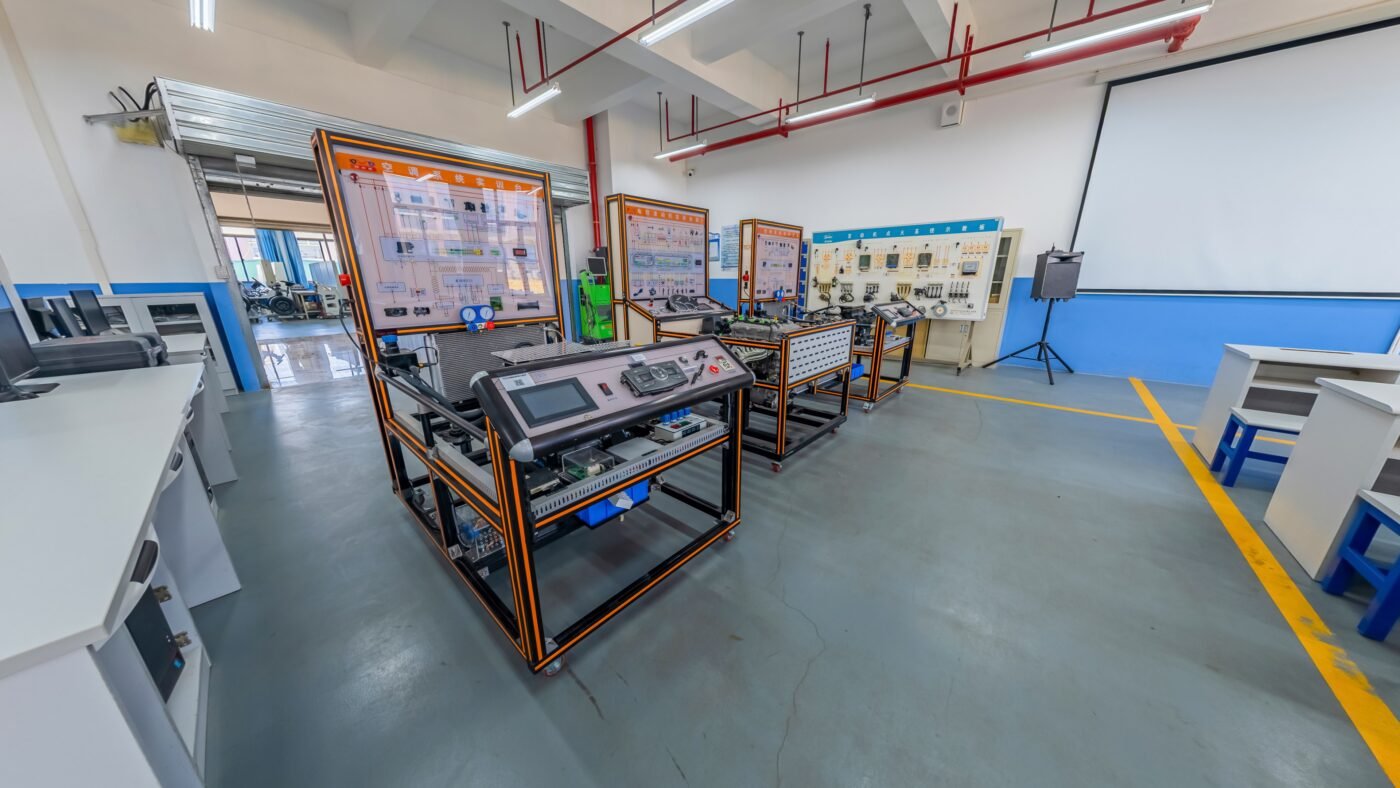
Many Chinese groups with factories in Vietnam want to train workers themselves to their own technological processes — from in-house training centres to vocational colleges. This is a conditional business sector, and where training involves technology transfer, a second layer of procedures applies.
1. Vocational training is a conditional sector
Under Vietnam’s Law on Vocational Education 74/2014/QH13, establishing a vocational education institution requires: adequate facilities and training equipment; qualified teaching staff; curricula; and a certificate of vocational education activity registration. Foreign investors must also comply with WTO commitments and the conditional-sector list of Investment Law 143/2025/QH15 (the conditional list takes effect from 1 July 2026).
2. Two common models for Chinese investors
- In-house training centre (training workers for their own factory): lighter procedures, but issuing certificates still attracts quality-management oversight.
- Independent vocational institution (open enrolment, tuition fees): requires an education legal entity with full sub-licences; much higher capital and facility requirements.
3. Technology-transfer notes
Where training uses the Chinese parent’s processes and know-how, note Vietnam’s Law on Technology Transfer 07/2017/QH14:
- Technology-transfer contracts in covered cases must be registered with the science-and-technology authority;
- Technologies on the restricted/prohibited transfer lists need approval or cannot be transferred at all;
- Transfer pricing between related parties (parent–subsidiary) carries transfer-pricing risk — tax authorities may adjust prices not meeting the arm’s-length principle.
4. Protecting know-how while training
Training means sharing trade secrets with hundreds of workers. Practical safeguards:
- NDAs with instructors and trainees, plus non-compete clauses consistent with the Labour Code;
- Knowledge tiering: workers access operating procedures only, not core formulas/technologies;
- Copyright registration for original training materials.
5. Practical sequencing
ERC/IRC for the education entity (or adding the business line to the existing company) → meet facility and staffing conditions → obtain the vocational activity registration certificate → register the technology-transfer contract (if any) → enrol/train. Engage early with the local Department of Home Affairs (formerly Labour) and Department of Science & Technology.
6. The “factory-school” model of large groups
Some large Chinese manufacturers in Vietnam use a train-to-hire model: partnering with local vocational schools, embedding their own processes into practical curricula, with graduates given hiring priority at the plant. This is lighter on licensing than opening your own school (no education licence needed), but requires a tight cooperation agreement: who owns adapted teaching materials, whether students are bound to work for the company (note the Labour Code 2019 limits on disguised “training fees” and restraints on workers), and how know-how is protected when taught inside a public school.
7. Tax treatment of training costs
Workforce training costs serving business operations are deductible for CIT purposes with lawful invoices and vouchers (Law on CIT 14/2008/QH12). For in-house centres, separately account training costs to defend them at tax finalisation. If the training facility operates as a revenue-generating unit (a tuition-charging school), consider CIT obligations on education activities and available education-sector tax incentives.
8. Chinese instructors: work permits
Chinese experts coming to teach need work permits under Decree 152/2020/ND-CP (amended by 70/2023/ND-CP): the “expert” position requires a bachelor’s degree or higher plus relevant experience, or proof of high technical skill. The dossier — criminal record, health check, diplomas — must all be consular-legalised (Vietnam is not a Hague Apostille member). Bringing 10–20 specialists at once needs 2–3 months’ lead time for permits.
9. Implementation checklist
- Choose the model: in-house centre, partnership with a local school, or independent school;
- Screen conditional sectors under Investment Law 143/2025 (list effective from 1 July 2026);
- Draft and register the technology-transfer contract (if covered); review transfer pricing;
- Build the NDA system and knowledge tiering before the first intake;
- Plan foreign instructors’ work permits 2–3 months ahead.
10. Technology leakage through departing instructors and trainees
Industrial-park experience shows freshly trained technicians are the most mobile workforce segment — often moving to a competitor in the same park. Legal measures: (1) training agreements with cost-reimbursement clauses for early departure (consistent with Article 62 of the Labour Code 2019 on vocational training contracts); (2) confidentiality and non-disclosure undertakings covering a reasonable post-employment period; (3) IP registration for registrable assets (programme trademarks, teaching-material copyrights). Management measures matter more: competitive pay and career paths — law is only the last line of defence.
11. Coordinating training with the factory ramp-up schedule
Training must be sequenced against equipment installation and commissioning. A common failure: the training centre graduates its first cohort before the production line is ready, and trained workers leave during the idle months. Better practice: phase intakes to match line commissioning milestones, use the equipment vendor’s own trainers for the first wave (often bundled in the equipment purchase contract — negotiate this), and run the in-house centre at full scale only from the second year. The training budget should be part of the project’s total investment schedule filed for the IRC, so that subsequent capital injections for the school are covered by the registered investment capital.
12. Case pattern: what successful programmes have in common
Across manufacturing investors, successful training programmes share four traits: (1) the curriculum is co-designed by the Chinese process engineers and Vietnamese instructors — not translated wholesale from the Chinese manual; (2) assessment is practical (can the worker run the station to takt time?) rather than exam-based; (3) the best graduates get a visible premium — team-leader track, not just a certificate; (4) the programme has a named owner at plant-director level, not buried in HR. Enterprises that treat training as a compliance checkbox get checkbox results; those that treat it as a production input get production results.
13. Working with local authorities
Do not build the training programme in silence. Engaging the Department of Home Affairs and the industrial-park management board early brings three benefits: (1) advance notice of licensing and training-quality inspection requirements; (2) a chance to have the centre included in the province’s workforce development planning — some localities subsidise vocational training for FDI enterprises; (3) goodwill with the authorities, useful for every subsequent factory procedure. Experience shows enterprises that “work behind closed doors” get inspected more than those that coordinate proactively.
14. Documentation: the file an inspector wants to see
Keep a training compliance file ready: the vocational activity registration certificate (or cooperation agreements for the partnership model); curricula with approval records; instructor qualifications and work permits; trainee registers and assessment records; NDAs and training-cost reimbursement agreements; and the technology-transfer registration receipt where applicable. Labour and education inspectors do visit industrial-park training centres, and a complete file turns a potentially disruptive inspection into a routine one. Update the file annually — stale documents invite deeper questions.
15. One-page summary for decision-makers
First, a training centre is capacity built in advance — budget it as production input, not overhead. Second, trade-secret protection must be in place before the first class, not after the first leak. Third, plan training land, dormitories and workshops at site selection — retrofitting costs multiples of advance planning. Get these three right and the programme is halfway to success. And keep the compliance file current: in Vietnam’s enforcement environment, the best inspection is the boring one.
Contact us
FLAT Law Firm advises Chinese investors throughout the Vietnam investment cycle — from deal structuring and licensing to operations and compliance. Contact us for advice tailored to your project.
This article has been quality-reviewed by the FLAW AI Legal Council


