
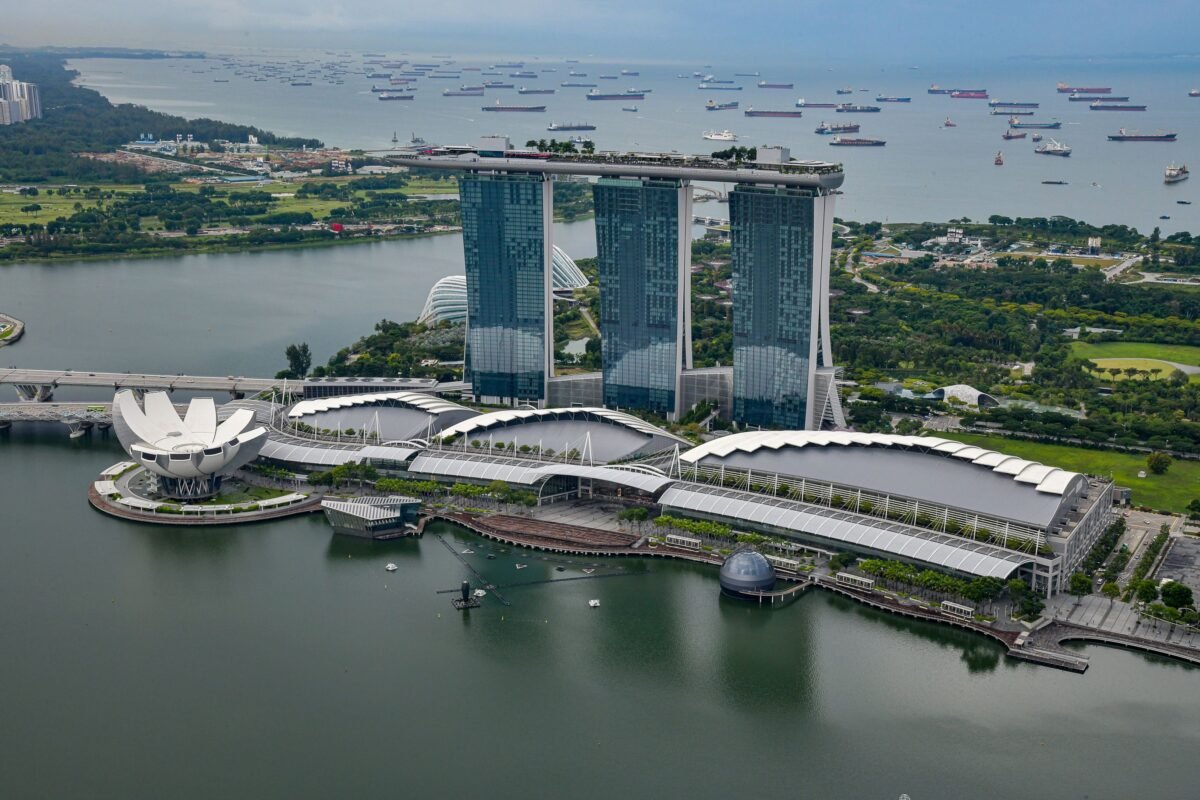
The Singapore Convention on Mediation (2019) is hailed as the “New York Convention of mediation” — letting international commercial mediated settlements be enforced directly in member states (like arbitral awards). But one decisive detail for Vietnam–China investors: China signed the Convention (2019); Vietnam has not. So mediated settlements do not enjoy the Convention’s cross-border enforcement in Vietnam. This article unpacks the reality and how to use mediation for Vietnam–China disputes in this landscape.
The Singapore Convention: mechanism and meaning
Mechanism: the Convention lets a party take a mediated settlement (witnessed by an international mediator) to a member-state court for direct enforcement — no need to re-litigate from scratch. Meaning: mediation turns from a “gentlemen’s agreement” into a tool with teeth — the losing side can’t easily walk back. Scope: only international commercial mediation (not consumer, employment or family disputes). Conditions: the settlement must be in writing, witnessed by a mediator, and the dispute must have an international element (parties in different states).
Vietnam hasn’t signed: practical consequences
Consequence 1 — No direct enforcement: an international mediated settlement can’t be taken to Vietnamese courts for award-like enforcement under the Convention. To enforce, you must sue (using the settlement as evidence of a civil agreement) — losing the Convention’s speed advantage. Consequence 2 — Mediation still has value: a mediated settlement is an enforceable civil contract — breach lets the other side sue for performance (just without the enforcement “shortcut”). Consequence 3 — The trend: Vietnam is studying accession (commercial mediation is encouraged) — but no concrete timeline as of writing. Note: “not signed” status can change — check the latest status before relying on it.
China has signed: what it means for the Vietnamese side
Meaning 1 — Enforcement in China: if mediation follows Convention standards and China has ratified (check ratification status — signing doesn’t equal in force), the settlement may be directly enforceable in Chinese courts — an advantage if the opponent’s assets are in China. Meaning 2 — Asymmetry: the mechanism is asymmetric — enforceable in China but not in Vietnam (until Vietnam accedes). Strategy: when negotiating dispute-resolution clauses, factor in this asymmetry — if the opponent’s assets are in China, Convention-standard mediation is a good pick; if assets are in Vietnam, arbitration (VIAC, New York Convention — both members) is safer.
Finding mediators in Vietnam and China: where to look
Vietnam: (1) the Vietnam Mediation Centre (VMC — under VIAC) — a roster of trained commercial mediators; (2) major law firms (lawyers serving as mediators); (3) court-annexed mediation (pilot mediation/dialogue at courts — free or low-cost). China: (1) the mediation centres of CIETAC/BAC (large mediator rosters, many bilingual); (2) international commercial mediation centres in Shanghai and Shenzhen (specialising in cross-border cases); (3) people’s mediation (“renmin tiaojie” — grassroots level, unsuitable for international commercial disputes). Selection criteria: (a) international commercial experience (not generic civil mediators); (b) language (English minimum; Chinese a big plus); (c) genuinely neutral (not “one side’s person”); (d) knowledge of the industry in dispute (textiles, electronics, construction — each has its own customs).
A worked scenario: handling a USD 500,000 dispute
Facts: a Vietnamese buyer vs a Chinese seller — defective goods, USD 500,000 in losses; the contract has a “mediate first, VIAC arbitration after” clause; the seller’s assets are in Guangdong. Step 1 — Mediation (weeks 1–6): engage a VMC mediator (English–Chinese bilingual); two sessions — the seller agrees to USD 300,000 compensation + replacement of the defective batch; the settlement records details (amount, 30-day deadline, 0.05%/day late penalty). Step 2 — Performance (weeks 7–10): the seller pays on time — done, total mediation cost under USD 10,000. If the seller reneges: Step 3 — VIAC arbitration (using the settlement as evidence plus the original contract); win, then enforce in China under the New York Convention (assets in Guangdong). Lesson: successful mediation is cheap, fast and relationship-preserving; failed mediation still leaves the arbitration path — the multi-tier clause is the safety net.
Drafting the med-arb clause: a skeleton
A workable multi-tier clause needs five elements: (1) a negotiation window (e.g. 30 days of good-faith talks); (2) mediation — name the institution (VMC, CIETAC Mediation Centre), the seat, the language and a time cap (60 days — mediation without a deadline drags); (3) the arbitration backstop — institution, seat, language and governing law (see articles EXP-3211 and EXP-3256); (4) a carve-out for urgent interim measures (either party may seek court-ordered asset freezes without breaching the tier sequence); (5) confidentiality covering both tiers. Test your clause against the delayer scenario: if the other side ignores mediation, does the clause let you move to arbitration cleanly after the time cap expires? If not, redraft — a clause that traps you in endless mediation is worse than none. The time cap is the exit door; make sure yours has one.
Mediation in Vietnam–China practice: four tips
(1) Mediate first, arbitrate after (med-arb): multi-tier clauses — mediate first (30–60 days), then arbitrate if it fails — combining mediation’s flexibility with arbitration’s teeth. (2) Pick the mediator: someone bilingual who understands both legal systems (a mediator fluent in only one side’s world won’t be trusted by the other). (3) Make the settlement “solid”: spell out specific obligations, deadlines, breach remedies — a vague settlement (“parties shall cooperate in good faith”) is unenforceable (Convention or not). (4) Don’t mediate against a “delayer”: mediation needs good faith on both sides — if the opponent uses mediation to stall and dissipate assets, stop and switch to arbitration + emergency measures immediately.
Why mediation still wins most Vietnam–China disputes
Despite the enforcement gap, mediation resolves the majority of cross-border commercial disputes — because most settle without needing enforcement: (1) Relationship preservation — Vietnam–China business runs on long-term relationships (guanxi-style networks matter on both sides); a mediated outcome lets both sides save face and keep trading — arbitration produces a winner and a loser; (2) Speed and cost — mediation typically takes weeks and costs a fraction of arbitration; for disputes under ~USD 200,000, arbitration economics rarely make sense; (3) Creative outcomes — mediators can broker non-monetary solutions (extended payment terms, future-order commitments, quality-improvement plans) that tribunals can’t order; (4) Confidentiality — mediation is private by default; neither side’s commercial reputation takes a public hit. The rule: always try mediation first (it’s cheap and often works); just don’t rely on it as your only enforcement path — pair it with an arbitration backstop.
Checklist: mediating Vietnam–China disputes
1. Know Vietnam hasn’t signed the Singapore Convention (China signed 2019). 2. Check China’s latest ratification status. 3. Assess where the opponent’s assets sit (drives mediation vs arbitration). 4. Multi-tier clause: mediate first, arbitrate after. 5. Pick a bilingual mediator versed in both legal systems. 6. Draft solid settlements — specific obligations + remedies. 7. Don’t mediate against a staller. 8. Watch for Vietnam’s accession (a game-changer).
Contact us
FLAT Law Firm advises Chinese investors in Vietnam across the full lifecycle: investment structuring, IRC/ERC procedures, tax, labour, intellectual property and dispute resolution. Contact us for advice tailored to your case.
This article has been quality-reviewed by the FLAW AI Legal Council


