
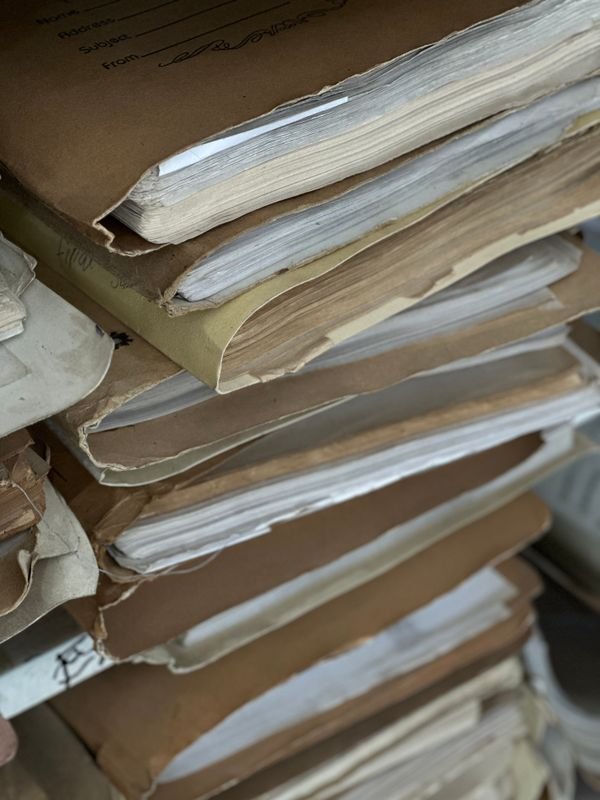
Scenario: a Japanese investor files an application for an Investment Registration Certificate (IRC): loose documents in a bag, no index, Vietnamese translations mixed with Japanese originals. The case officer spends nearly two weeks just checking what is missing — while a tidy dossier could have been received and completeness-checked on the filing day itself. This article provides a cover template, a model index, and an organization method for a complete IRC dossier.
Legal framework: what one dossier comprises
Clause 1, Article 39 of Decree No. 96/2026/ND-CP (dated 31 March 2026, guiding the Investment Law No. 143/2025/QH15) provides that the investor files one (01) dossier applying for an Investment Registration Certificate, comprising the components in Clause 1, Article 32 of the Decree. (Statutory basis: Clause 5, Article 26 of the Investment Law 143/2025/QH15 tasks the Government with regulating IRC dossiers and procedures.)
Three golden rules: (1) file one dossier per the statutory checklist; (2) foreign-language documents must be accompanied by Vietnamese translations; (3) the receiving authority may not demand documents beyond the checklist set by the Investment Law and Decree 96/2026 (Point (b), Clause 1, Article 6). Knowing these three rules protects you from ad-hoc document requests at filing.
Cover template
The cover is the dossier’s “face” — the first thing the officer sees. A compliant cover includes: the heading “APPLICATION DOSSIER FOR INVESTMENT REGISTRATION CERTIFICATE”; the investor’s name (exactly as on the passport/certificate of incorporation); the project name; the project location; the receiving authority (determined under Article 27 of the Investment Law 143/2025 — see FAQ below); the filer’s name, phone and email for supplementation contact; the filing date; and a table listing enclosed documents (numbers of originals, copies and translations).
Model index: 8 document groups under Clause 1, Article 32
Order the index following Points (a) through (e) of Clause 1, Article 32 of Decree 96/2026/ND-CP, plus two supporting groups:
1. Written request to implement the investment project — Point (a), Clause 1, Article 32; including the commitment to bear all costs and risks if the project is not approved. This is the dossier’s “soul” — every other document must be consistent with it.
2. Documents on the investor’s legal status — Point (b): passport copy (individual investor) or copy of the certificate of incorporation or equivalent (institutional investor; foreign organizations need consular legalization).
3. Documents proving financial capacity — Point (c): at least one of — financial statements for the two most recent years, a parent company’s or financial institution’s financial support commitment, a financial capacity guarantee, or other documents (e.g., a bank balance confirmation for individual investors).
4. Investment project proposal — Point (d): objectives, scale, investment capital and capital-raising plan, location, term, implementation schedule, labor needs, proposed investment incentives, socio-economic effectiveness.
5. Copies of documents on lawful site use rights — Point (dd): office/factory/land lease contract or documents confirming the right to use the project site.
6. Technology explanation — Point (e): mandatory only for projects subject to technology appraisal; if not applicable, mark “not applicable” in the index rather than leaving it blank.
7. Power of attorney for filing — where a representative files: the power of attorney (consularly legalized if signed abroad) with the attorney’s identity documents; place right after the cover so the officer can verify the filer’s standing.
8. Vietnamese translations — of all foreign-language documents, placed immediately after each original or as a separate cross-referenced set.
Organization and pre-filing cross-check
Presentation: paginate the entire dossier consecutively; use colored tabs separating each index group; note on the index whether each item is an original, copy or translation; use a hard or plastic cover so documents do not shift in the authority’s storage.
Cross-check: run a three-box checklist for every document before sealing — present (matches the index), valid (passport, balance confirmation, power of attorney not expired), translated (every foreign document has a Vietnamese translation). Cross-verify identity details — investor name, passport number, project name — absolutely consistent across the written request, legal-status documents and power of attorney. A single mismatch is enough to trigger a correction request.
Filing mode: file in person at the investment registration authority (obtain a receipt) or online via the National Investment Information System; keep the receipt carefully — it anchors the processing timeline and status tracking.
Frequently Asked Questions
How long after filing the IRC dossier until the result?
The processing timeline has a point requiring further cross-checking between the Investment Law 143/2025/QH15 and Decree 96/2026/ND-CP — as of the writing date (19 October 2026) no exact figure has been verified, so this article states no specific timeline. Ask the investment registration authority directly when filing to plan realistically, and keep your filing receipt for follow-up.
Paper filing or online filing?
Both are accepted: in person at the investment registration authority, or online via the National Investment Information System (with or without a digital signature). Each locality may prefer one mode — check with your receiving authority first to prepare correctly.
If one document is missing, is the dossier rejected or can it be supplemented?
Not rejected outright. The authority notifies the investor to complete the dossier — for online procedures, the notice is sent within 05 working days of receipt. Still, preparing everything upfront per the 8-group index above remains the fastest route.
Where does a project inside an industrial park file?
Under Article 27 of the Investment Law 143/2025/QH15: the management board of the industrial park, export processing zone, hi-tech park or economic zone issues IRCs for projects inside those zones (Clause 1); the Department of Finance issues IRCs for projects outside them (Clause 2). Identify the correct receiving authority upfront to avoid misfiling.
Related articles
- Livestream selling by FDI companies: advertising and tax rules
- Harmonising Pay Systems After Mergers in Vietnam
- Measuring Post-Merger Integration Success in Vietnam: 12-Month KPIs
- Post-M&A Registration Updates in Vietnam: Business, Tax and Banking Checklist
- Reviewing Related-Party Transactions After Group Restructuring in Vietnam
This legal analysis has been verified against current Vietnamese regulations and cross-border FDI transaction practices by the attorneys at FLAT LAW FIRM.