
Situation: Can a Delayed FDI Project Have Its Land Recovered?
1. The situation (hypothetical)
Company K, a 100% foreign-owned enterprise, leases 5 hectares in an industrial park for a factory, 50-year term. Under the registered project schedule, the company must put the land into use (complete construction and commence operations) within 24 months of physical handover.
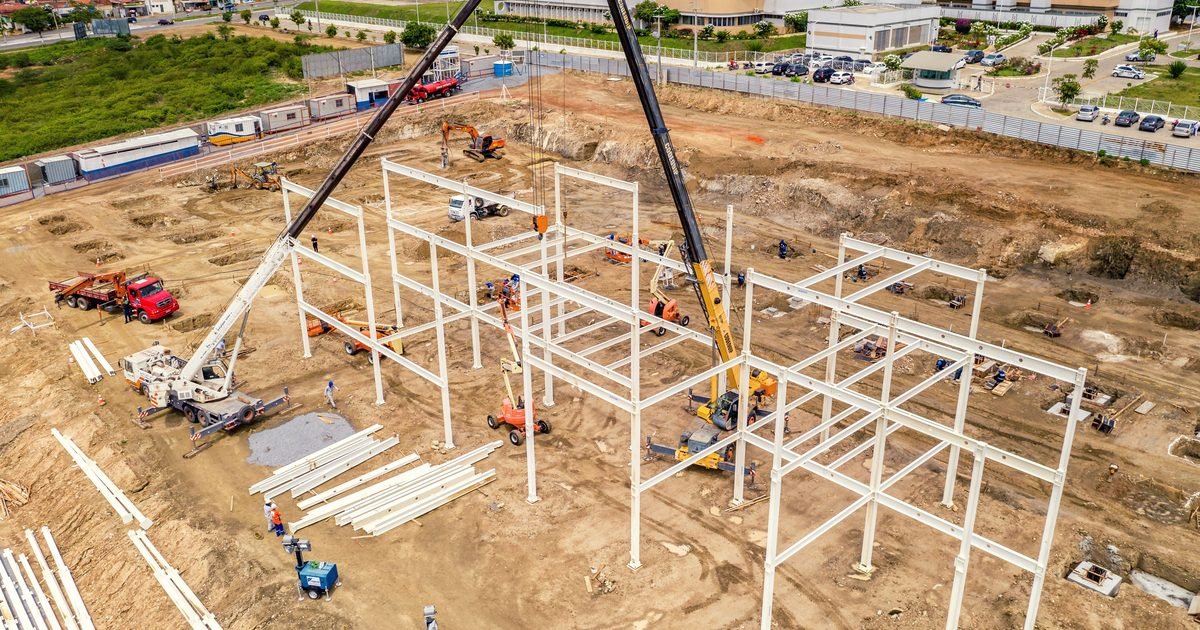
Reality: after 30 months, construction is only about 40% complete — equipment supply chains were disrupted, construction costs surged forcing the parent to reschedule disbursement, plus fire-safety acceptance snags.
Management asks two questions: can the land be recovered for such delay? And if there is a risk, what should be done right now?
2. Legal questions
- How long a delay triggers land recovery? How does the extension mechanism work?
- Are "project schedule extension" and "land-use deadline extension" the same thing?
- How are delays caused by objective events (force majeure) treated?
3. Analysis
3.1 Applicable legal framework
The 2024 Land Law (Article 81) provides for land recovery for land-law violations, including: land allocated or leased for an investment project that is unused for 12 consecutive months or whose use is 24 months behind the schedule stated in the investment project, counting from physical handover.
A two-step mechanism applies:
- Step 1 — Extension: the investor gets a 24-month extension and must pay the State land use/rental fees corresponding to the delayed period.
- Step 2 — Recovery: after the extension expires with the land still unused, the State recovers the land without compensation for the land or attached assets, except in force majeure cases.
The Investment Law 143/2025 allows extension of the investment project's implementation schedule upon justified request, up to 24 months beyond the registered schedule. This sits with the investment registration authority — different from the land-use deadline extension, which is a land matter.
3.2 Option A: Proactively seek schedule extension + land-use extension
Content: Company K simultaneously (1) requests the investment registration authority to extend the project schedule under the Investment Law 143/2025, and (2) completes the 24-month land-use extension under Article 81 of the Land Law, accepting land-rent payment for the delay.
Pros: legally proactive; the two timelines (project schedule and land-use schedule) are re-synchronized; extension cost (rent for the delay) is far lower than losing all invested assets.
Cons: additional land rent for the delay period; the dossier must demonstrate the delay reasons and a feasible recovery plan; two different authorities mean coordination effort.
3.3 Option B: Transfer part of the project or find a capital partner
Content: If the delay stems from prolonged capital shortage with no fix possible within the extension, Company K could transfer part of the investment project to a capable investor, or partner up to accelerate.
Pros: addresses the root cause (capital/capacity); a new investor can continue without interruption.
Cons: project-transfer procedures are no simpler (transfer conditions, IRC amendment); finding a suitable partner quickly is hard; and the delay "clock" keeps running meanwhile.
3.4 Comparing the options
| Criterion | Option A (extend + renew) | Option B (transfer/partner) |
|---|---|---|
| Processing time | Fast (administrative) | Slow (partner search + procedures) |
| Cost | Land rent for delay period | Transaction and valuation costs |
| Fits when | Recovery still possible, just needs time | Financial capacity definitively lost |
| Risk | Extension expires still delayed → recovery | No partner found in time |
For Company K (objectively caused delay, still able to complete), Option A fits. Option B only makes sense when recovery within the extension is clearly impossible.
4. Conclusion and recommendations
- 30 months' delay does not mean immediate recovery, but it has entered Article 81's danger zone (the 24-month threshold). The longer the wait, the less room to maneuver.
- Act on Option A now: request project schedule extension (Investment Law 143/2025) and the 24-month land-use extension (Article 81, Land Law) in parallel — two authorities, do not sequence them.
- Build the evidence file: disrupted supply contracts, the parent's disbursement rescheduling documents, fire-safety acceptance records — serving both the extension dossier and any force majeure claim.
- Never let the extension expire with the land still unused: recovery then comes without compensation for land and attached assets — a total loss of invested value.
5. Follow-up questions
- During the extension, can Company K downscale the project area to match capacity — and how?
- How is the land rent for the delayed period calculated?
- If part of the land is already in use and part is not — is the whole area recovered?
These depend on each project's specific dossier. If your project is in a similar situation, contact FLAT Law Firm at hotline 0988424851 for a tailored assessment.
6. Sequencing: convert before or after other corporate changes?
Timing the conversion relative to other corporate actions saves months. As a rule, complete the type conversion before any capital increase, share transfer to new foreign investors, or charter capital redenomination. Why: the investment registration certificate (IRC) and enterprise registration certificate (ERC) must be amended in sequence, and licensing authorities process them faster when the enterprise type is already settled — a pending conversion freezes most other filings.
Conversely, finish ongoing procedures first: an unfinished tax finalization, a pending land-use right certificate update, or an open customs audit should be closed before conversion, because the new enterprise type inherits all liabilities and authorities may ask the "new" entity to re-explain old files. A practical sequence: (1) close pending filings, (2) convert enterprise type (IRC then ERC), (3) execute capital changes or investor changes, (4) update seals, bank signatories, and contracts. Build a 6–8 week buffer — MPI and DPI timelines slip, especially around holidays.
FAQ
Q: How long can an FDI project be delayed before land recovery?
A: Per Article 81, 2024 Land Law: 12 consecutive months unused, or 24 months behind schedule from handover. Before recovery, a 24-month extension (with rent payment) applies; recovery follows only after the extension expires unused.
Q: How many extensions are allowed?
A: One 24-month extension. After expiry with land still unused: uncompensated recovery (except force majeure).
Q: Does force majeure delay trigger recovery?
A: Force majeure is excluded — but causation must be proven and all remedial measures shown. Keep records from day one.
Q: How do I extend an FDI project's schedule?
A: Request it from the investment registration authority under the Investment Law 143/2025 (max 24 months) — a different procedure from the land-use extension; run both in parallel.
Q: Are built assets compensated on recovery?
A: No — Article 81 provides uncompensated recovery for schedule violations (except force majeure).
References
- Land Law 31/2024/QH15 (effective 1/8/2024), Art. 81.
- Investment Law 143/2025/QH15 (effective 1/3/2026).
- Decree 102/2024/ND-CP guiding the 2024 Land Law.
- Cross-checked via thuvienphapluat.vn at drafting (28/9/2026).
—