
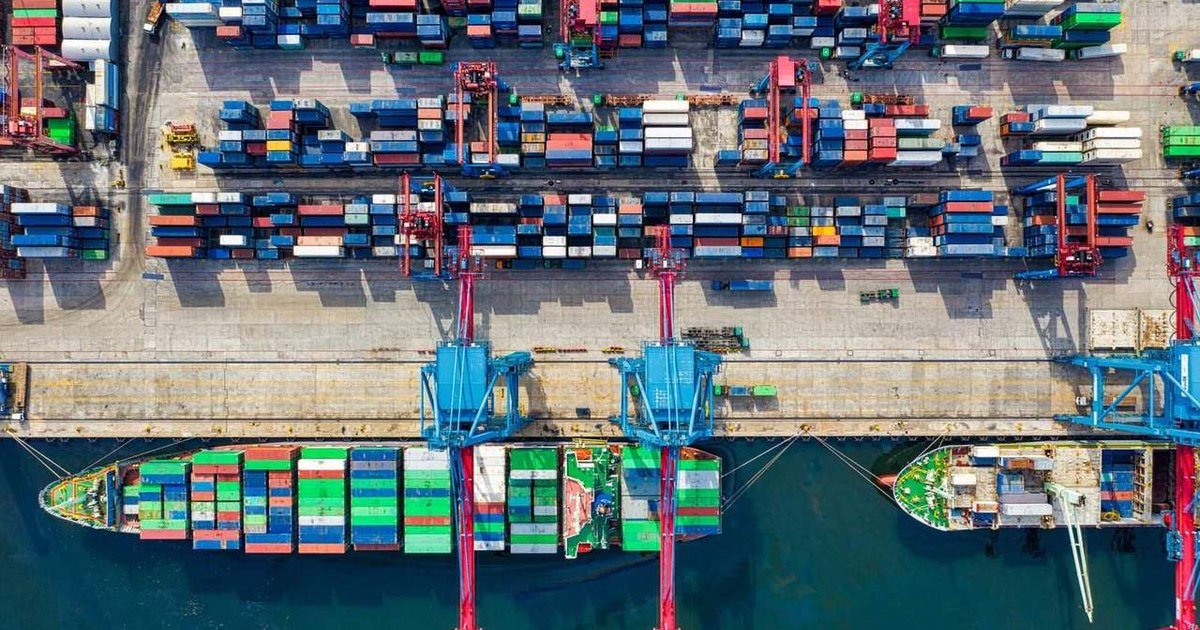
Goods travelling from a factory in China to a company’s warehouse in Vietnam must cross thousands of kilometres, pass through customs at least twice, and face countless risks: damage, loss, delay, and goods stuck at a border gate. The delivery clause is where the parties allocate: who bears transport costs up to where, when risk passes, who handles customs, and what happens when goods arrive late or wrong. This article analyses Incoterms 2020 in the China–Vietnam context, the time risk passes, customs documents, partial delivery, and remedies for late delivery.
Quick summary. Topic: delivery terms in cross-border contracts — Incoterms 2020, transfer of risk, costs, customs documents, inspection and claims, and late-delivery remedies. Audience: companies buying from or selling to Chinese counterparties by sea, road or rail. Check first: the named port or place, the Incoterms rule and version, and the documents required for payment.
The delivery clause decides three things: risk, cost and the time of payment
Many companies treat the delivery clause as a logistics matter only — “which route the goods take, how long they take”. In fact, this clause decides three core legal questions. First, allocation of risk: if the goods are damaged or lost in transit, which side bears the loss — the answer depends on when risk passes under the chosen term. Second, allocation of costs: freight, insurance, import and export duties, customs clearance fees — each item must have an “owner”. Third, the payment milestone: payment instalments in the payment clause are usually anchored to delivery milestones (delivery, presentation of the bill of lading, acceptance) — if the delivery clause is vague, the payment clause cannot be enforced either.
The delivery clause and the payment clause must therefore be drafted as a pair: reading each clause alone may look fine, but only side by side can you tell whether they match. The structure of payment tied to delivery milestones is analysed in Payment Terms in Vietnam–China Contracts.
Incoterms 2020 and the four most common terms on the China–Vietnam route
Incoterms is a set of rules issued by the International Chamber of Commerce (ICC) interpreting the trade terms used in international sales of goods. The current version is Incoterms 2020. The key point to remember: Incoterms do not apply automatically — the parties must refer to them expressly in the contract (for example: “FOB Shanghai – Incoterms 2020”), and must state the correct version they intend to apply. The four terms most used on the China–Vietnam route:
- FOB (Free On Board): the seller delivers the goods when they are on board the vessel at the named port of shipment (for example: FOB Shanghai, Incoterms® 2020). Under FOB Shanghai, Incoterms® 2020, risk passes when the goods are on board the vessel at the named port of shipment. Costs are allocated under the individual FOB obligations — the seller bears the costs up to delivery on board, and the buyer bears the costs from that point on — rather than all costs automatically passing together with risk. Specify payment documents and transfer of title separately. Common for sea freight from Chinese ports to Vietnamese ports (Hai Phong, Cat Lai).
- CIF (Cost, Insurance and Freight): the seller bears the transport cost and buys insurance to the port of destination, but risk passes as soon as the goods are on board the vessel at the port of shipment — the same time risk passes as under FOB, differing in that the seller pays freight and insurance. This is the most commonly misunderstood point: “the seller buys insurance” does not mean “the seller bears the risk in transit”.
- DAP (Delivered At Place): the seller bears all risks and costs of bringing the goods to the named place (which may be the buyer’s warehouse in Vietnam), except import clearance and import duties. Risk passes only when the goods have arrived and are ready for unloading. It suits a buyer who wants to “receive the goods at the warehouse without worrying about logistics”.
- DDP (Delivered Duty Paid): the seller bears maximum responsibility — bringing the goods to the named place, having completed import procedures and paid all duties and fees. The buyer only has to take delivery. Most convenient for the buyer, but it requires the seller (the Chinese side) to be able to complete customs procedures in Vietnam — in practice, not every supplier can do this.
Which term to choose depends on each side’s logistics capability, the value of the shipment, and the degree of control the buyer wants over the journey of the goods. There is no “best” term for every transaction — only the term best suited to each specific transaction.
The time risk passes: the point most often misunderstood
The time risk passes is the time from which, if the goods are lost or damaged by an unexpected event, the buyer must still pay even though it does not receive the goods intact. This is a legal concept independent of ownership and independent of who pays the freight — these three things do not necessarily pass at the same time.
Under the Incoterms above, the time risk passes is clear: FOB and CIF — when the goods are on board the vessel at the port of shipment; DAP — when the goods arrive at the named place and are ready for unloading; DDP — when the goods are delivered at the named place with import procedures completed. If the contract does not refer to Incoterms, the time risk passes is determined under the governing law of the contract (for example, the risk-transfer rules in the CISG or the chosen national law) — once again showing why the governing-law clause should not be left blank (see Governing Law and the CISG in Vietnam–China Sales).
Good practice: in addition to referring to Incoterms, the contract should state clearly the obligation to buy cargo insurance during transport — which side buys it, what type of insurance, and the minimum insured value. Even where risk has passed to the buyer, a full insurance contract remains a “safety net” for both sides.
Delivery documents and customs procedures: don’t let goods get stuck at the border gate
Goods from China into Vietnam — by sea, by road through a border gate, or by rail — must all pass customs with a complete set of documents. The delivery clause must allocate clearly who prepares which document and who handles procedures at each end:
- Basic document set: commercial invoice, packing list, bill of lading (sea) or road/rail waybill, certificate of origin (C/O). For goods imported from China, the Form E C/O (under the ASEAN–China trade framework) is the basis for preferential duty rates — without a valid C/O, a company may have to pay import duty at a much higher rate.
- Allocation of responsibility: under FOB/CIF, the seller handles export procedures in China and the buyer handles import procedures in Vietnam; under DDP, the seller (or its agent) must handle import procedures in Vietnam too — confirm in advance that they have the capacity and standing to do this.
- Quality documents: quality certificates, inspection certificates and accompanying technical documents — list them as a specific schedule in the contract rather than writing generally “documents as prescribed”.
- Time limit for providing documents: state clearly how many days before the goods arrive the seller must send the document set to the buyer — goods arriving at the port while the documents have not yet arrived is a common scenario for stuck cargo, generating storage and demurrage charges calculated daily.
Partial delivery, early delivery, late delivery: real-life situations
Few cross-border shipments proceed exactly as the contract writes. A good delivery clause is one that has anticipated off-standard situations:
- Partial delivery: for large orders, state clearly whether partial delivery is permitted, the minimum quantity of each part, and whether payment is made per part or once on full delivery. If the contract is silent, short delivery may be treated as a breach — or conversely, the buyer may refuse partial delivery without grounds.
- Early delivery: it sounds good but can cause trouble — the warehouse is not ready, receiving procedures have not been arranged, or cash flow is not prepared for the payment instalment tied to the delivery milestone. The contract should state whether early delivery requires prior notice and the buyer’s consent.
- Late delivery: distinguish delay caused by the seller’s fault (triggering remedies) from delay caused by a force majeure event or by the buyer itself (late opening of an L/C, late provision of information) — each case has different legal consequences, and the contract should provide a mechanism for determining the cause, rather than assuming every delay is the seller’s fault.
Inspection of goods and the claim period: rights are lost by staying silent too long
Taking delivery does not mean accepting the goods. The delivery clause should design a clear inspection and claim procedure:
- Inspection period: state a specific number of days for the buyer to inspect the goods after receipt (for example, quantity inspection immediately on receipt, quality inspection within a defined period). A period that is too short disadvantages the buyer; no period at all makes the right to claim vague.
- Duty to notify defects: when the buyer discovers non-conforming goods, it must notify the seller within the agreed period, with a description of the defect and evidence (photographs, inspection records, survey results). Late notice may cause the loss of the right to claim — the point Vietnamese buyers most often overlook.
- Independent survey: for high-value goods or quality disputes, agree in advance on an independent surveyor whose conclusions both sides accept — avoiding a situation where each side hires its own surveyor producing two conflicting conclusions.
- Warranty: the warranty period, scope and claim procedure should be stated as part of the delivery clause (or an attached technical appendix), rather than left for “later agreement”.
Remedies for late delivery: from penalties to the right to cancel
When the seller delivers late, the buyer needs legal tools for each level:
- Penalty for late delivery: usually calculated as a percentage of the value of the late-delivered part, multiplied by the number of days (or weeks) of delay — but with a cap. The penalty rate and cap are agreed by the parties within the limits permitted by law; companies should check the rules in force on the penalty cap at the time of signing.
- Damages: in addition to the penalty, the buyer may claim actual loss arising from late delivery (for example, having to buy substitute goods at a higher price, or a production line having to stop). It must be agreed clearly whether both penalty and damages may be claimed, and how loss is proved.
- Right to cancel the contract: for serious late delivery (beyond an agreed grace period) or where late delivery defeats the purpose of the contract (seasonal goods, goods for a project with a fixed schedule), the buyer should have the right to cancel and claim a refund of amounts paid. The threshold triggering cancellation must be quantified specifically (a number of days), not a vague qualitative criterion.
- Grace period: in practice, the seller should be given a short grace period to cure before heavy remedies apply — reasonable in a long-term business relationship, and avoiding arguments that the buyer is “exploiting” a small delay to cancel the contract.
Delivery at industrial parks and border gates: state the place clearly
A feature of Vietnam–China trade is that many transactions have a very specific place of delivery: the company’s warehouse in an industrial park in Vietnam, or a land border gate. Points to clarify:
- The place of delivery must be recorded fully and accurately: the warehouse name and address, or the specific border gate — not generally “delivery in Vietnam”. Under DAP/DDP, this place is where risk passes, so it must be all the more precise.
- Delivery at a border gate: state clearly which side is responsible and bears the cost for the leg from the gate to the warehouse (usually the Vietnamese buyer arranges it or hires a logistics provider), and what document records handover at the gate (a handover record signed by both sides).
- Delivery at an industrial park: some industrial parks have their own rules on vehicle entry and exit, delivery hours and procedures with the park management — the seller (especially a carrier hired by the Chinese side) must be told in advance to avoid goods arriving but unable to enter the warehouse.
- Costs arising at the place of delivery: unloading fees, storage fees if the buyer is late taking delivery — state clearly who pays, to avoid arguments over “who pays storage” when one side is late.
For an overview of the legal risks in Vietnam–China transactions, including the position of the delivery clause in the whole contract structure, see the topic pillar page.
Frequently asked questions
What happens if the contract does not state Incoterms?
The contract is not invalid for that reason, but the parties lose a standard set of rules for allocating risk, costs and responsibility. Those matters are then determined under the governing law of the contract (for example, the CISG or the chosen national law) and the specific agreed content — a more complex and dispute-prone process than referring to a clear Incoterms term with its version from the start. An international sale contract should therefore always refer to Incoterms with the version (currently Incoterms 2020).
How do CIF and FOB differ, and which should be chosen?
The core difference: under FOB, the buyer arranges transport and insurance itself from the port of shipment; under CIF, the seller arranges (and pays for) transport and insurance to the port of destination. But the time risk passes is the same for both terms — when the goods are on board the vessel at the port of shipment. Choose FOB where the buyer wants to control logistics itself and has a reliable carrier; choose CIF where the seller is to handle all transport. Do not choose CIF merely because it “sounds as if the seller bears more responsibility” — on risk, the two terms are the same.
Who bears the loss if goods are damaged in transit?
It depends on the time risk passes under the chosen term and the cause of the damage. If the damage occurs after risk has passed to the buyer, the buyer must still pay (but may claim against the insurer if insurance was bought). If the damage is caused by the seller’s packing fault, the seller remains liable regardless of whether risk has passed. The contract should therefore provide at the same time for the time risk passes, the insurance obligation, and packing standards.
The seller delivers late because goods are stuck at the border gate due to a lengthy customs inspection — must it compensate?
It depends on the cause of the hold-up and the allocation of responsibility in the contract. If the hold-up is due to incomplete documents from the seller, the seller must bear responsibility. If it is due to a random customs inspection through no fault of either side, this may be treated as an event beyond control — the contract should have a force majeure or objective-impediment clause covering this case. If it is due to the buyer being slow to provide information for clearance, the buyer must bear the consequences. A good delivery clause is one that has anticipated and classified these scenarios in advance.
Should goods be accepted before a thorough inspection?
As a matter of law, taking delivery does not mean giving up the right to claim — but in practice, accepting goods without recording their condition (a delivery record with notes) makes it much harder to prove defects later. Good practice: check quantity and packaging condition immediately on receipt, record any irregularity in the delivery record signed by the carrier, and carry out a detailed quality inspection within the period stated in the contract.
Legal sources
The delivery terms in this article are based on the following instruments, checked for effect as of 19 November 2026:
- ICC Incoterms® 2020 — the rules for FOB, CIF, DAP and DDP; the time risk passes and the allocation of costs and obligations under each rule. Incoterms apply only where the contract refers to them expressly, with the rule and version stated (for example, “FOB Shanghai, Incoterms® 2020”).
- United Nations Convention on Contracts for the International Sale of Goods (CISG) — the default rules on transfer of risk where the contract does not refer to Incoterms.
- Commercial Law 2005 — the framework for international sale of goods contracts, customs documents and remedies for late delivery.
Talk to a lawyer if you:
- You are about to sign an international sale contract and have not yet decided which Incoterms term to choose.
- A high-value shipment, or complex machinery and equipment — a strict inspection, acceptance and warranty procedure needs to be designed.
- A dispute has already arisen over late delivery, goods damaged in transit, or goods not meeting quality.
- You need to assess liability where goods are stuck at a border gate or seaport and storage and demurrage charges arise.
- You want to build a standard delivery clause template for regular transactions with Chinese counterparties.
Discuss with FLAT LAW FIRM
FLAT LAW FIRM advises on designing delivery clauses suited to the transport method and route of each transaction: choosing the optimal Incoterms 2020 term, clearly allocating the time risk passes, insurance responsibility and each side’s customs obligations; reviewing the document schedule and the goods inspection and claim procedure; building a tiered late-delivery remedy system (penalty, damages, right to cancel) within the limits permitted by law; and supporting the handling of delivery disputes — from negotiation and independent survey to commercial arbitration and the courts. Please contact us for advice.
Contact FLAT LAW FIRM at info@flaw.vn or (+84) 988 424 851 for an initial discussion about delivery terms in your cross-border contract.
This content is for general information only and does not replace legal advice for a specific matter. Laws, authority practice and procedures may change over time, by locality and by file.
Related topics
Payment Terms in Vietnam–China Contracts · Governing Law and the CISG in Vietnam–China Sales · Contractual Penalties and Damages under Vietnamese Law · Force Majeure in Vietnam–China Contracts · Drafting Vietnamese–Chinese Bilingual Contracts
This legal analysis has been verified against current Vietnamese regulations and cross-border FDI transaction practices by the attorneys at FLAT LAW FIRM.

