
The scenario below is hypothetical, given to illustrate how the law applies. The conclusions hold only for the facts as stated; changing one detail can change the outcome — real cases need separate lawyer assessment.
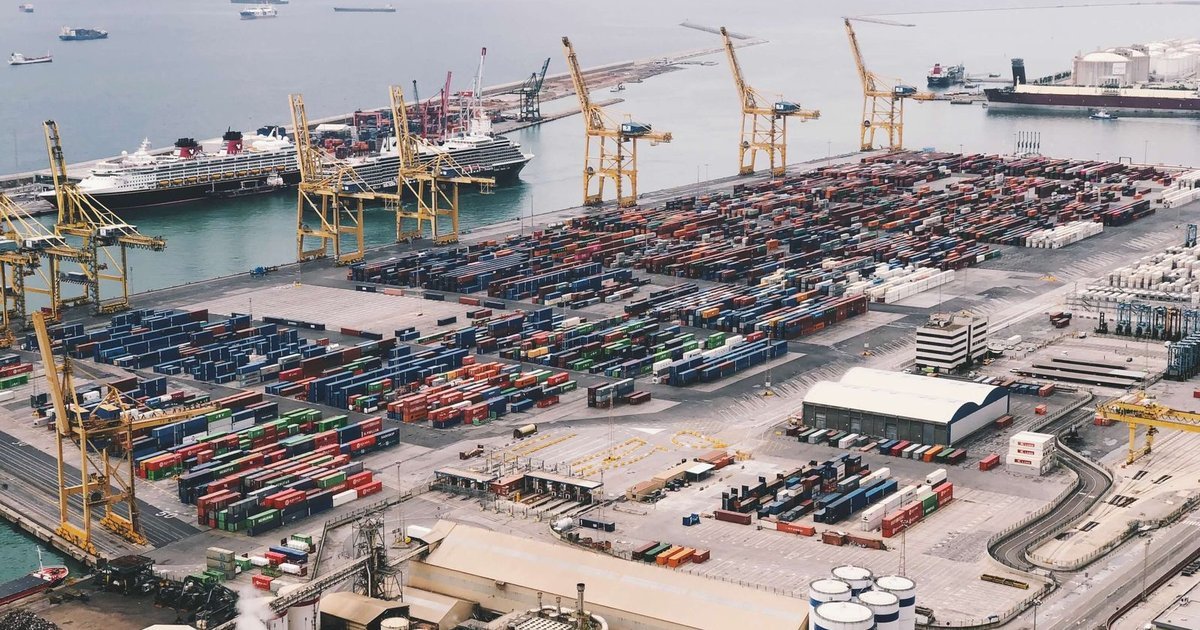
Port congestion, container shortages, delayed vessels — these logistics risks have become "everyday matters" in goods trading. But when the seller cites port congestion to explain a two-month delivery delay, while the buyer insists on damages, whose side is the law on? The answer lies not in whether "congestion was the seller's fault" but in a far stricter legal institution: force majeure and the conditions for exemption from liability.
This article analyses the hypothetical scenario below under the 2005 Commercial Law and the 2015 Civil Code, with two opposing legal options so readers can see the line between "exempt" and "must compensate".
Contents
- 1. The scenario (hypothetical)
- 2. Legal questions
- 3. Analysis
- 4. Conclusion and recommendations
- 5. Extended questions
- Your case differs in the details?
- References
1. The Scenario (Hypothetical)
Company A (seller, Vietnam) and Company B (buyer, Vietnam) sign a contract for 500 tonnes of production materials worth VND 10 billion, with delivery at Hai Phong port before 30/6/2026. In early June 2026, Hai Phong port falls into severe congestion: A's cargo vessel cannot berth on schedule, and the situation lasts until end of August 2026. A delivers on 28/8/2026 — 2 months late. On 10/6/2026, immediately upon receiving official notice of the congestion, A writes to B stating the cause and warning of possible late delivery. Short of materials, B must urgently buy substitute materials at 15% higher prices to keep production running, and claims from A the price difference plus contractual penalty. The contract's force majeure clause only says "force majeure events as prescribed by law" in general terms, without listing port congestion.
The given facts:
- F1 — Sale contract between A (seller) and B (buyer): 500 tonnes of materials, delivery at Hai Phong port before 30/6/2026.
- F2 — June 2026: severe congestion at Hai Phong port; A's vessel cannot berth on schedule, lasting until end of August 2026.
- F3 — A actually delivers on 28/8/2026, 2 months behind the contract.
- F4 — 10/6/2026: A writes to B notifying of the congestion and its possible consequences.
- F5 — B must buy substitute materials at 15% higher prices; B claims the price difference and penalty from A.
- F6 — The contract's force majeure clause is generic, not listing port congestion.
2. Legal Questions
- Q1 — Does the port congestion in this scenario count as force majeure?
- Q2 — Is A exempt from damages and penalty liability?
- Q3 — What rights does B have when A delivers 2 months late?
3. Analysis
3.1 Applicable Legal Framework
Three groups of provisions decide this entire scenario:
First, the force majeure definition. Article 156 of the 2015 Civil Code defines: a force majeure event is an event occurring objectively, unforeseeably, and irremediably despite the application of all necessary measures and available capabilities. All three hallmarks must co-exist — missing one, no force majeure.
Second, exemption cases. Article 294(1) of the 2005 Commercial Law lists four cases where a breaching party is exempt from liability: (a) an exemption case agreed by the parties; (b) force majeure; (c) breach entirely caused by the other party's fault; (d) breach caused by implementing a decision of a competent state management agency that the parties could not have known at contract conclusion. Article 294(2) places the burden of proof on the breaching party: A must prove; B need not disprove.
Third, the notification duty and consequences of prolongation. Article 295 requires the breaching party to notify the other in writing immediately of the exemption case and its possible consequences; to notify immediately when the exemption case ends; and provides that failure to notify or untimely notification triggers liability for damages. Article 296 governs extending the performance period in force majeure: the parties may agree an extension; absent agreement, the period is extended by the force majeure duration plus a reasonable remedy period, capped at 5 months (for goods with a delivery period not exceeding 12 months) or 8 months (periods over 12 months); if prolongation exceeds these caps, either party may refuse performance with neither entitled to claim damages.
Fourth, damages and penalty. If not exempt, A must compensate damages under Article 302 of the 2005 Commercial Law, covering the value of actual losses and directly lost profits B would have earned absent the breach. A penalty applies only where the contract agrees one, capped at 8% of the value of the breached contractual obligation under Article 301.
3.2 Option A: Port congestion as force majeure — A exempt
The option: A successfully proves the congestion meets all three force majeure hallmarks, and is thereby exempt from damages and penalty under Article 294(1)(b).
Legal basis and reasoning: For this option to stand, A must prove each Article 156 hallmark.
On objectivity: the congestion stems from a systemic port failure, beyond A's control — A neither caused nor could prevent it. Evidence includes the port's official notice, news of the congestion, the shipping line's confirmation.
On unforeseeability: at contract conclusion, a prudent business could not have predicted this specific congestion episode. This is A's most attackable point: if Hai Phong congestion is seasonal and was publicly warned of in logistics media, B can argue A did or should have foreseen it.
On irremediability: A must show it applied all necessary measures within its capabilities — e.g. contacted an alternative port but no slots were available, proposed partial-delivery solutions, worked with the shipping line to prioritise berthing. If A merely "sat waiting for the congestion to clear", this hallmark collapses.
Additionally, A performed the Article 295(1) initial-notification duty (F4: the 10/6/2026 letter); no fact shows the Article 295(2) cessation notice. This is an important plus: even where force majeure is recognised, failure to notify in time still triggers damages liability.
Upside: If successful, A is exempt from the entire 15% price-difference damages and penalty; the contract continues with the delivery period extended accordingly under Article 296.
Risks and limits: The burden of proof is heavy and rests entirely on A. Practice shows Vietnamese courts and arbitrators apply a fairly strict force majeure standard to ordinary logistics risks. Moreover, exemption covers only damage caused by the force majeure event — any delay unrelated to the congestion remains A's liability.
3.3 Option B: Port congestion not force majeure — A compensates
The option: The congestion fails at least one of the three Article 156 hallmarks; A is liable for the late-delivery breach.
Legal basis and reasoning: This option starts by "knocking out" at least one Article 156 hallmark.
The most common scenario attacks unforeseeability: if it is shown the Hai Phong congestion at that time was predictable (seasonal peak congestion, the port's advance notices, or A as a professional logistics business that should have known), A cannot invoke force majeure. A prudent business that foresaw the risk should have had contingency plans: contracting earlier, choosing a backup port, or agreeing more flexible delivery terms.
The second scenario attacks irremediability: A could have diverted to another port (Hai Phong has multiple terminals), split the shipment, or used another transport mode, but did not or did so inadequately. Where a reasonable remedy existed but was not applied, "irremediable" cannot be claimed.
Legal consequences: A must compensate B's damages under Article 302, including the 15% price premium B paid for substitute materials (actual loss) and provable lost profits (e.g. B had to cut output, lost orders). Additionally, if the contract provides a penalty, A bears it up to 8% of the breached obligation's value under Article 301. Note: B has a duty to mitigate damages — if B could have bought substitutes cheaper but did not, the additional damage attributable to B's fault may be excluded.
Upside (for B): B is made whole for actual losses; it pressures A to manage logistics risks proactively rather than citing objective causes.
Risks and limits (for B): B must fully prove damages: substitute purchase invoices, price-difference documents, causation between the late delivery and the loss. Speculative, undocumented damages will not be accepted.
3.4 Comparing the Options
| Criterion | Option A (force majeure — exempt) | Option B (not force majeure — compensate) |
|---|---|---|
| Legal basis | Article 294(1)(b); Articles 295, 296 Commercial Law 2005; Article 156 Civil Code 2015 | Articles 300, 301, 302 Commercial Law 2005; Article 351 Civil Code 2015 |
| Burden of proof | A must prove all 3 force majeure hallmarks + notification + remedial efforts | B must prove actual damages and causation; A fails to prove force majeure |
| Financial consequence for A | Exempt from damages and penalty; late delivery with extended period | Compensates price difference + lost profits + penalty (max 8%) |
| B's rights | Request time extension; if prolongation exceeds statutory cap, refuse performance | Require continued performance + damages + penalty |
| Main risk | Strict force majeure standard; vulnerable on "foreseeability" and "remedy" | B must fully document damages; duty to mitigate |
4. Conclusion and Recommendations
Conclusion: On the given facts (F1–F6), A has a chance of exemption from damages and penalty if it proves the congestion meets all three force majeure hallmarks under Article 156 of the 2015 Civil Code and has performed the Article 295(1) initial-notification duty (F4 is A's strength as to the initial notice). But this is not automatic: A's weakest points are proving the "unforeseeability" and "irremediability" of a logistics risk. If B shows A did or should have foreseen the congestion, or that A had reasonable remedies it did not apply, Option B prevails and A must compensate B's full actual damages.
Specific recommendations:
- For the seller (A's position): the moment the incident occurs, notify in writing immediately (not just by phone); build a complete evidence file on the congestion and every remedial effort (emails with the port, the shipping line, alternative solutions attempted); notify immediately when the incident ends; and in future contracts, list specific logistics risks in the force majeure clause instead of generic wording.
- For the buyer (B's position): on receiving a late-delivery notice, respond in writing reserving the right to claim damages; collect full damage documentation (substitute purchase invoices, price differences); perform the duty to mitigate; and carefully assess the ability to prove "the seller foresaw it" before suing.
- For both sides: with a delivery period not exceeding 12 months as here, the maximum extension under Article 296 is 5 months — a 2-month delay stays within the extension frame, so B cannot yet invoke "excessive prolongation" to refuse performance.
Note: the above conclusion holds only for the stated hypothesis. Changing one fact — e.g. A did not notify, or the congestion was warned of in advance — could reverse the result. Real cases need separate lawyer assessment.
5. Extended Questions
What if A only phoned on 10/6 instead of writing? Short answer: A faces major risk. Article 295 requires "immediate written" notification; a phone call is hard to prove and may count as non-performance of the notification duty — then A must compensate even if force majeure is recognised. Lesson: every important notice must be in storable writing.
What if the contract expressly excluded "port congestion, logistics bottlenecks" from force majeure? Short answer: the parties' agreement prevails. A cannot invoke congestion for exemption, except by proving another Article 294 exemption case. This is why experienced buyers negotiate to narrow the force majeure clause.
What if the congestion lasted 6 months instead of 2? Short answer: for contracts with delivery periods not exceeding 12 months, the Article 296 maximum extension is 5 months. Beyond 5 months, B may refuse performance (notifying within 10 days) with neither party entitled to claim damages.
What if this were an international sale contract? Short answer: besides Vietnamese law, check the 1980 Vienna Convention on Contracts for the International Sale of Goods (CISG), to which Vietnam is a party — CISG Article 79 governs exemption where the impediment was beyond control and could not reasonably have been foreseen or avoided at conclusion. The CISG standard differs in points from Article 156 of the 2015 Civil Code.
What if B did not buy substitutes but shut the plant down and claimed all lost profits from A? Short answer: B would struggle to recover in full. B has a duty to take reasonable mitigation measures; additional damage caused by B's failure to mitigate may be excluded from compensation.
Your Case Differs in the Details?
Every late-delivery dispute has its own fact set, and the line between "exempt" and "must compensate" often lies in small details: the force majeure clause's wording, the timing and form of notification, evidence of remedial efforts. FLAT Law Firm helps enterprises assess specific cases, build proof strategies, negotiate and resolve commercial disputes. Contact hotline 0988424851 for a case-specific assessment.
References
- Commercial Law No. 36/2005/QH11, effective 01/01/2006.
- Civil Code No. 91/2015/QH13, effective 01/01/2017.
- United Nations Convention on Contracts for the International Sale of Goods (CISG), 1980 — Vietnam is a contracting state.


