
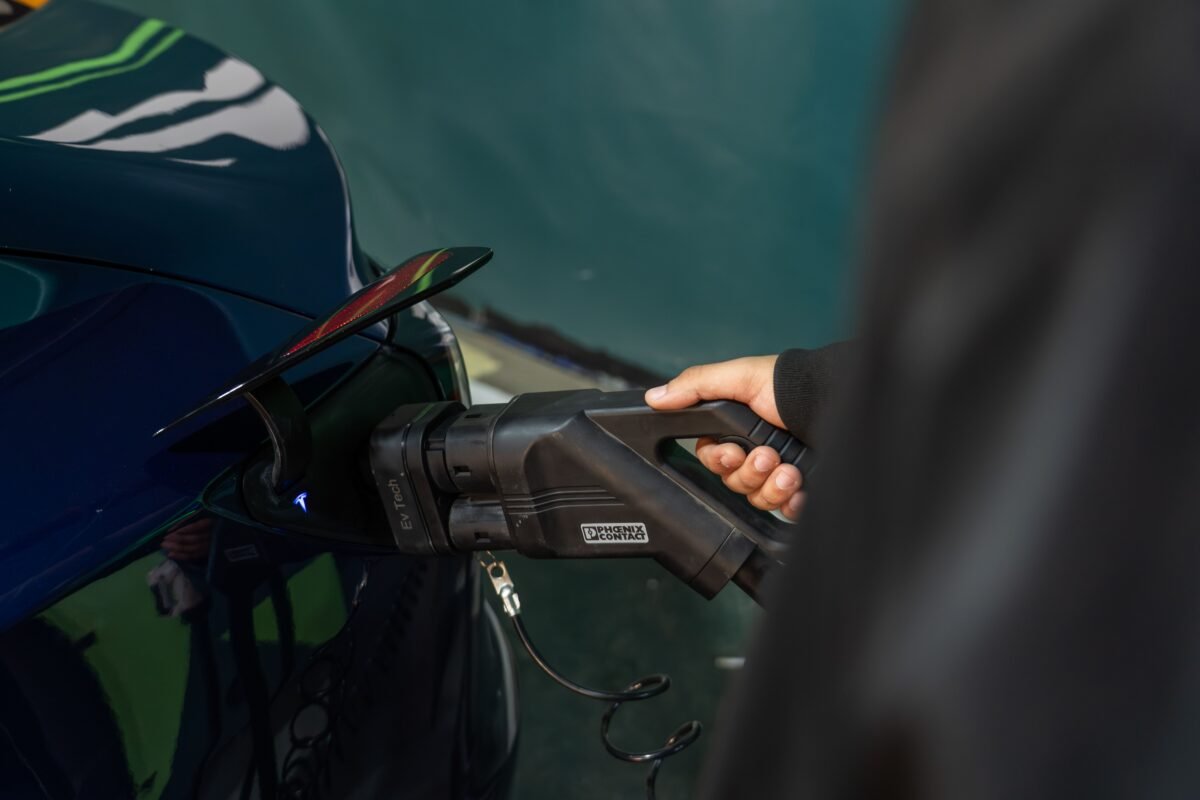
Chinese-brand batteries and EV chargers (BYD, CATL, charger makers) are flooding into Vietnam on the EV wave — but distributing them in Vietnam isn’t “import and sell”. For foreign investors, distribution is a conditional business right: it needs a distribution licence under Decree 09/2018, technical-standard compliance for lithium batteries and electrical equipment, and warranty liability under the Consumer Protection Law. This article sets out the complete conditions for Chinese firms distributing batteries and EV charging equipment in Vietnam — from licensing to warranties.
Gate 1: foreign investors’ distribution rights
Under the Investment Law 143/2025/QH15 and Decree 09/2018/ND-CP, foreign investors conducting distribution (goods trading) in Vietnam need a distribution business licence (with exceptions for some goods). Licensing conditions: (1) an IRC covering distribution; (2) planning and facility conditions (compliant warehousing — lithium batteries are fire/explosion hazardous, needing special fire-protection warehousing); (3) some goods need Ministry of Industry and Trade opinions. Key point: a 100% Chinese-owned company may distribute batteries/chargers (not a prohibited category) but must hold the licence — selling unlicensed draws fines and possible operation suspension. Realistic licensing: 1–3 months.
Gate 2: technical standards for batteries and chargers
Lithium batteries and EV chargers are high safety-risk products — they must meet national technical regulations (QCVN) and complete conformity announcement before circulation. Requirements: (1) testing at designated labs (electrical safety, fire/explosion, electromagnetic compatibility); (2) conformity certification (CR mark); (3) goods labelling (Vietnamese, specs, safety warnings). Biggest trap: batteries/equipment already CE (EU) or CCC (China) certified — not automatically recognised in Vietnam; Vietnamese conformity is still required (foreign test results may be usable if the lab is recognised, but the certificate must be Vietnamese). Timeline: 2–4 months per new product line.
Gate 3: warranties and product liability
The Consumer Protection Law 19/2023/QH15 (effective 01/07/2024) tightens duties: (1) mandatory warranty — EV batteries and chargers need a clear warranty policy (term, conditions, service points); (2) defective-product liability — a fire/explosion causing damage makes the distributor/importer jointly liable for compensation; blame can’t all be pushed to the Chinese manufacturer; (3) product recalls — batch defects trigger recall and regulatory reporting. Reality: Chinese brands must build warranty centres in Vietnam (Hanoi and HCMC minimum), stock spare parts, and train technicians — routinely under-budgeted in distribution plans. Product-liability insurance is a governance must (even where not legally mandatory) — one EV-battery fire can cost billions of dong in compensation.
Three distribution models
Model 1: direct distribution (subsidiary distributes). The Chinese brand sets up a Vietnamese subsidiary, licenses it, sells directly — controls price, brand and service; but capital-heavy (warehousing, warranty, teams) with all the risk. Suits big brands (BYD, CATL). Model 2: exclusive Vietnamese distributor. Appoint one Vietnamese company as exclusive distributor — capital-light, leveraging existing networks; but weak control over pricing and service quality, plus counterfeit risk under the brand. Model 3: hybrid. The subsidiary handles import + warranty + marketing; Vietnamese dealers handle retail — balancing control and capital. Recommendation: for batteries and chargers (technical products, fire risk), use Model 1 or 3 — handing everything to an exclusive distributor without technical oversight invites disaster when incidents occur.
Realistic roadmap and costs
Months 1–2: company formation (IRC + ERC), distribution-licence dossier prep. Months 2–4: distribution licensing (Decree 09/2018) + conformity testing in parallel. Months 4–6: licence + CR certification received, compliant warehousing built (battery-grade fire protection), technical teams hired. Months 6–9: first import shipment, warranty centres built, dealers trained. Total capital: VND 10–30 billion for a mid-size distribution system (warehousing, initial inventory, warranty, first-year operations) — excluding goods-import capital. Breakeven: typically years 2–3 at planned sales.
Four common traps
(1) Selling before licensing. “Trial sales” unlicensed — administrative fines, and goods confiscation in serious cases. (2) Substituting CE/CCC for Vietnamese conformity. Goods held at port or forced to re-export on inspection. (3) Non-compliant battery warehousing. Lithium-battery fires can’t be fought with ordinary water — warehouses need dedicated suppression; fire inspectors shut non-compliant warehouses. (4) Phantom warranties. Advertising 5-year warranties with no centres and no parts — when batch failures hit, the media crisis kills the brand faster than any competitor.
Competing with the grey market — the counterfeit battle
Wherever genuine Chinese batteries sell well in Vietnam, fakes follow within months — counterfeit chargers and refurbed batteries wearing BYD/CATL-style branding, sold at half price through e-commerce and roadside shops. The brand owner’s weapons: (1) record the trademarks with Vietnamese Customs for border seizure of counterfeit imports — unrecorded marks get no border help; (2) QR-code authentication on every genuine unit, with a Vietnamese-language verification page customers can check in seconds; (3) a publicised authorised-dealer list — customers who buy outside it get no warranty, and saying so loudly steers purchases to legitimate channels; (4) test purchases and enforcement — buy suspected fakes, test them, and file complaints with market-surveillance authorities, who can raid and fine sellers. The deeper defence is economic: counterfeits thrive where genuine products are overpriced or unavailable — a well-stocked authorised network at fair prices starves the grey market more effectively than any lawsuit. And when a counterfeit battery catches fire, the brand takes the reputational hit regardless of authenticity — which is why the authentication system and the public education campaign (“buy genuine, stay safe”) belong in the launch budget, not in a later crisis-response budget.
Preparing for the recall you’ll hope never happens
Every battery distributor eventually faces a batch defect — the question is whether the recall is managed or chaotic. Build the recall machine before the first sale: (1) batch traceability — every battery’s production batch, import shipment and customer recorded in one system (without this, a recall means recalling everything); (2) a recall committee with named members, decision authority and a 24-hour activation protocol; (3) pre-drafted communications (customer notices, regulator reports, media statements) in Vietnamese — drafting these mid-crisis guarantees mistakes; (4) a reverse-logistics plan — how defective batteries get collected, stored safely and returned or destroyed (used lithium batteries are hazardous waste with their own handling rules). Report to regulators early: Vietnamese authorities punish cover-ups far more harshly than defects — a voluntary, well-managed recall builds credibility, while a concealed defect discovered by the media destroys it permanently. The distributors that survive battery incidents aren’t the ones with perfect products; they’re the ones whose recall response was faster than the rumour mill.
Checklist: distributing Chinese batteries/chargers in Vietnam
1. Choose the model: direct, exclusive distributor or hybrid. 2. IRC with distribution objectives + company formation. 3. Distribution licence under Decree 09/2018 (1–3 months). 4. Conformity: testing + CR certification per product line (2–4 months) — don’t rely on CE/CCC. 5. Battery-grade fire-protection warehousing. 6. Warranty centres (Hanoi + HCMC minimum) with parts stock. 7. Product-liability insurance. 8. Warranty policy per Consumer Protection Law 19/2023. 9. Train technicians and dealers. 10. Build the recall plan (process, contacts, communications) before the first sale. 11. Sell only when licensed + conformed + warranty-ready.
Contact us
FLAT Law Firm advises Chinese investors in Vietnam across the full lifecycle: investment structuring, IRC/ERC procedures, tax, labour, intellectual property and dispute resolution. Contact us for advice tailored to your case.
This article has been quality-reviewed by the FLAW AI Legal Council


