
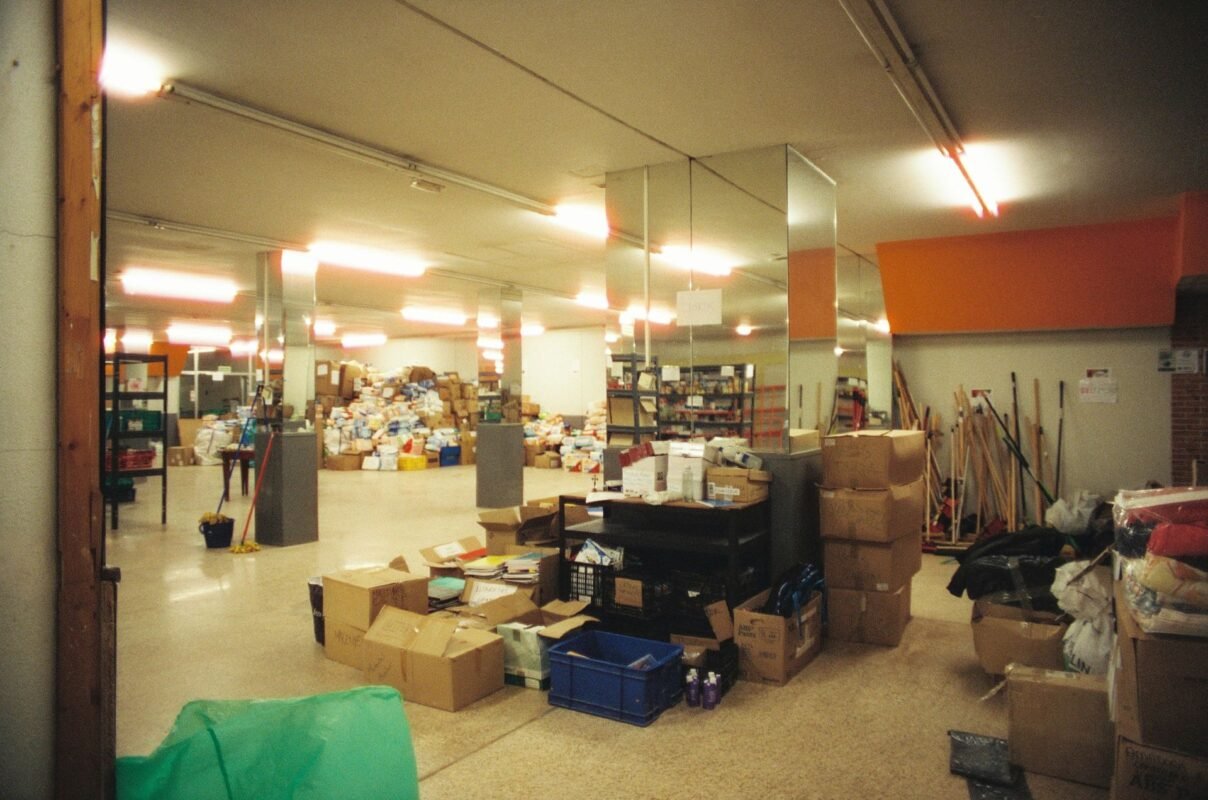
A licence contract ends early because the market turned, the group changed partners, or the licensee breached quality standards. Yet the warehouse still holds thousands of branded products, plus pre-printed packaging and work in progress. Keep selling and you risk infringement; destroy the stock and the loss is heavy. Vietnamese law gives no ready-made answer for this inventory problem; the answer lies in the contract clauses and in how the parties handle the transition.
The legal starting point: no default sell-off period in the statute
The IP Law provides no default grace period (sell-off period) for inventory after a licence contract ends. When the contract terminates, the licensee’s right to use the mark terminates with it; continuing to circulate branded goods after that point, without an agreement permitting it, can be treated by the owner as infringement of the trademark rights. That is why the inventory clause must be designed when the licence is drafted, while relations are good, not negotiated in a dispute atmosphere at termination.
Two termination scenarios should be distinguished. On natural expiry, the parties usually saw it coming and agree a sell-off window readily. On early termination for the licensee’s breach, the owner is typically far less generous, and a well-drafted contract sets different consequences per cause in advance: serious quality breaches or counterfeiting may carry an immediate stop-sale and destruction duty, while termination for purely commercial reasons usually comes with a controlled sell-off window.
Four options for the inventory, and the conditions of each
Option one, sell off within a defined grace period: the licensee may sell the stock lawfully produced before the termination date, within an agreed window, on conditions of no further production, no brand-damaging discount dumping, periodic sales reporting, and royalties on grace-period sales if the contract so provides. Option two, buy-back: the owner or the incoming licensee purchases the inventory at an agreed price, usually cost plus reasonable expenses; legally the cleanest option, as the goods return to an authorised channel.
Option three, de-branding and sale under another brand: feasible where the mark sits only on packaging or labels that can be removed or over-stickered; not feasible where the mark is printed directly, embroidered or moulded into the product. Option four, supervised destruction: for substandard goods, goods barred from circulation, or where no other agreement is reachable; the contract should state who bears the destruction cost, who supervises, and how the destruction is documented, because this cost is usually the last point of dispute in the whole affair.
The forgotten ‘inventory’: unused packaging, work in progress and online channels
Beyond finished goods in the warehouse, companies forget three related asset groups. Unused pre-printed packaging and labels: these are mark-bearing materials not yet attached to goods, and reselling them to another printer or continuing to use them is risky; the termination agreement should deal with them separately, usually towards destruction or handover to the owner. Work in progress on the production line: the parties must fix the production freeze point and how far-completed items count as legitimate inventory.
The third group is digital presence: e-commerce storefronts, product pages on the website, live advertising, and goods already sold to sub-distributors but not yet reaching consumers. The termination agreement should include a timetable for removing mark-bearing content from channels the licensee controls, and confirm that goods which left the licensee’s warehouse into distribution before the termination date may continue to be sold by those distributors, so innocent third parties are not dragged into a dispute between the two principals.
The clause to lock down when the licence is drafted
A complete inventory clause within the licence framework of Article 144 of the IP Law should contain: the definition of legitimate inventory (finished goods produced before the termination date, confirmed by a stock-take); the sell-off window and its conditions per termination cause; the duty to report inventory at termination and the owner’s inspection right; the fallback when stock remains after the window (buy-back, de-branding or destruction) with cost allocation; and the duty to stop production and new packaging print orders from the termination notice.
Where termination has already happened and the old contract has no inventory clause, the parties can still sign a separate termination agreement to govern the transition; it should be lawyer-drafted because it doubles as the licensee’s release evidence when selling off stock during the grace period. Never adopt the ‘keep selling and sort it out later’ approach: every day of selling branded goods after termination without written permission is another day of accumulated exposure to damages claims and infringement enforcement.
Frequently Asked Questions
On early licence termination, how is branded inventory handled?
By agreement between the parties, because the law provides no default mechanism. Four common options: sell off within a conditional grace period; buy-back by the owner or the incoming licensee; de-branding and sale under another brand where the mark is only on packaging; or supervised destruction for substandard goods. Every option must be recorded in writing in the termination agreement.
May remaining stock be sold after termination?
Only with permission in writing: either an inventory clause in the licence contract or a separate termination agreement signed when the contract ends. Continuing to sell branded goods after the termination date without written permission can be treated as trademark infringement, even though those goods were produced entirely lawfully while the contract was in force.
How long is the sell-off grace period?
The law fixes no grace period; it is a negotiation point depending on product life cycle, stock volume and the cause of termination. Fast-moving consumer goods usually need a shorter window than industrial goods and equipment with long sales cycles. What matters is attaching conditions to the window: a production freeze, inventory and sales reporting, no brand-damaging discounting, and a plan for whatever remains when the window closes.
Who bears the cost of destroying inventory?
As agreed; the common allocation follows the cause of termination: if termination results from the licensee’s breach of quality or other core terms, destruction costs usually fall on the licensee; if the owner terminates for commercial reasons (changing partners, restructuring), the parties often share the cost or the owner buys the stock back instead of destroying it. Because the law does not preset this, the cost-allocation clause belongs in the licence contract itself.
FLAT drafts inventory-handling clauses into licence contracts under Article 144, and where early termination has already occurred, negotiates termination agreements with transition periods that protect both owners and licensees in Vietnam.
Related articles
- Dividing a Trademark Application After Partial Refusal: Saving the Acceptable Part
- Amending a Trademark Application (Name, Address, Narrowing Classes): Procedure and Limits
- Assigning a Pending Trademark Application: Procedure and Notes
- Trademark Renewal: Filing Window, 6-Month Grace Period, and Fees
- Trademark Lapsed for Missed Renewal: Can It Be Restored?
This legal analysis has been verified against current Vietnamese regulations and cross-border FDI transaction practices by the attorneys at FLAT LAW FIRM.

