
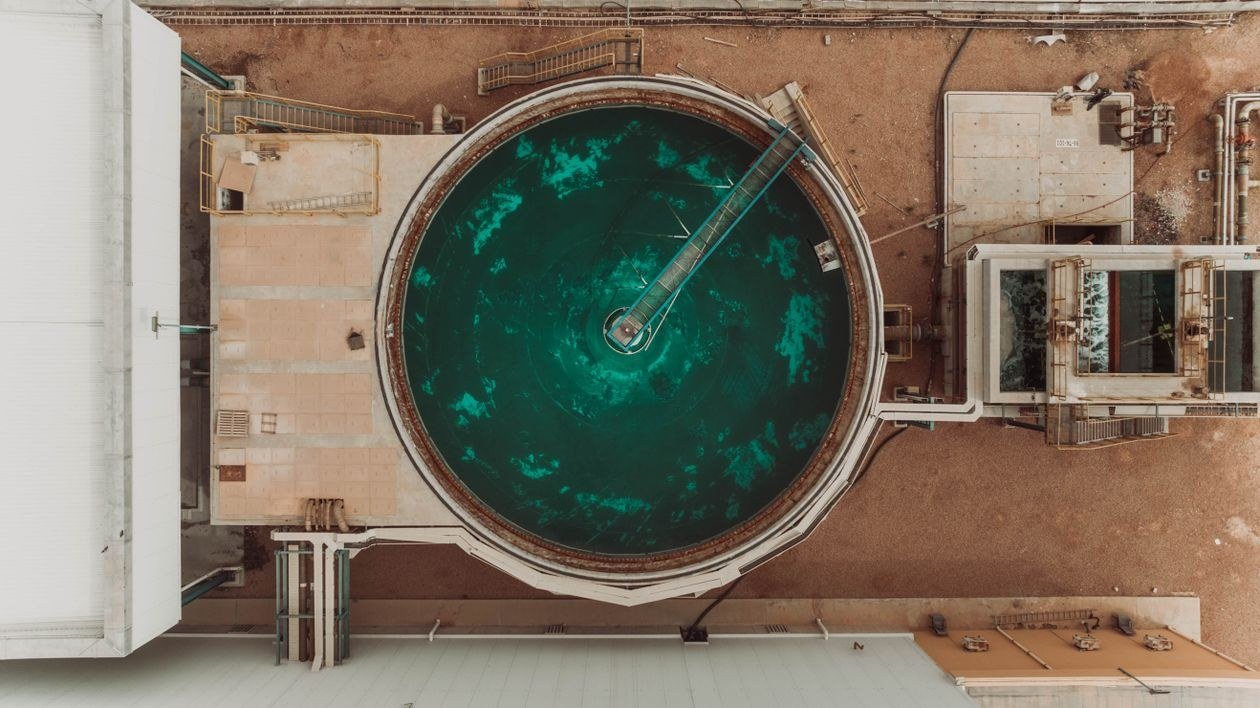
An animal feed factory emits a distinctive combination few industries share: organic dust from milling and mixing; odor from animal-protein ingredients, drying and storage; and wastewater from washing equipment and floors. These three streams map to three different legal fronts in Environmental Protection Law 72/2020/QH14 and Decree 08/2022/ND-CP: the pre-operation environmental procedure (environmental impact assessment or environmental licence), emission-control duties during operation (monitoring, treatment to standard), and liability when surrounding communities complain or sue — precisely the situation in this article’s originating question. The article distinguishes itself from the food-factory environmental licence (VERT-FD-02, centred on organic wastewater) by emission sources and treatment technology, and from dust as a labour issue (VERT-AF-06): this piece covers emissions beyond the factory fence and relations with residents; AF-06 covers the working environment inside the plant.
The feed factory’s environmental procedure: EIA or environmental licence
Under Environmental Protection Law 72/2020/QH14, investment projects are grouped by scale, capacity, land area and environmental sensitivity: group I projects with high adverse-impact risk must prepare an environmental impact assessment (EIA) report for appraisal and approval before implementation; projects in the licensing class apply for an environmental licence integrating wastewater, emissions, waste and noise requirements; the smallest projects register environmentally with the local authority. Large-capacity feed plants, or plants near residential areas or sensitive zones, commonly fall into the higher procedure tier precisely because of odor and dust.
In operation, the environmental licence is a living document: any change in capacity, technology or emission sources altering its content requires the corresponding adjustment or re-issuance procedure, and periodic environmental protection reporting is mandatory. The common error is treating the environmental procedure as finished at issuance — while most community disputes arise from operations drifting away from exactly what was licensed.
Odor and dust: why this is the sector’s hardest front
Dust from a feed plant is controlled by capture at source points (mills, mixers, bagging), filtration and stack monitoring against national technical regulations on industrial emissions; this technical part is relatively measurable. Odor is different: it arises from protein and fat ingredients and storage, spreads with wind and weather, and resists a single quantified index — so odor disputes are usually decided not by one reading but by the file: distance to housing, complaint history, inspection records, monitoring results and the plant’s treatment-system operating logs.
For prevention, the three measures with the highest legal value are: controlling odor at source within the process (enclosed storage, fast input turnover, capture and treatment at emission points rather than dilution release); a green buffer and placing main emission sources at the far side of the site from housing; and a documented community-dialogue channel — when the first complaint arrives, a plant holding contact records and a written remediation plan stands in an entirely different position from a plant that stayed silent until the lawsuit came.
When residents sue over odor: handling sequence and the plant’s legal position
A typical odor case runs on three parallel tracks. The administrative track: local authorities and environmental agencies receive complaints, inspect and monitor; on finding emission-standard violations or operation contrary to the environmental licence, the plant is fined and ordered to remediate, with suspension of the polluting activity in serious cases. The civil track: affected residents may claim extra-contractual damages and demand cessation of the harmful act under Civil Code 46/2015/QH13, including by lawsuit; on this track, holding a valid environmental licence does not by itself exempt the plant from compensation where actual damage is proven. The community and media track usually decides how fast the other two escalate.
The plant’s defensive position is therefore built before any filing: continuous compliant monitoring records, complete treatment-system operating logs, minuted complaint-handling records, and a timed technical upgrade plan where odor is a real problem. At the inspection table, the correct sequence is to cooperate with measurement, acknowledge genuinely established violations with a deadline-bound remediation commitment, and separate exaggerated complaints using the plant’s own monitoring data — rather than denying everything, the fastest credibility-destroying reaction in community environmental cases.
Related pieces: the food-factory environmental licence (VERT-FD-02) — same Environmental Protection Law frame, centred on organic wastewater; dust and occupational disease for workers inside the plant at VERT-AF-06; the overall plant project frame at VERT-AF-01.
FAQ
Residents sue over odors from an animal feed factory: how to handle it?
The case usually runs on three tracks at once: (1) administrative — environmental agencies inspect, monitor, fine and order remediation where the plant breaches emission standards or operates contrary to its environmental licence under Environmental Protection Law 72/2020/QH14; (2) civil — residents claim damages and cessation of the harmful act under Civil Code 46/2015/QH13, and a valid environmental licence does not by itself exempt compensation where damage is proven; (3) community — which sets the escalation speed. The plant must work all three simultaneously: cooperate with inspection, use monitoring records as evidence, commit to a deadline-bound remediation plan, and keep minuted dialogue with residents.
Must an animal feed factory prepare an EIA or only obtain an environmental licence?
It depends on project classification under Environmental Protection Law 72/2020/QH14 and Decree 08/2022/ND-CP: group I projects (large scale, high adverse-impact risk) must prepare an environmental impact assessment report appraised before implementation; projects in the licensing class obtain an environmental licence integrating wastewater, emission and waste requirements; the smallest projects register environmentally with the local authority. Large plants or plants near housing and sensitive areas usually sit in the higher tier. Self-classifying below the true tier is a violation from the project’s first day.
Does operating exactly under the environmental licence protect the plant from all odor complaints?
It does not prevent complaints, but it fundamentally changes the plant’s position in handling them: compliant monitoring records, treatment-system logs and minuted complaint handling are the core evidence for inspectors’ conclusions and for a court assessing compensation claims. Note that civil liability for actual damage can still arise despite licence compliance, so compliance is a necessary condition, not an absolute shield — odor prevention at source and early community dialogue remain the cheapest protective layer.
Related articles
- Parent Company's Business License: Legalization and Translation
- Parent Financial Statements: Audit, Translation and Recency
- Bank Statements Proving Financial Capacity: Format and Balances
- Parent Company's Investment Decision: Mandatory Contents
- Land/Factory Lease Contracts: Mandatory Clauses for the IRC Dossier
This legal analysis has been verified against current Vietnamese regulations and cross-border FDI transaction practices by the attorneys at FLAT LAW FIRM.

