
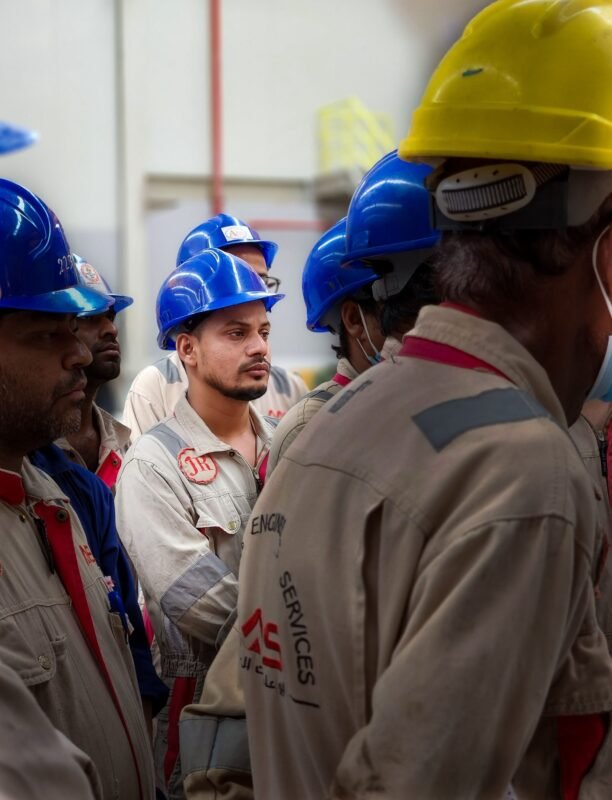
Scenario: labor inspectors visit a 180-worker machinery plant and find that 60 workers in mandatory training groups let their safety cards lapse over a year ago, and the company holds no periodic training records at all. The director assumes “no accident means no problem”. In fact, safety training is a standalone compliance duty: the violation is fined when discovered, without waiting for any accident to happen.
The training duty, group by group
Article 14 of the Occupational Safety and Health Law No. 84/2015/QH13 requires employers to organize OSH training for employees in the groups set by the Government. Decree No. 44/2016/ND-CP defines six groups: group 1, managers in charge of safety; group 2, full-time and part-time safety officers; group 3, workers in jobs with strict safety requirements (operating strictly-controlled equipment, working at height, in confined spaces, and similar); group 4, other employees; group 5, medical staff; and group 6, safety and hygiene network members. Each group has its own curriculum, duration and testing; group 3 workers receive a safety card after passing.
The “periodic” element means training is not a one-off: new hires must be trained before assignment; retraining is required when jobs, equipment or technology change; and periodic refresher training follows the cycle prescribed for each group (group 3 safety cards carry an expiry and must be renewed through training and testing). Training files — rosters, curricula, test results, cards — must be retained and produced on inspection.
Fines and corrective measures
From 10 September 2026, fines for training violations follow Decree No. 283/2026/ND-CP (replacing the corresponding provisions of Decree No. 12/2022/ND-CP): the fine is set by the nature of the conduct and the number of mandatory trainees left untrained, with organizations paying double the individual rate under the decree’s general principle, and the company is simultaneously compelled to train all remaining workers. Sixty lapsed cards, as in the scenario, is not a minor paperwork lapse but a violation at scale, and the inspection record will note that it persisted across several training cycles.
The indirect consequences usually outweigh the fine: the inspection conclusion imposes a remediation deadline; if an accident occurs during the untrained period, the missing training is a directly adverse factor in compensation liability and in management’s own responsibility, and insurers gain grounds to dispute coverage. Companies should track card expiries and training dates as fixed annual compliance deadlines rather than waiting to be reminded.
Organizing training properly
A company may train in-house if it meets the lecturer and curriculum conditions for each group, or contract a training organization recognized as eligible by the competent authority (graded under Decree No. 44/2016/ND-CP). When outsourcing, verify that the provider’s eligibility recognition is still valid, that the curriculum matches the group, and collect the full file: contract, trainee roster, tests, and card issuance list. Training costs are the employer’s; they may not be deducted from wages. After training, update the tracking register and set the next cycle’s reminder at handover.
Frequently Asked Questions
How is skipping periodic safety training fined?
Under Decree No. 283/2026/ND-CP (effective 10 September 2026): a monetary fine scaled by the conduct and the number of mandatory trainees left untrained, with organizations at double the individual rate, plus a compulsory measure to train everyone outstanding. Violations spanning many workers and several cycles are recorded as aggravating when inspectors conclude the case.
Who exactly must be trained?
All employees in the six groups of Decree No. 44/2016/ND-CP: safety managers (group 1), full-time and part-time safety officers (group 2), workers in strictly-controlled jobs (group 3, issued safety cards), other employees (group 4), medical staff (group 5) and safety-hygiene network members (group 6). Curricula and durations differ per group.
Is one training session at hiring enough?
No. Training must occur before job assignment, again when jobs, equipment or technology change, and periodically on each group’s prescribed cycle; group 3 safety cards expire and require retraining and retesting. Missing any of these cycles is a separate violation even if no accident has ever occurred.
What should we check when hiring an outside trainer?
The provider must hold a currently valid recognition of training eligibility, graded under Decree No. 44/2016/ND-CP and covering the relevant groups. Keep the contract, curriculum, trainee roster, test results and card list on file; costs are borne by the employer and may not be deducted from employees’ wages.
Related articles
- Accused of Discrimination in Hiring: Response
- Harassment Accused Is the Director: Managing the Conflict of Interest
- Mass Layoffs Without Reporting to Labor Authority: Fined
- 3 Months Wage Arrears, Workers Sue: Payment Priority
- Terminating Older Workers, Then Sued: Compensation
This legal analysis has been verified against current Vietnamese regulations and cross-border FDI transaction practices by the attorneys at FLAT LAW FIRM.

