
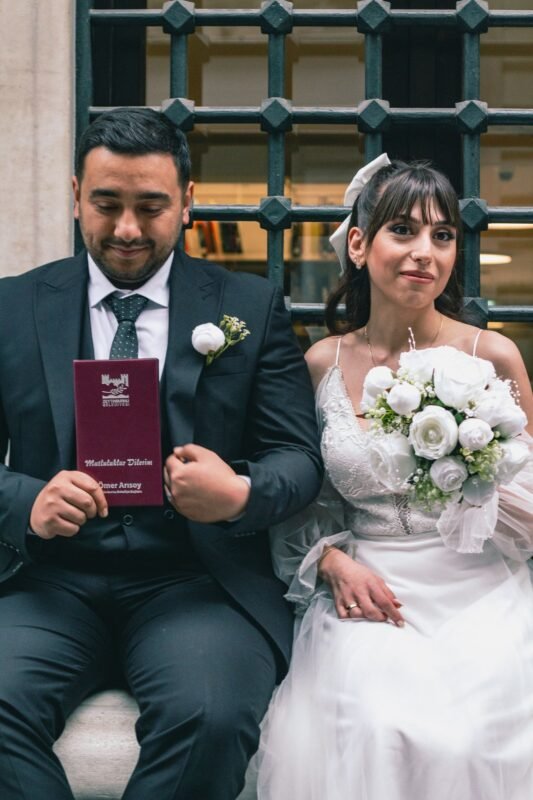
Marriage to a Vietnamese citizen is one of the few work permit exemption grounds tied to the worker’s personal life, and also the one raising the most practical questions: is the exemption automatic, must the couple live in Vietnam, and what happens when the marriage ends? This article analyses the ground in Clause 6, Article 154 of the 2019 Labour Code and the corresponding confirmation procedure. The specific case of working at an FDI company after marriage is analysed in article EXP-5513 on this site; this article focuses on the conditions of the exemption itself, how to evidence them, and the events that change exemption status.
1. The ground: married to a Vietnamese citizen and residing in Vietnam
Clause 6, Article 154 of the 2019 Labour Code provides that a foreigner married to a Vietnamese citizen and residing in the territory of Vietnam is not subject to work permit issuance; Article 7 of Decree 219/2025/ND-CP incorporates the cases in Clauses 3 to 8 of Article 154 into the list of those outside the permit regime. This ground has two cumulative conditions. The first is a lawful marriage to a Vietnamese citizen — a marriage registered under law; if married abroad, the marriage documents must be recognised and recorded under Vietnam’s civil status rules. The second is residing in the territory of Vietnam: an actual-residence condition, distinguishing the case of a couple living abroad where the foreigner only occasionally comes to Vietnam to work — that later case is not safely within this ground and must be assessed under another basis. When both conditions are met, the person may work for any unit in Vietnam without a position-based work permit — a major difference from a permit, which is bound to one employer and one position.
2. Confirmation procedure: obtain the exemption certificate anyway
Being outside the permit regime does not mean holding no documents. In practice, the employer and the worker should complete the exemption-certificate procedure under Decree 219/2025/ND-CP (the general procedure is analysed in the confirmation-procedure article in this section), with a core file of the request form, the marriage certificate or marriage-record extract, the passport, and documents evidencing residence in Vietnam. The certificate is the proof produced on labour inspection, in long-term residence procedures, and when the employer must evidence lawful use of the worker. Skipping confirmation exposes the worker to exactly the risk covered in the penalties article in this section: in practice he is treated as working without documents until the exemption ground is proven.
3. The family-visit residence card and its relation to the labour exemption
A foreigner married to a Vietnamese citizen usually resides on a family-visit temporary residence card sponsored by the Vietnamese spouse, with a maximum term of 03 years under immigration law. Keep the two layers separate: the residence card settles lawful stay; the Clause 6, Article 154 ground settles the right to work. The layers support each other in the file (the residence card is strong evidence of the residing-in-Vietnam condition) but do not replace each other. Conversely, once the worker has stable employment and an exemption certificate, that labour file also strengthens later residence and civil-status procedures. Families should manage one shared timeline: the expiry dates of the residence card, the exemption certificate, and the passport, because misalignment among these three dates is the most common cause of documentation gaps.
4. When the marriage ends or the residence condition changes
The exemption attaches to an existing marriage and to residence in Vietnam, so any event removing either condition ends the ground. When a divorce takes effect, the worker is no longer within Clause 6, Article 154; to keep working in Vietnam he must convert to a position-based work permit at the current employer (the employer starts the demand-reporting and issuance process under Decree 219/2025) or to another exemption ground if available, and the conversion must be completed before continuing to work after the marriage ends. Likewise, if the couple relocates abroad long-term and the foreigner returns only on work trips, the residing-in-Vietnam condition is no longer clear and the file must be reassessed. Employers of such workers should include marital status among the events to be notified in the personnel file — delicate but necessary, because the legal risk of an exemption ground lapsing unnoticed falls on both sides.
Related articles
- 45-Day Visa Exemption: Can Experts Use It?
- Female Worker Replaced During Maternity Leave: Handling
- Overtime Over 40 Hours/Month Fined: Rescheduling Shifts
- Union Demands 2% Union Fee: FDI Company Obligations
- Dismissal Annulled for Wrong Procedure: Reinstating the Worker
This legal analysis has been verified against current Vietnamese regulations and cross-border FDI transaction practices by the attorneys at FLAT LAW FIRM.

