
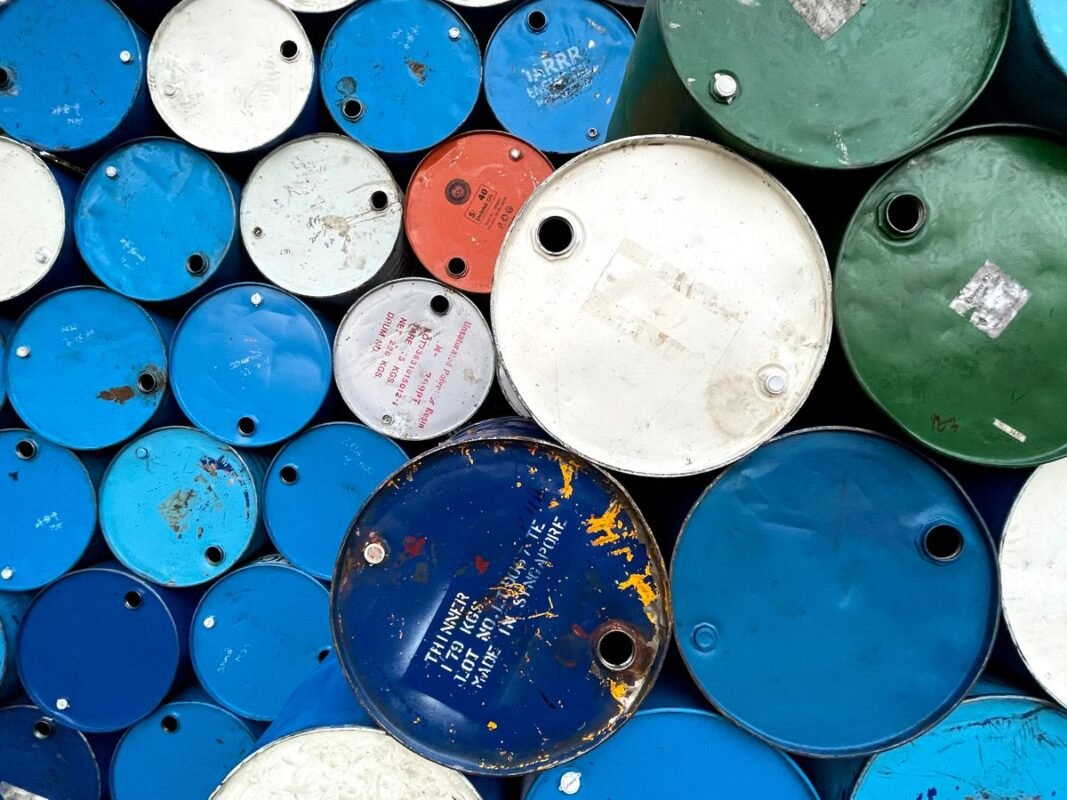
Waste oil, spent solvents, heavy-metal sludge, chemical packaging… — hazardous waste arises at most production and medical facilities. The law does not ban its generation, but places on the waste generator a closed chain of responsibilities: from declaration, sorting and segregated storage to treatment or transfer to a licensed facility.
This article systematizes hazardous waste generator responsibilities under 2026 law.
1. Who is the “waste generator”?
Under Clause 1, Article 3 of Circular 02/2022/TT-BTNMT, the waste generator is the organization or individual owning, or assigned to manage and operate, the waste-generating facility. In other words: whoever operates the facility generating hazardous waste bears responsibility — it cannot be shifted onto the collection contractor.
2. Three core responsibility groups (Clause 1, Article 83, 2020 Law on Environmental Protection)
- (a) Declaration: declare the volume and types of hazardous waste in the environmental license application dossier or the environmental registration contents;
- (b) Identification, sorting, collection, segregated storage: identify and sort from the start; collect and store separately, never mixed with non-hazardous waste, ensuring no environmental pollution;
- (c) Treatment or transfer: self-reuse, recycle, treat, co-process or recover energy as prescribed — or transfer the hazardous waste to a facility holding a suitable environmental license for treatment.
3. Storage requirements
Under Clause 2, Article 83, storage must:
- Be segregated by sorted type;
- Never mix hazardous waste with ordinary waste;
- Prevent dust dispersion and liquid waste leakage into the environment;
- Last only for a defined period as prescribed.
Circular 02/2022/TT-BTNMT (Article 35) details: sorting begins when waste enters the storage area at the generating facility or upon transfer to the treatment facility; a hazardous waste manifest form accompanies each transfer.
4. Transport requirements
Under Clauses 3–4, Article 83:
- Hazardous waste must be contained and transported by suitable equipment and vehicles to the treatment facility;
- Transport vehicles must be fitted with positioning devices and operate along routes and schedules set by the provincial People’s Committee;
- Authorized transporters: generators with compliant vehicles and equipment — or facilities licensed for suitable hazardous waste treatment.
5. In practice: what if you cannot treat it yourself?
Most facilities (hospitals, workshops, garages, laboratories…) lack hazardous waste treatment technology. The only lawful solution: sign a transfer contract with a unit holding an environmental license for suitable hazardous waste treatment, with a waste manifest for each handover.
Important: signing a transfer contract does not erase the generator’s responsibility for declaration, proper sorting and choosing a suitably licensed treatment unit. Hiring an ordinary garbage collector to “handle” hazardous waste is a violation.
6. Frequently asked questions
Q: A newly operating office building generates hazardous waste (fluorescent tubes, batteries…). What now?
A: It is still a waste generator — it must declare in its environmental dossier and transfer to a suitably licensed treatment unit, never mixed into domestic waste.
Q: May hazardous waste be mixed with ordinary trash to “reduce” its volume?
A: No — the law prohibits mixing hazardous with non-hazardous waste; diluting or mixing to evade management is heavily penalized.
Q: How long may hazardous waste be stored on-site?
A: The law says “a defined period” — generators should transfer periodically, avoiding prolonged accumulation that risks leaks and penalties.
Need a review of your hazardous waste management process? Contact us for advice.
This article was prepared by the FLAW AI Legal Council. Content is pending QA Council review before submission for approval; information is for reference only and does not replace legal advice for your specific case.