
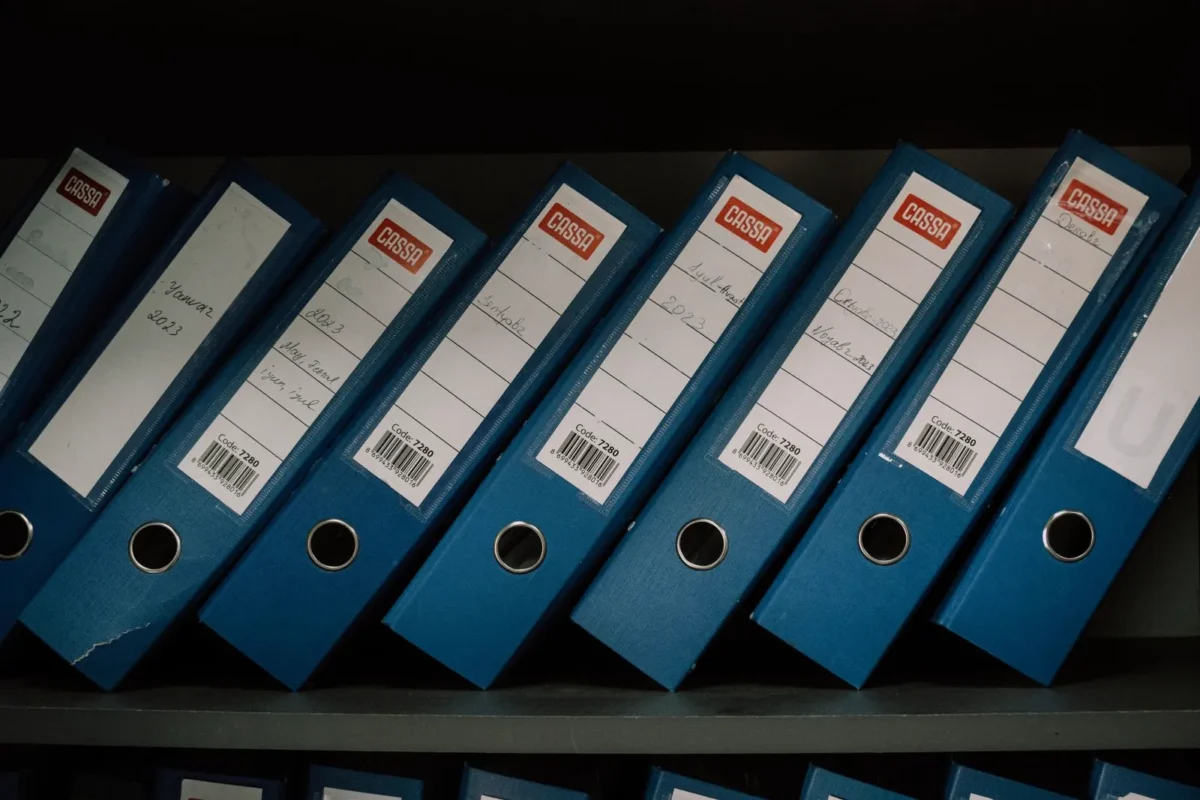
Five years, ten years, or permanently? It is a question nearly every chief accountant has hesitated over: which vouchers may be destroyed after five years, which ledgers must be kept for ten, and which documents must never be destroyed? A wrong answer risks penalties during inspection — or, conversely, costly storage of documents that could lawfully have been destroyed.
This article maps the three retention tiers under the Law on Accounting and Decree 174/2016/ND-CP, with a detailed lookup table, how to count the start date, destruction procedures, and notes on electronic records.
1. The quick answer: three retention tiers
Under Article 41.5, Law on Accounting 88/2015/QH13 (effective 1/1/2017, still in force), accounting documents fall into three tiers:
| Tier | Period | Document types |
|---|---|---|
| 5 years | At least 5 years | Documents used for management/administration; vouchers not directly used for bookkeeping and financial statements |
| 10 years | At least 10 years | Vouchers directly used for bookkeeping and financial statements; accounting ledgers; annual financial statements (unless otherwise prescribed) |
| Permanent | Never destroy | Documents of historical value, significant for the economy, security, or national defense |
The golden rule: “at least” — these are minimum periods. Companies may keep documents longer, never destroy them earlier.
2. Detailed lookup under Decree 174/2016/ND-CP
At least 5 years (Article 12)
- Vouchers not directly used for bookkeeping and financial statements (internal receipts/disbursement slips not passing through the books);
- Documents serving the units management and administration;
- Other items per the detailed list in Article 12.
At least 10 years (Article 13)
- Vouchers directly used for bookkeeping and financial statements;
- Detailed and general accounting ledgers;
- Monthly, quarterly, and annual financial statements; finalization reports;
- Fixed-asset liquidation dossiers;
- Asset inventory minutes;
- Other items per the detailed list in Article 13.
Permanent (Article 14)
- Accounting documents of historical value, significant for the economy, security, or national defense as prescribed;
- Companies should check the Article 14 list to identify which of their documents qualify.
Article 8 of Decree 174/2016 lists the accounting document types subject to retention — the basis for classification before applying the periods.
3. How to count the start date
The retention period runs from the end of the fiscal year (usually 31 December) of the year the document was prepared — not from the vouchers date. Examples:
- Example 1: A VAT invoice dated 15/3/2026 used for bookkeeping → 10-year tier → may be destroyed from 1/1/2037 (31/12/2026 + 10 years);
- Example 2: An internal payment request of 6/2026 not used for bookkeeping → 5-year tier → destroyable from 1/1/2032;
- Example 3: 2026 annual financial statements → 10-year tier → destroyable from 1/1/2037.
4. Destroying expired documents (Article 16)
Documents whose retention period has expired and which are not otherwise directed by a competent state authority may be destroyed under a decision of the legal representative. Notes:
- Destruction must ensure the information is irrecoverable (burning, shredding, secure deletion for electronic data);
- Form a destruction council and minutes (document list, time, method) as evidence for inspections;
- Never destroy documents under ongoing inspection, investigation, or dispute — even if the retention period has expired.
5. Notes on electronic vouchers and e-invoices
- Electronic vouchers and e-invoices have the same legal value as paper and the same retention periods;
- They must be kept in a readable, retrievable original format throughout the period — migrating accounting software must keep old data accessible;
- Maintain backups and a recovery plan; losing electronic vouchers without recovery still breaches the retention duty.
6. When laws prescribe different periods: apply the longer one
Specialized laws may require longer retention than the Law on Accounting. For example, tax law — now the Law on Tax Administration 108/2025/QH15 (effective 1/7/2026) — may require tax-related dossiers to be kept longer for inspection purposes. Conflict rule: apply the longer period among the rules governing the same document type.
Companies in special sectors (banking, securities, insurance) must also check their sectoral laws.
7. Building a retention schedule that actually works
A wall of legal text does not help the accounting team on a daily basis. Convert the rules into a one-page retention schedule:
- Column 1 — document type (e.g., sales invoices, payroll sheets, fixed-asset cards);
- Column 2 — tier (5 years / 10 years / permanent) with the legal reference (Art. 12/13/14, Decree 174/2016);
- Column 3 — start date rule (end of fiscal year of the document year);
- Column 4 — earliest destruction date (computed per year-batch);
- Column 5 — storage location (physical archive shelf or system folder).
Review the schedule once a year — ideally right after the fiscal year closes — and process the batches whose destruction date has arrived. This turns a legal obligation into a routine 2-hour annual exercise.
8. Special-sector notes
- Banks and credit institutions: sectoral regulations may extend retention for credit dossiers and transaction records beyond the accounting tiers;
- Securities companies and fund managers: securities law imposes its own record-keeping duties for client transactions;
- Insurance enterprises: policy and claims dossiers follow insurance business rules in addition to accounting rules;
- Listed companies: securities disclosure archives must remain available for market surveillance look-backs.
In every case the conflict rule is the same: apply the longer period.
9. FAQ
Q: Is there a penalty for keeping documents past expiry without destroying them?
A: No — the law only prohibits early destruction. But over-retention costs warehouse/system space and increases data-leak risk; destroy on time per procedure.
Q: May we destroy books for a year under tax inspection?
A: No — documents under ongoing inspection, investigation, or dispute must not be destroyed even after expiry.
Q: Our paper archive was damaged in a flood. Are we liable?
A: The retention duty is not excused by force majeure alone — document the event (photos, incident report, insurance claim), attempt recovery, and reconstruct from secondary sources (bank statements, counterparties, tax filings). Showing diligent recovery efforts is what inspectors look for.
Q: Can we store accounting records on an overseas cloud server?
A: Electronic storage is permitted, but the records must remain readable and retrievable in Vietnam throughout the retention period, and data-localization and cybersecurity duties (including the Cybersecurity Law 116/2025/QH15) must be observed. Consult counsel before moving the primary archive offshore.
10. Legal bases
- Law on Accounting 88/2015/QH13 (effective 1/1/2017): Art. 41.5
- Decree 174/2016/ND-CP: Arts. 8, 12, 13, 14, 16
- Law on Tax Administration 108/2025/QH15 (effective 1/7/2026) — check on period conflicts
Note: General information. Companies in special sectors (banking, securities, insurance) should check additional sectoral laws.
Transparency note: This article was prepared by the FLAW AI Legal Council; its legal content is awaiting review by the QA Council before approval. This is general legal information, not a substitute for legal advice on a specific matter.
For advice on a specific case, please contact FLAT Law Firm.


