
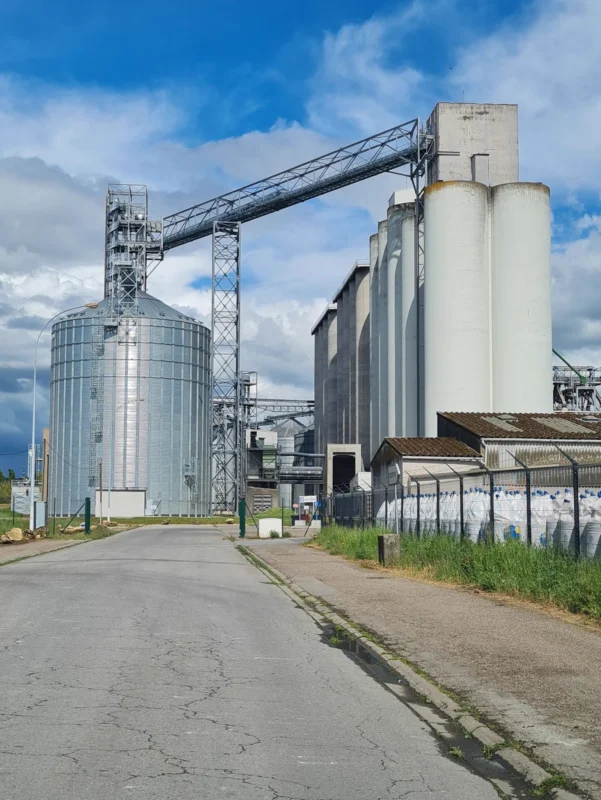
An investor signs a contract to lease 5 hectares in an industrial park, paying 40 years of rent upfront to build a factory. After signing, the investor discovers that the industrial park infrastructure developer has not yet been granted the master land use right certificate for the park. Is such a sublease lawful? What risks does the investor face, and how should they respond? This is a legal question with a large grey area — this article presents both sides so investors can fully assess the situation.
Side one: the law permits infrastructure developers to sublease land
Clause 3, Article 202 of the Land Law 31/2024/QH15 provides: a developer leased land by the State on an annual-payment basis may switch to lump-sum payment; for areas leased on an annual-payment basis, the developer may sublease the land on an annual-payment basis; for lump-sum areas, subleasing may be on a lump-sum or annual basis.
At the same time, point c, Clause 1, Article 151 of the Land Law 2024 creates a dedicated exception: ordinary land lessees and sublessees are not granted certificates, except for those leasing or subleasing land from an infrastructure developer, consistent with an investment project approved by a competent authority — meaning industrial park sublessees are granted land certificates for the subleased area.
In other words, as a matter of principle, the infrastructure developer’s lack of a master certificate does not extinguish its right to sublease. This is the basis on which many industrial park land leases proceed in practice.
Side two: risks to the sublease contract’s validity
However, point a, Clause 1, Article 45 of the Land Law 2024 requires a land user exercising the right to lease to “hold a certificate.” A developer without a master certificate shows signs of failing the conditions for exercising the sublease right — exposing the sublease contract to validity disputes.
This is a major UNCERTAIN point: must an infrastructure developer subleasing land fully satisfy Article 45, or is it governed separately by Article 202? The law does not clarify the boundary between the two. Therefore, it cannot be asserted that the sublease is “void,” nor can it be asserted that it is “fully lawful.” Investors must assess risk under both scenarios.
Specific risks facing the investor
1. Risks from the developer’s financial obligations
A developer without a master certificate typically has not fulfilled its land financial obligations to the State (land rent, taxes, fees). The State may then apply land recovery or enforcement measures — directly affecting the sublessee’s rights, through no fault of the investor.
2. Administrative risks
Leasing or subleasing land use rights without meeting the conditions is sanctioned under point b, Clause 3 and Clause 4, Article 17 of Decree 123/2024/ND-CP:
- VND 20–30 million fine for individuals; organizations face double, i.e. VND 40–60 million;
- Remedial measures: the lessee is compelled to return the land and disgorge unlawful gains.
3. Practical project risks
- Difficulty verifying exact boundaries, area, and remaining lease term;
- Difficulty registering changes or mortgaging the lease right;
- Difficulty attracting investment capital and project financing;
- In some cases, inability to register the investment project on the leased land.
Legal due diligence checklist before signing
Before signing a sublease, investors should require the developer to provide and verify:
- (a) The competent state authority’s land lease decision for the infrastructure developer;
- (b) The land lease contract between the developer and the State;
- (c) Confirmation of the developer’s fulfillment of land financial obligations (land rent, taxes, fees);
- (d) The approved detailed industrial park plan;
- (e) The investment policy approval decision for the park infrastructure project (infrastructure investment projects fall under investment policy approval per Article 24.14 of the Investment Law 143/2025/QH15; the specific approving authority follows Article 25 — verify against the original text, do not speculate);
- (f) The developer’s remaining land lease term — the sublease term must not exceed this remainder; total project land use in the park must not exceed 70 years (Clause 4, Article 202);
- (g) The land’s dispute and seizure status.
Note on sublease form: the sublease form must correspond to the developer’s lease form — a developer leasing land on an annual-payment basis may only sublease on an annual-payment basis (Clause 3, Article 202). Paying a lump sum to a developer that itself leases annually is a risky structure to avoid.
Protective clauses for the investor in the sublease contract
- The developer’s warranties on the land’s legal status and sublease right;
- The developer’s obligation to complete the master certificate within a defined period;
- Staged payments tied to the developer’s certificate obligations — do not pay the full rent upfront while the developer lacks the certificate;
- Breach penalties where the developer fails to ensure stable land use rights;
- A unilateral termination right with refund of paid rent plus damages where the developer cannot secure the land use right.
After leasing: register for a certificate
After signing, the investor should complete registration to obtain a certificate under point c, Clause 1, Article 151 of the Land Law 2024 (the dedicated exception for industrial park sublessees). Practical note: the Land Registration Office may require the developer’s legal dossier — investors should confirm the specific procedure with the local office before proceeding.
Remedies where the contract is already signed
If the missing master certificate is discovered after signing, the investor may: negotiate supplementary refund and compensation clauses; file complaints or denunciations; or sue to declare the contract void under Articles 123 and 131 of the Civil Code 2015 to recover amounts paid.
What the law does not provide
- The law does not require an industrial park infrastructure developer to hold a master certificate before subleasing — but neither does it exempt the developer from the “hold a certificate” condition in Article 45 (the legal gap noted above);
- The law sets no specific deadline for the developer to complete master certification.
Applicable legal framework (in force at 14 October 2026)
- Land Law 31/2024/QH15 (fully effective 1 August 2024 under Law 43/2024/QH15): Article 45, point c Clause 1 Article 151, Article 202 — in force.
- Decree 123/2024/ND-CP: point b Clause 3, Clause 4 Article 17 — in application.
- Investment Law 143/2025/QH15 (effective 1 March 2026; amended by Law 24/2026/QH16 on conditional business lines, effective 1 March 2027): Article 24.14, Article 25 — in force.
- Decree 96/2026/ND-CP detailing the Investment Law (effective 31 March 2026) — in force.
- Civil Code 91/2015/QH13: Articles 123, 131 — in force.
Frequently asked questions
Can an industrial park developer without a master certificate sublease land?
The law permits developers to sublease (Clause 3, Article 202 of the Land Law 2024), and the missing master certificate does not extinguish this right as a matter of principle. However, the “hold a certificate” condition in point a, Clause 1, Article 45 creates validity dispute risks — a legal grey area investors should not treat as fully safe.
Can an industrial park sublessee obtain a land certificate?
Yes. Point c, Clause 1, Article 151 of the Land Law 2024 is a dedicated exception: those leasing or subleasing from an infrastructure developer, consistent with an approved investment project, are granted certificates. The practical procedure should be confirmed with the local Land Registration Office.
What is the maximum sublease term in an industrial park?
It must not exceed the developer’s remaining lease term; total project land use in the park must not exceed 70 years (Clause 4, Article 202 of the Land Law 2024).
What if the missing certificate is discovered after signing?
Negotiate supplementary refund and compensation clauses; file complaints or denunciations; or sue to void the contract (Articles 123 and 131 of the Civil Code) to recover amounts paid.
Contact FLAT Law Firm for legal due diligence on industrial park land lease projects.
Note: This article is for general reference only based on the law in force at the time of writing (14 October 2026) and does not constitute legal advice for any specific case. Legal provisions may change; specific cases require a lawyer’s opinion.
Transparency note: This article was drafted by FLAT Law Firm’s AI content production system and is undergoing internal review (AI Legal Council QA and owner approval before publication). It has not been reviewed by a human lawyer.


